
-
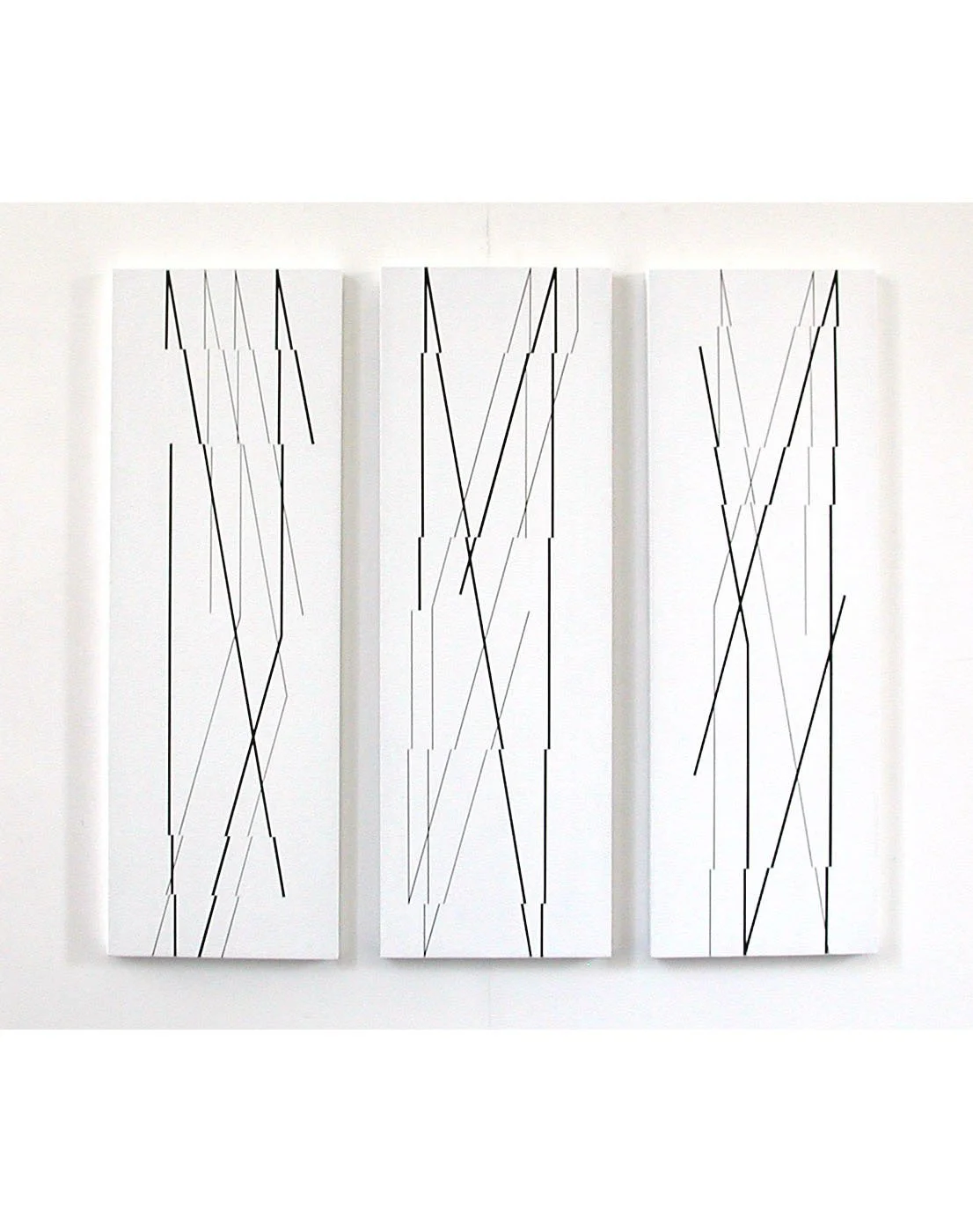
![Henri Prosi]()
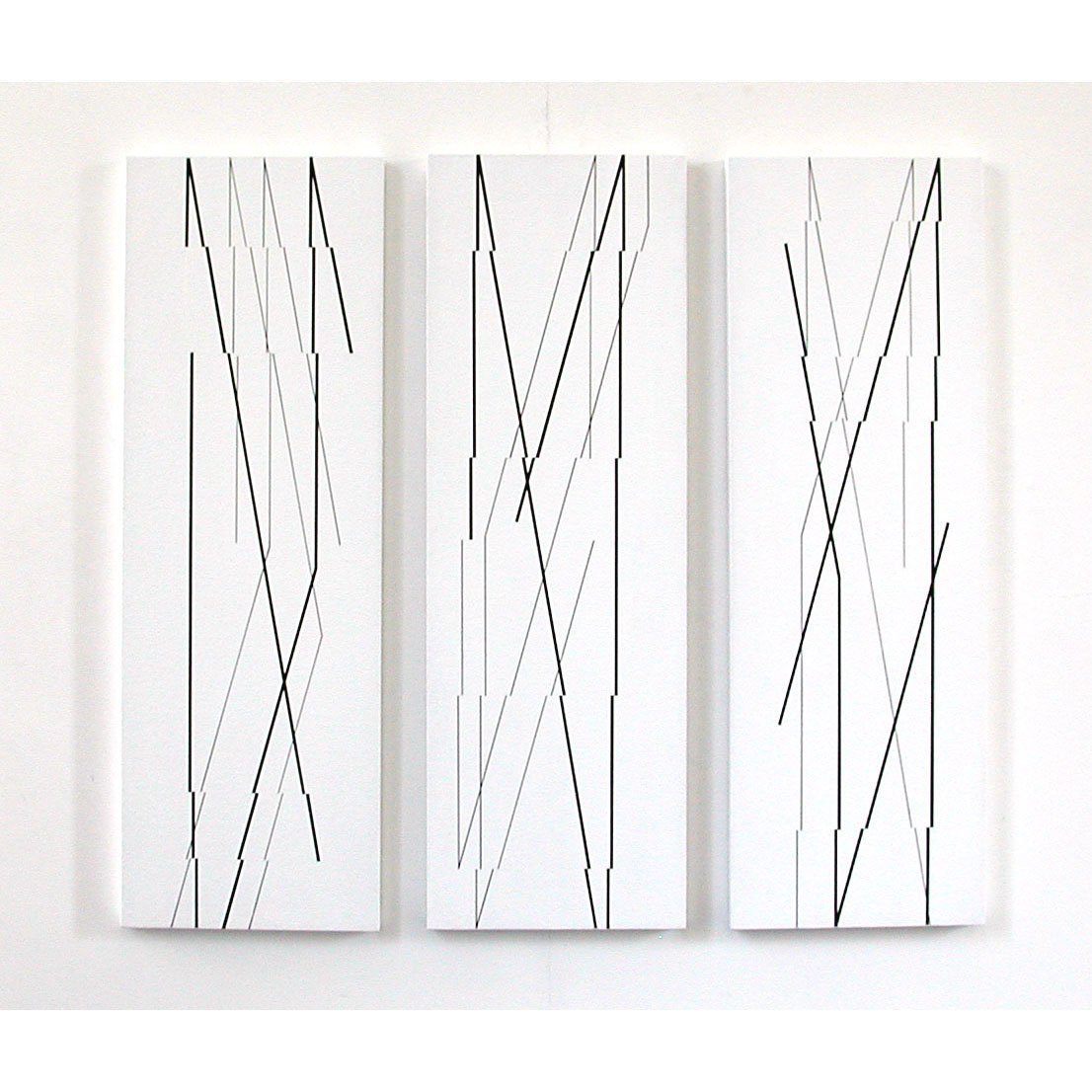
Offset Tracings No. 250, 1991
triptych, acrylic on canvas, 120 x 40 cm (x3)
-
![Henri Prosi]()
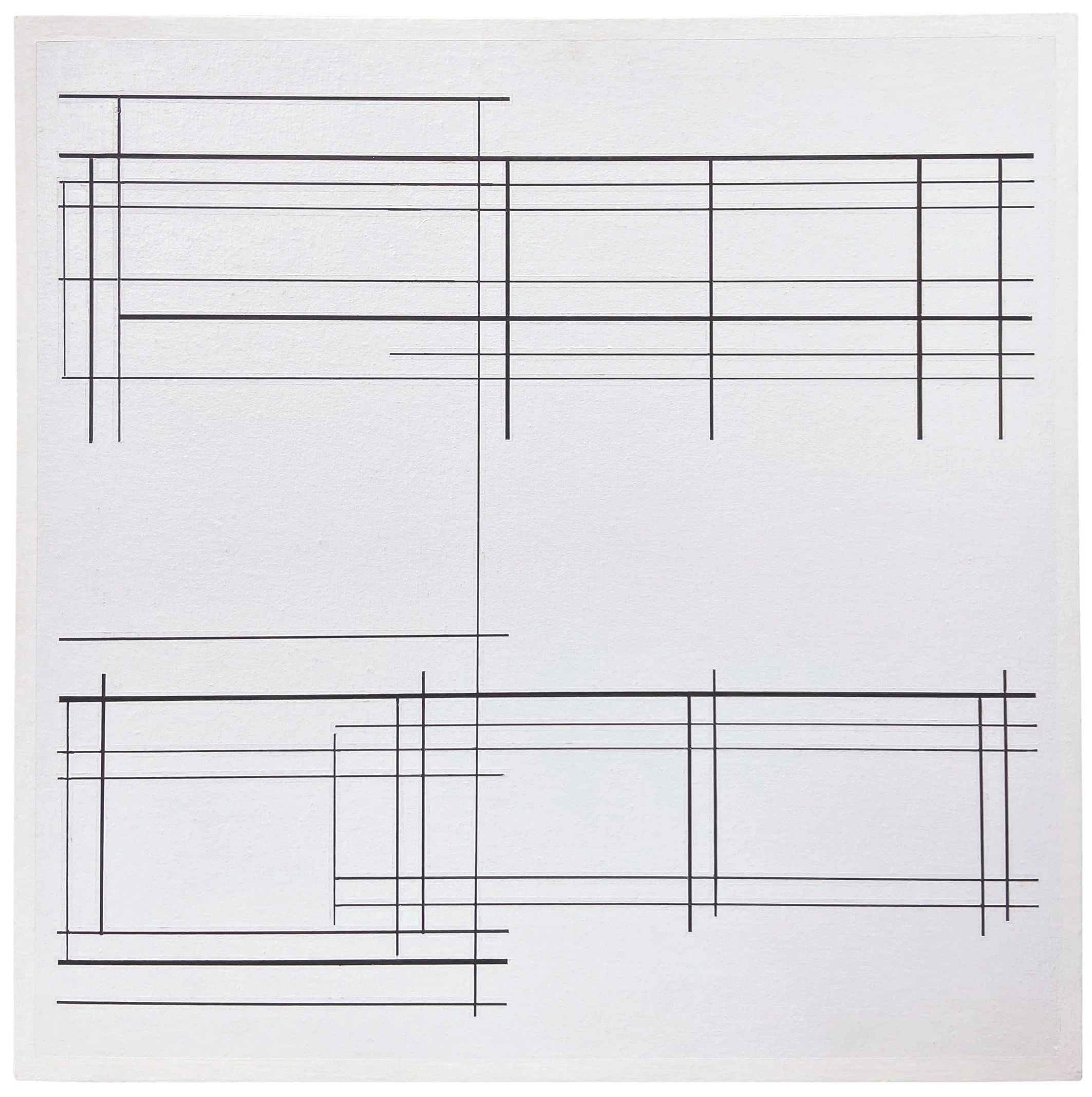
Traces No. 367, 1994
acrylic on canvas, 60 x 60 cm
-
![Henri Prosi]()
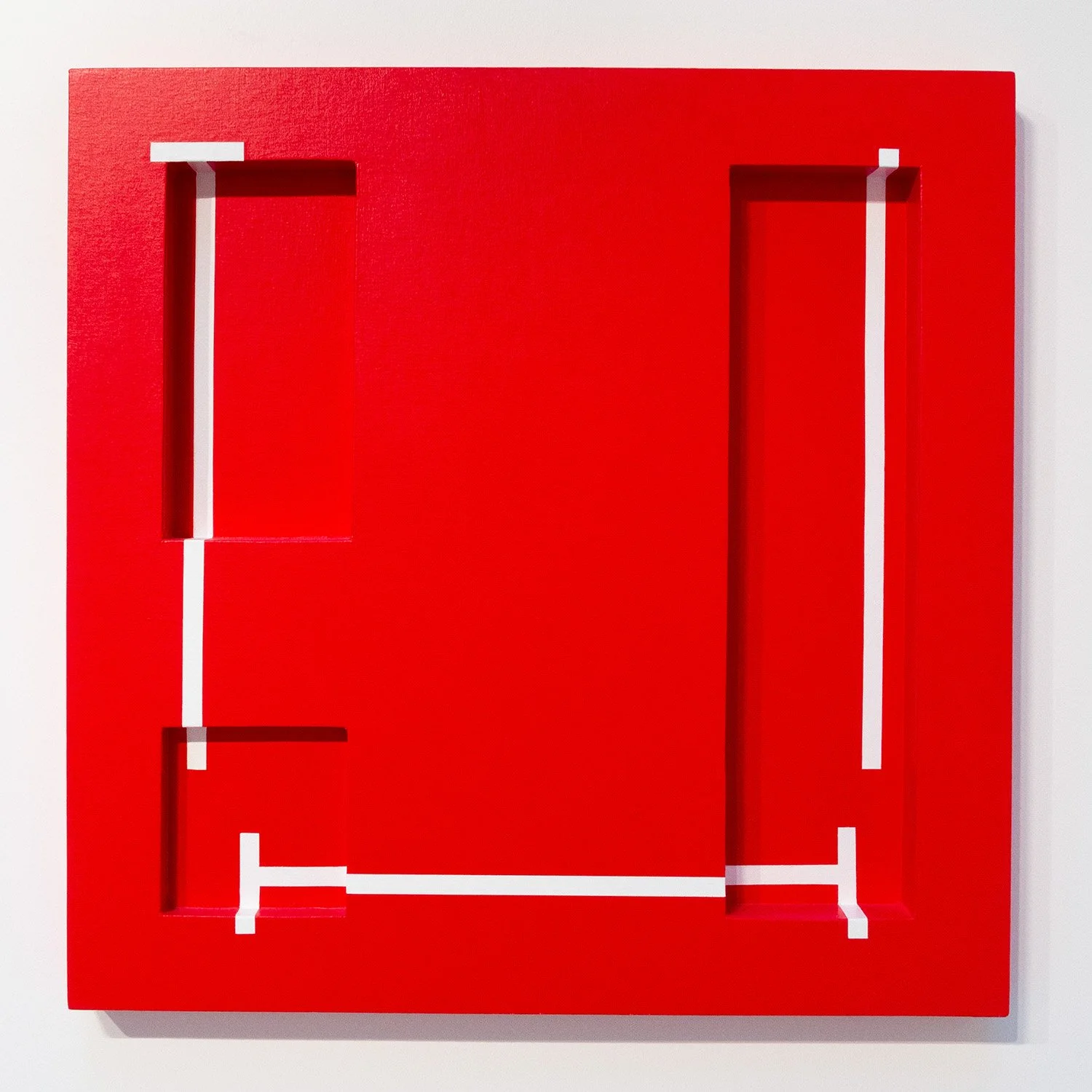
Thi 770, 2006
acrylic on canvas, 60 x 60 cm
-
![Henri Prosi]()
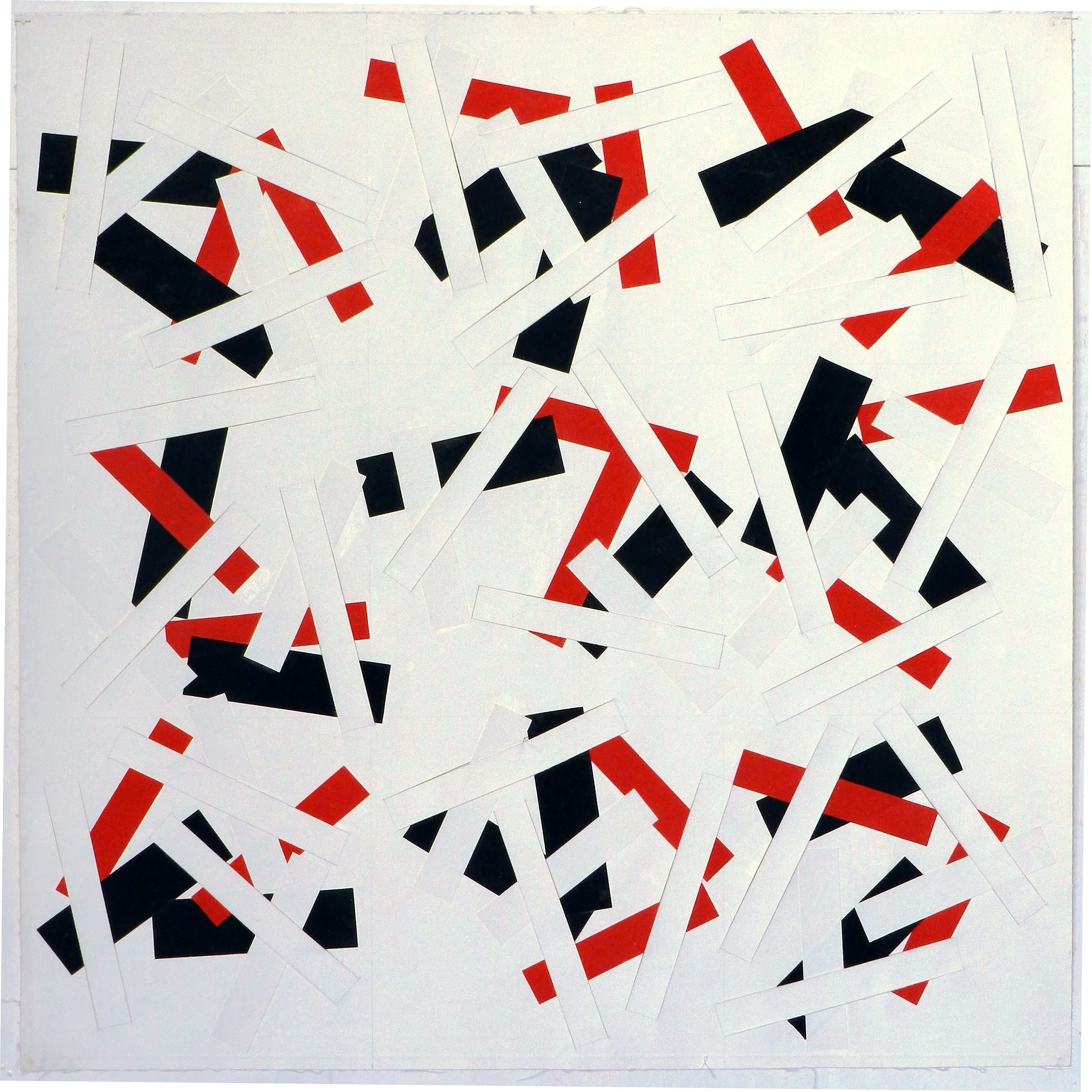
Untitled, ca. 1980
acrylic on canvas and collage, 80 x 80 cm
-
![Henri Prosi]()
Untitled, 1981
acrylic on canvas and collage, 64.5 x 49 cm
-
![Henri Prosi]()
Untitled, circa 1975
acrylic, collages on canvas, 141.5 x 139.5 cm


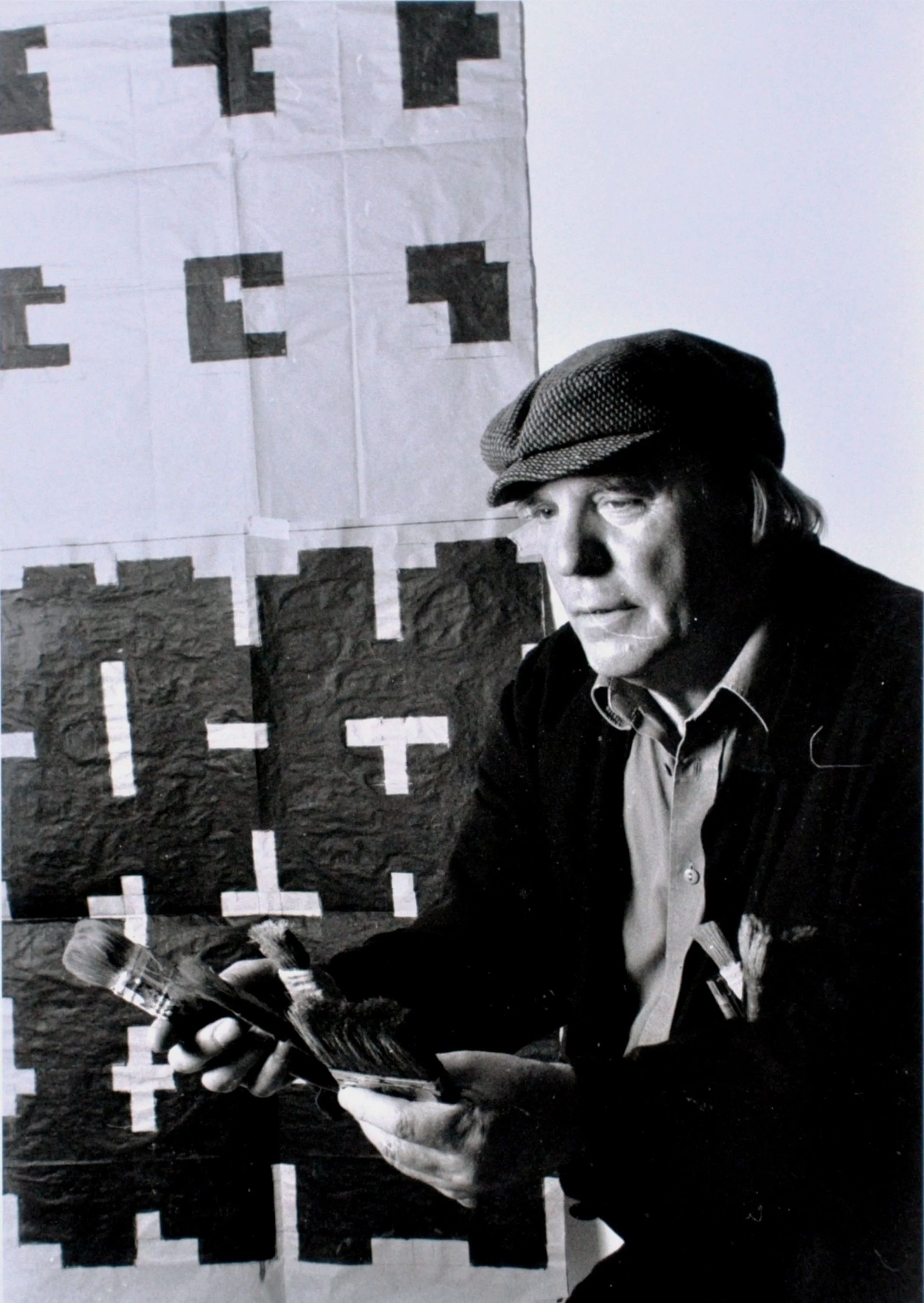
HENRI PROSI
Born in 1936 in Metz, died in 2010.
Henri Prosi works with the grid, using the three primary colors, black, and white. Prosi's approach is more akin to a Baroque sensibility, employing movement, imbalance, asymmetry, and fragmentation to express a centrifugal force. The construction is rigorous, yet it conceals itself behind an instability reminiscent of the infinitely small or the infinitely large, a kind of floating, suspended time. Playing with the space of the canvas, or the relief, Henri Prosi introduces a dimension that contradicts the arrangement and rhythm of the foreground, somewhat like the syncopation in jazz or certain modulations in contemporary music.
Excerpt from a text by Bernard Fauchille
His work could be formally understood, in his own words, as an exploration of "structures," "figures," and "contours." More intelligent than any graphics software, he knew how to redefine the laws of painting construction. Each of his works reinvented a combination of fullness and emptiness, presence and absence. He was a craftsman of combinatorial abstraction, constructed and played with. He was able, subtly and enduringly, to delineate a different distribution of the senses and demonstrate to us that art remains a game and a pleasure that only the most serious can truly engage with.
Excerpt from a text by Jack Ferrand (2010)
Taking a fresh look at the painter's studio led us to choose to present works from the 1970s and 80s. Revisiting this work of broken lines, of cut and pasted canvases, sometimes stretched or unstretched, strikes us with its vitality. Yet the structure is there, the cuts are clean and orderly through the mounting on the canvas, the jumble of lines. This vibrant whole calls out and awakens the gaze. We will linger longer to understand what dances before our eyes. Prosi was a vibrant and energetic character, always in motion.
Domitille d'Orgeval aptly describes his work and the artist here: “From his beginnings in the mid-1960s, Henri Prosi approached geometry not because he saw it as the embodiment of a moral truth or an absolute geometric order, but rather for its vital dimension. Indeed, speaking of his early geometric paintings, the artist declared: ‘There is a dynamic action, something is happening. For me, it becomes alive. Like people passing each other in the street, like life.’ This dynamism, based on the dialectic of relationship, governs the artist’s entire body of work.” Prosi explored its infinite possibilities with an astonishing capacity for renewal, studying in turn the contributions of colors (reduced to primaries and black and white), rectangles, squares, verticals and horizontals, solids and voids, while each time emphasizing a particular aspect of the work, whether its structure, its surface, or its contours
Excerpts from the text of the exhibition "Revisiting Henri Prosi" 2018
Works in museums and public collections
National Fund for Contemporary Art, Paris
Arithmeum, Bonn, Germany
Leshot Foundation, Switzerland
Mondriaanshuis, Amersfoort, Netherlands
Museum of Contemporary Art, Ingolstadt, Germany
Selection of the main exhibitions
2007 Château de Tours
2008 Convent of the Minims, Perpignan
2009 Stattgalerie Klagenfurt, Austria
2010 Messmer Foundation, Riegel, Germany
2010 Sens Museum
2011 The Arts Road, Courgé, France
2018 Revoir Henri Prosi, Galerie Lahumière, Paris, France
Selection of works available in the shop


Selection of prints available in the shop

Price on request
Acrylic on canvas and collage
64.5 x 49 cm
Free collection at the Gallery or delivery upon request (quote available).
←Henri Prosi | ←Original works | ←Store