
-
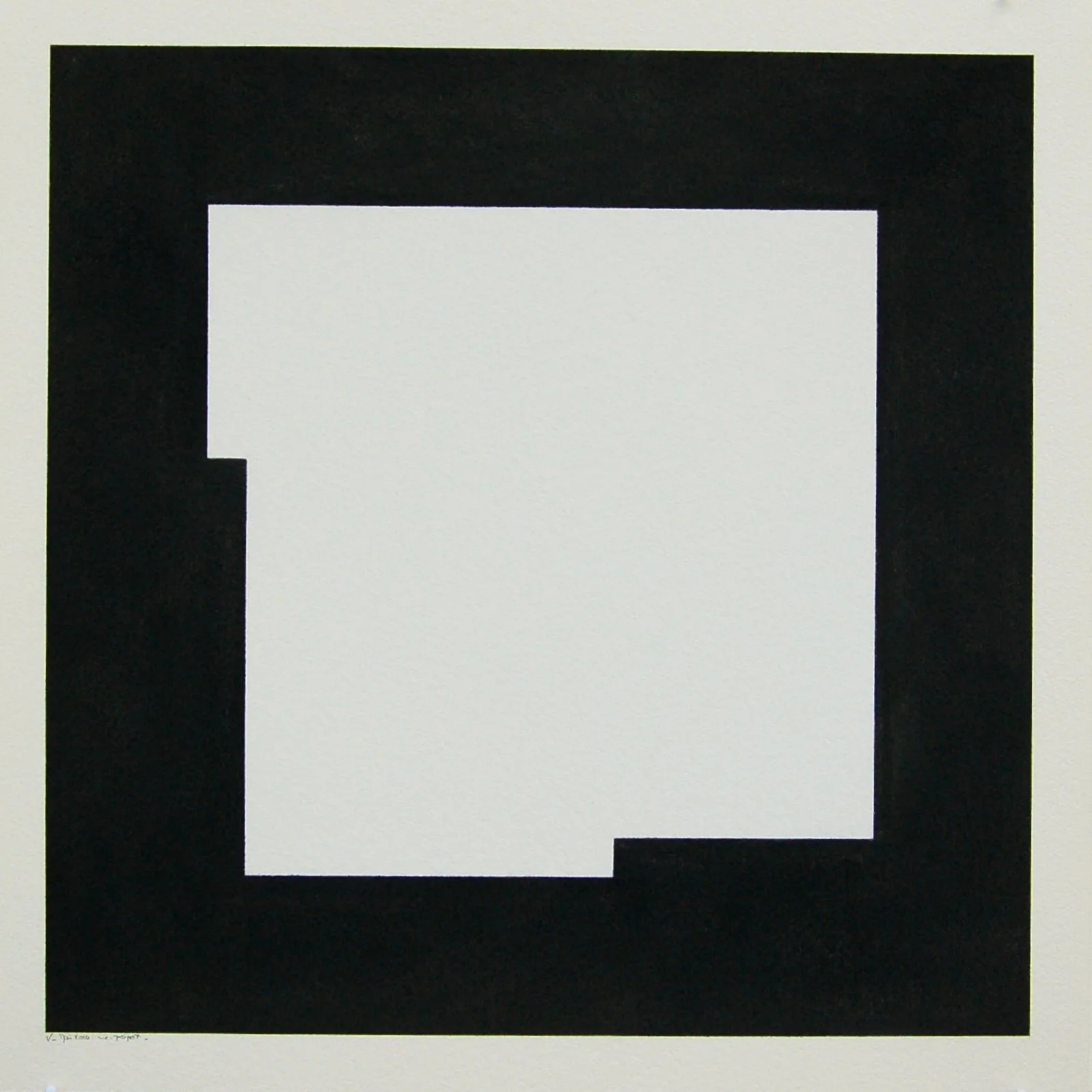
![Yves Popet]()
V, 2014
Dry pastel on paper, 56 x 56 cm
-
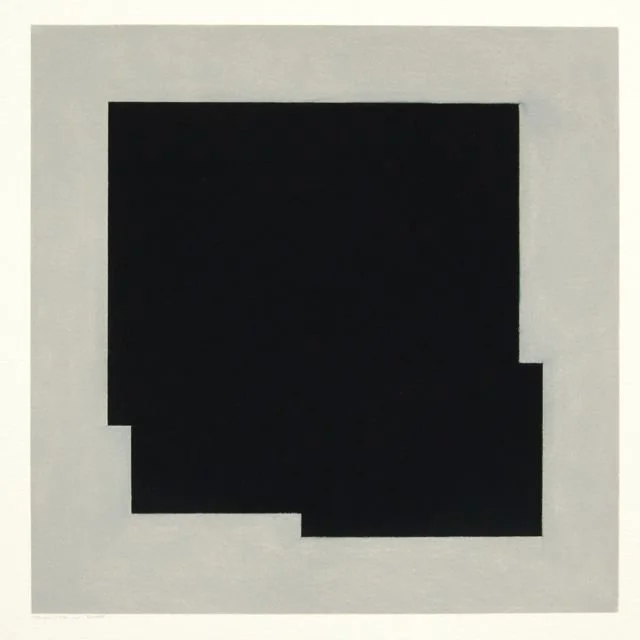
![Yves Popet]()
VIII, 2014
Dry pastel on paper, 56 x 56 cm
-
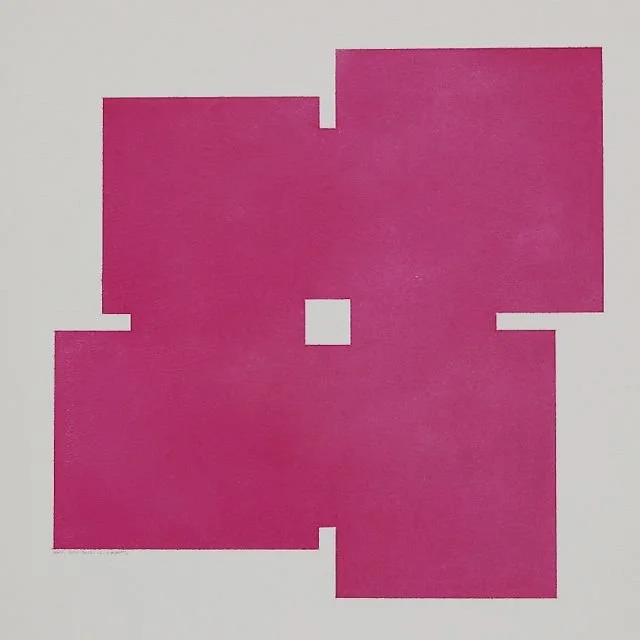
![Yves Popet]()
XXV, 2014
Dry pastel on paper, 56 x 56 cm
-
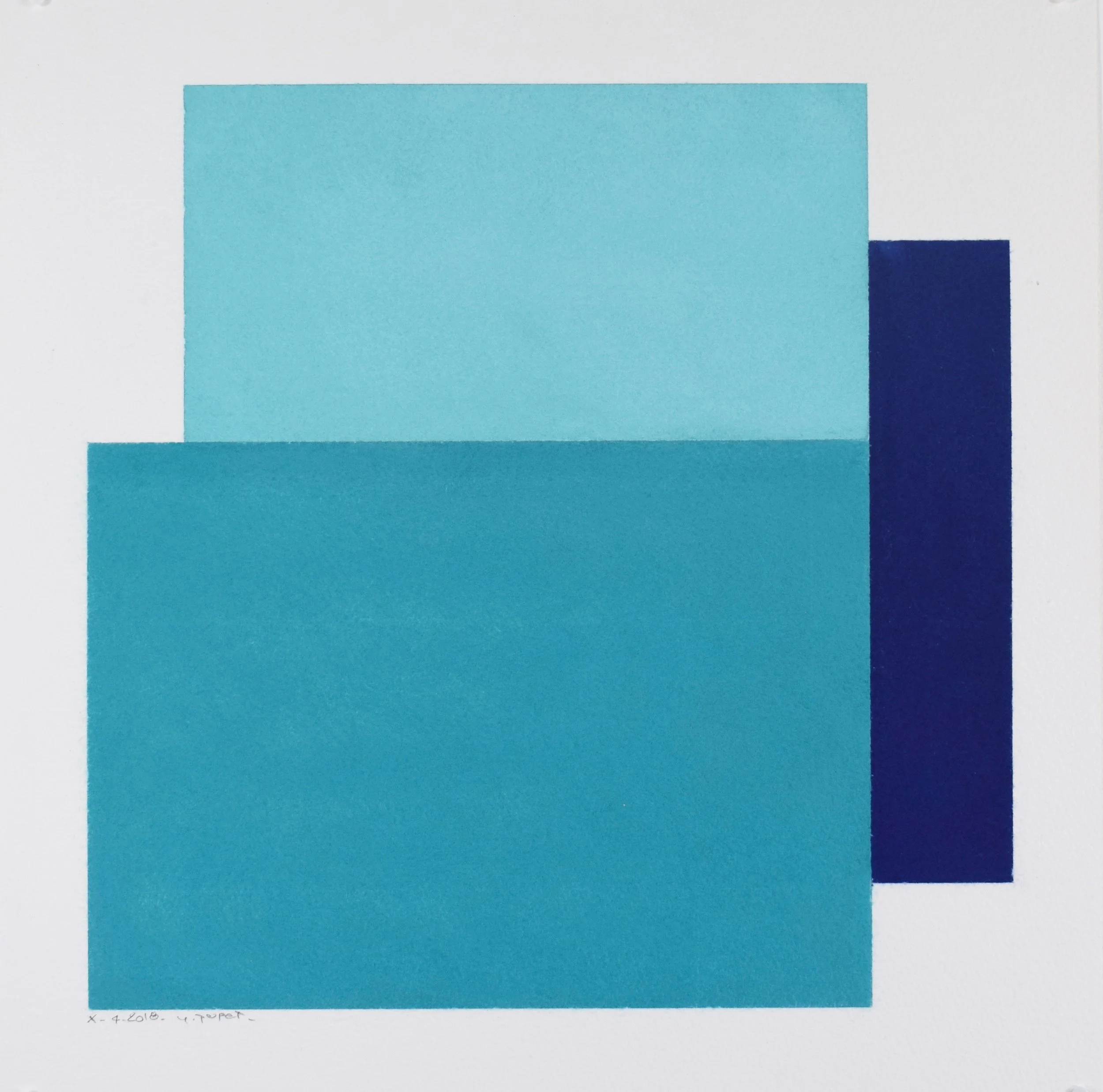
![Yves Popet]()
April X, 2018
Dry pastel on paper, 36.5 x 36.5 cm
-
![Yves Popet]()
XIV, June 2008
Acrylic on canvas, 60 × 60 cm


YVES POPET
Born in 1946 in Reims, lives and works in Normandy
Within the framework of geometric abstraction, the artist has been experimenting continuously and methodically with orthogonality since the mid-1960s, simultaneously exploring the chromatic possibilities of color in its relationship to light. It was in the 1980s that he introduced pastels into his artistic practice.
Popet's use of pastel is quite unique. At the heart of a chromatic universe that unfolds its palette in 1200 hues, his mastery lies not in the art of the palette but rather in that of touch. It is the body that leads the dance (it is a dance) and generates the gestures. What sets it in motion is a technique of the knowing body that works in parallel with a regulating and constructive conscious awareness. Imagine it, and you immediately see the breath, the respiration and its rhythm, the ductile spreading of the pigment, outcroppings, overlays, subtle reworkings in a fluid field at the heart of a continuous a fresco, until a stopping point is decided and the powdery color is applied sparingly by mouth, not with a spray can, so as not to alter the reflective properties of the light. Humanity's first gesture, and perhaps its foundational one, since we know from the discovery of the Blombos cave (C. Henshilwood, 1991) that the oldest known artistic representations are geometric compositions (crosshatching) on blocks of ochre with unclear functions, but among which is mentioned that of sprinkling colored powder on objects... We might be accused of having missed the analysis of the ordering put in place by Yves Popet, but would we know more, would we improve our perception by engaging in long developments on the effect of the subjective contour which allows an optical segregation of the quadrangles in the manner of the Kanizsa Triangle or variations on the law of simultaneous contrast of colors theorized by Chevreul? When he wallpapers, covers, powders, scatters, and arranges his colors in clouds, does Yves Popet not invite us to reconsider, after Riegl, Leroi-Gourhan and Deleuze, the concept of haptics, proposing that each person let themselves be drawn into what is its definition: a space of immediacy and contact, which allows the gaze to feel the object, to let itself be invested by it and to lose itself in it.
Excerpts from a text by Vincent Baby “three notes on the pastels of Yves Popet.
Yves Popet is a skillful portraitist, without being an iconoclast, of course, for he hardly considers cataloging the different parts of the face and, through wrinkles, revealing the incidents of a life frozen in an obscure past. He does not, however, neglect the eye, for he has observed that the gaze is not far removed from the soul. If, in his relationship with history, Popet must have been struck by Malevich's square, it is more in Brancusi's heads that he has been challenged, and he piously reaffirmed: "Simplicity is complexity resolved," developing this preliminary point: - simplicity is never definitive in its richness - and it is only with measured steps that one can become an iconoclast, at the risk of being consumed by entropy in the event of irreverence.
Popet is in love, as we discover in these paintings imbued with an invisible modesty. We are far removed from the narcissistic self-portrait of an Albers, the religious romanticism of an Aurélie Nemours, or the intransigence of a Sol LeWitt. This added dimension of soul that Popet invites us to discover, beyond the mirror, allows us to be convinced that he has not committed the sacrilege of worshipping the golden square, and that beyond the surface limited by four equal sides and four equal angles, the poet has taken the place of Pythagoras, trembling before a blank page.
Finally, he is one of those who provide an answer to the children of Uccello, who are no longer challenged by photography, but by digital and virtual images, by testifying that plastic truth is an infinite gaze.
Jean Claude Lahumière, 1994
Works in museums and public collections
Collezione d’Arte della Provincia di Sassari Sardinia (Italy).
Civic museum of contemporary art in Calassetta Sardinia (Italy).
National Fund for Contemporary Art (France).
Forum Konkrete Kunst, Peterskirche, Erfurt (Germany).
The Foundation For Constructive Art, University of Calgary, (Canada).
Ursuline Museum, Mâcon. (France).
Museum of Grenoble (France).
Muzeum Okregowe dzial sztuki wspolczesney Chelm (Poland).
Montbéliard, Castle Museum (France).
Mondriannhuis, Amersfoort (Holland).
Vaas Veszprém Collection (Hungary).
Hoppe-Ritter Collection (Germany)
Artothèque Auxerre (France).
Cambrai Museum (France).
Tome Museum (Japan).
Städtische Museum Freiburg (Germany)
Sammlung Schroth, Stiftung Konzeptuelle Kunst, Soest (Germany).
Wilhelm Hack-Museum Ludwigshafen am Rhein (Germany).
Arithmeum Museum Bonn (Germany)
Valenciennes Library, A. Schweizer collection (France).
Print Museum, Gravelines (France)
Selection of the main exhibitions
2009 Galerie Lahumière (with S. Rompza), Paris.
2012 März Galerie (with V. Molnar), Mannheim (Germany).
2015 Galerie Lahumière pastels (with D. Pondruel sculptures), Paris.
März Galerie (with F. Malaprade, G. Riel), Mannheim (Germany).
Espace M. Guiol pastels (with P. Grunchec photos) Bellême.
Selection of works available in the shop




Selection of prints available in the shop


Price on request
Acrylic on canvas
60 x 60 cm
Free collection at the Gallery or delivery upon request (quote available).
←Yves Popet | ←Original works | ←Store