
-
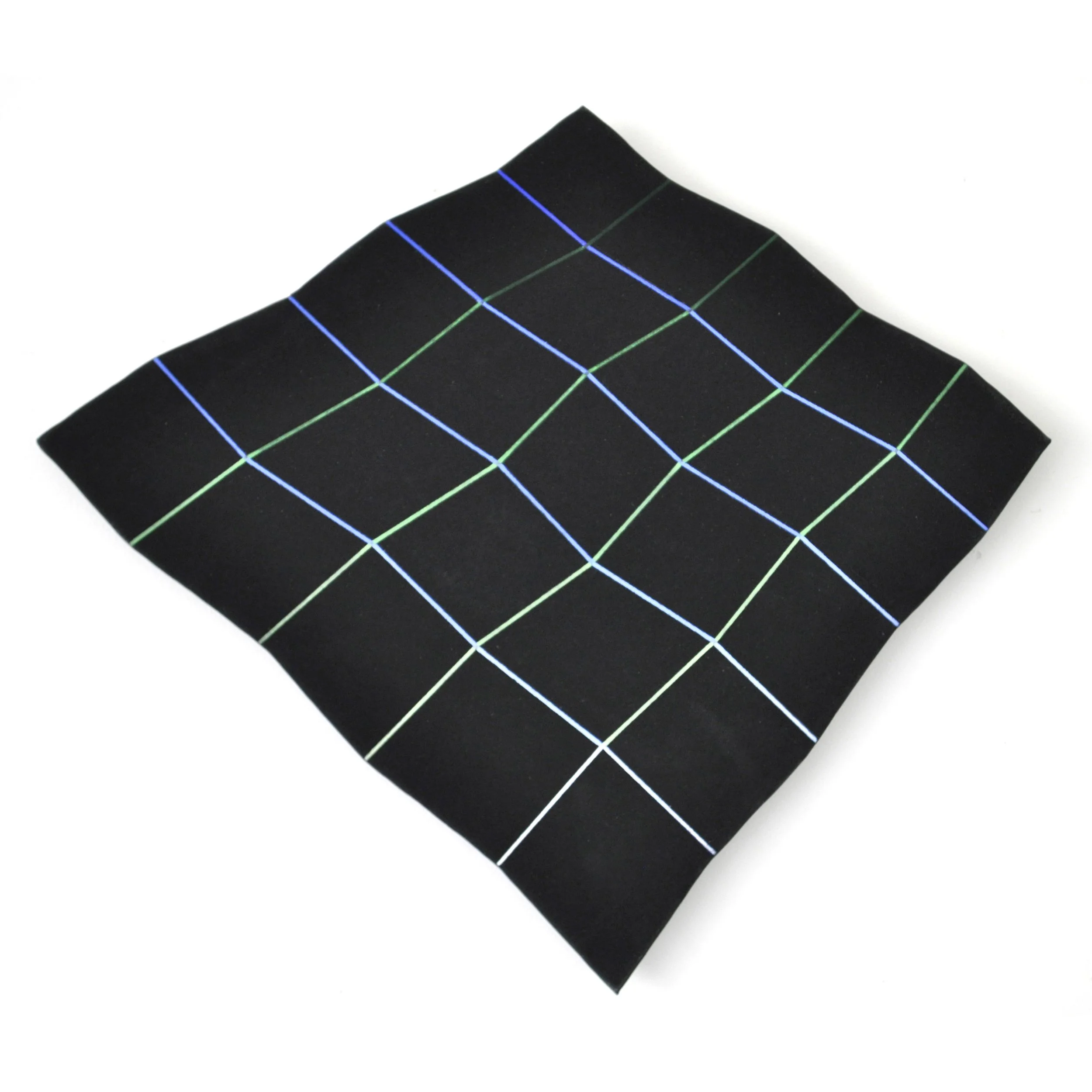
![Hans Jörg Glattfelder]()
Refraktion an der Horizontalen, 2016
acrylic, canvas mounted on wood, 146 x 184 cm
-
![Hans Jörg Glattfelder]()
8 Stufen in bewegter Grenze, 2012
Acrylic on canvas mounted on wood, 48 x 55 cm
-
![Hans Jörg Glattfelder]()
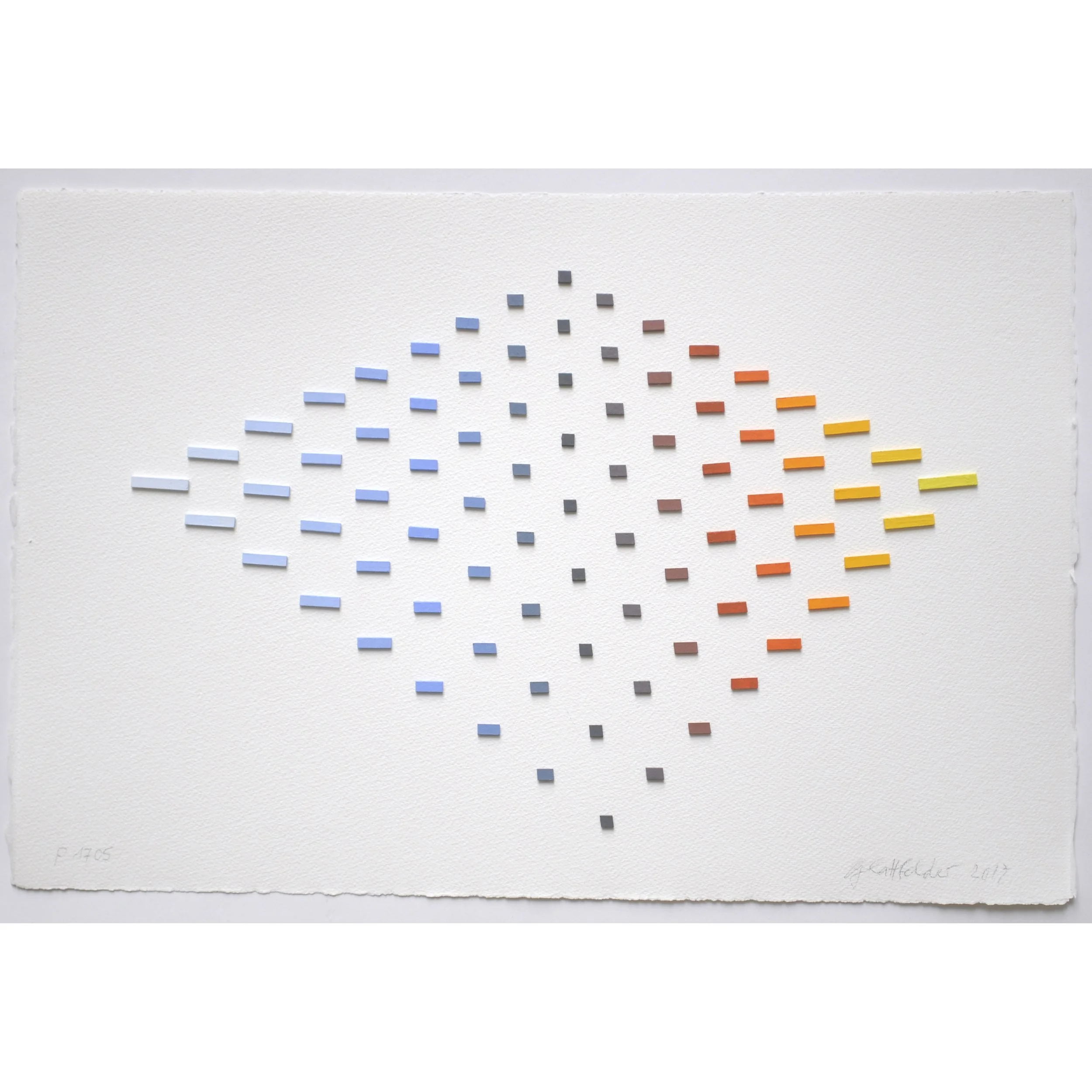
Untitled P1705, 2017
Acrylic on cardboard glued onto paper, 38.5 x 57 cm
-
![Hans Jörg Glattfelder]()
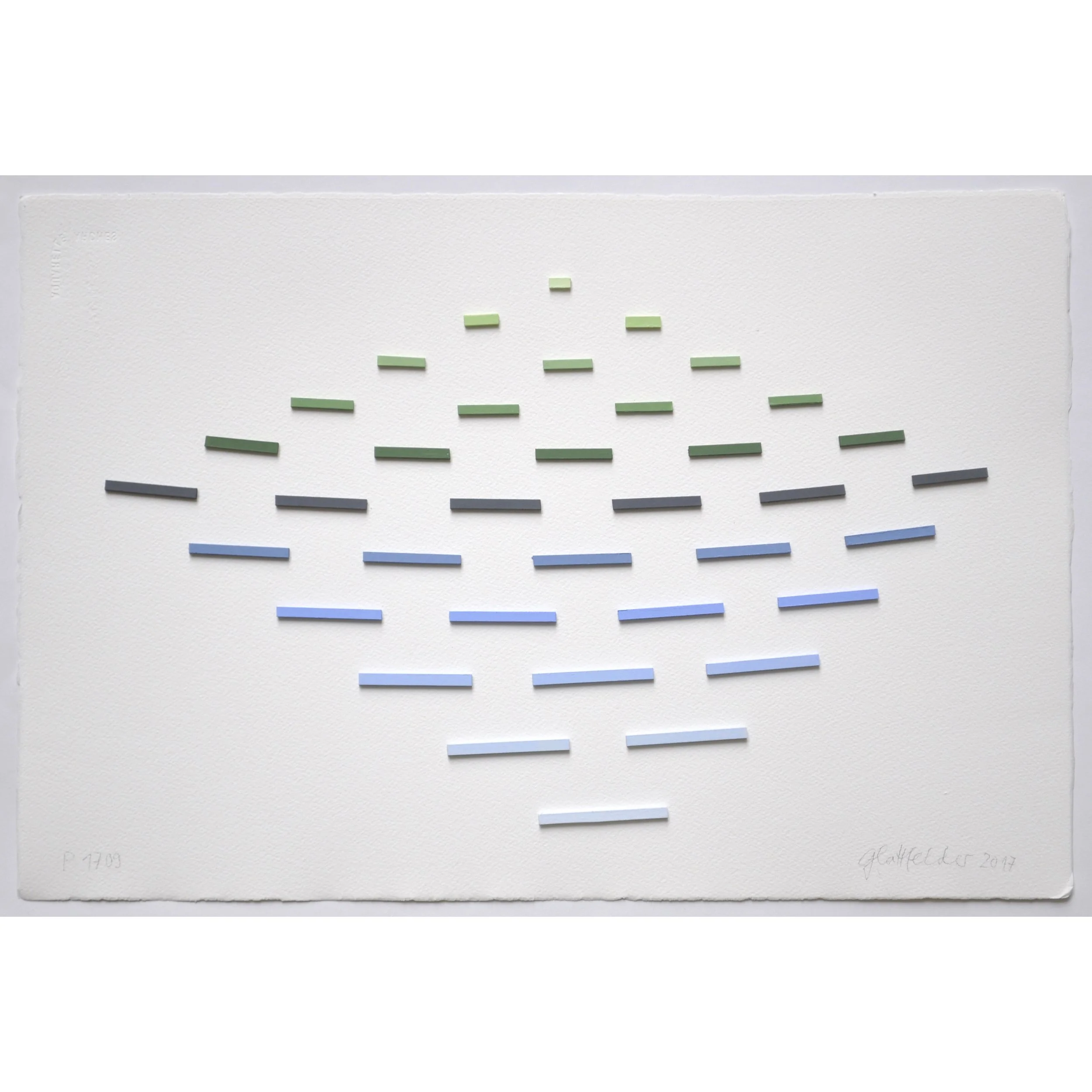
Untitled P1709, 2017
Acrylic on cardboard glued onto paper, 38.5 x 57 cm
-
![Hans Jörg Glattfelder]()
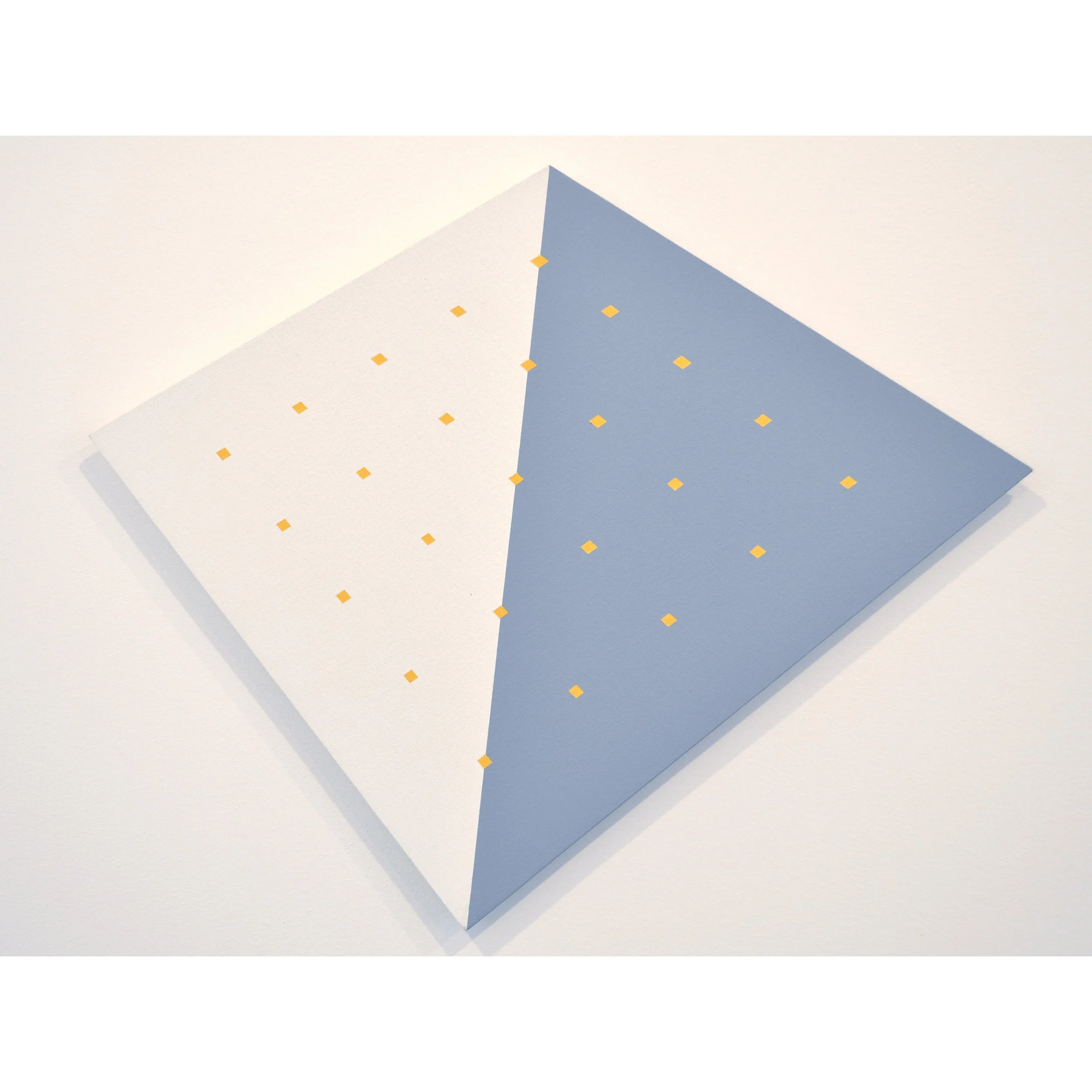
Gruppe und Teilung, 1999
Acrylic on canvas mounted on wood, 45 x 55 cm

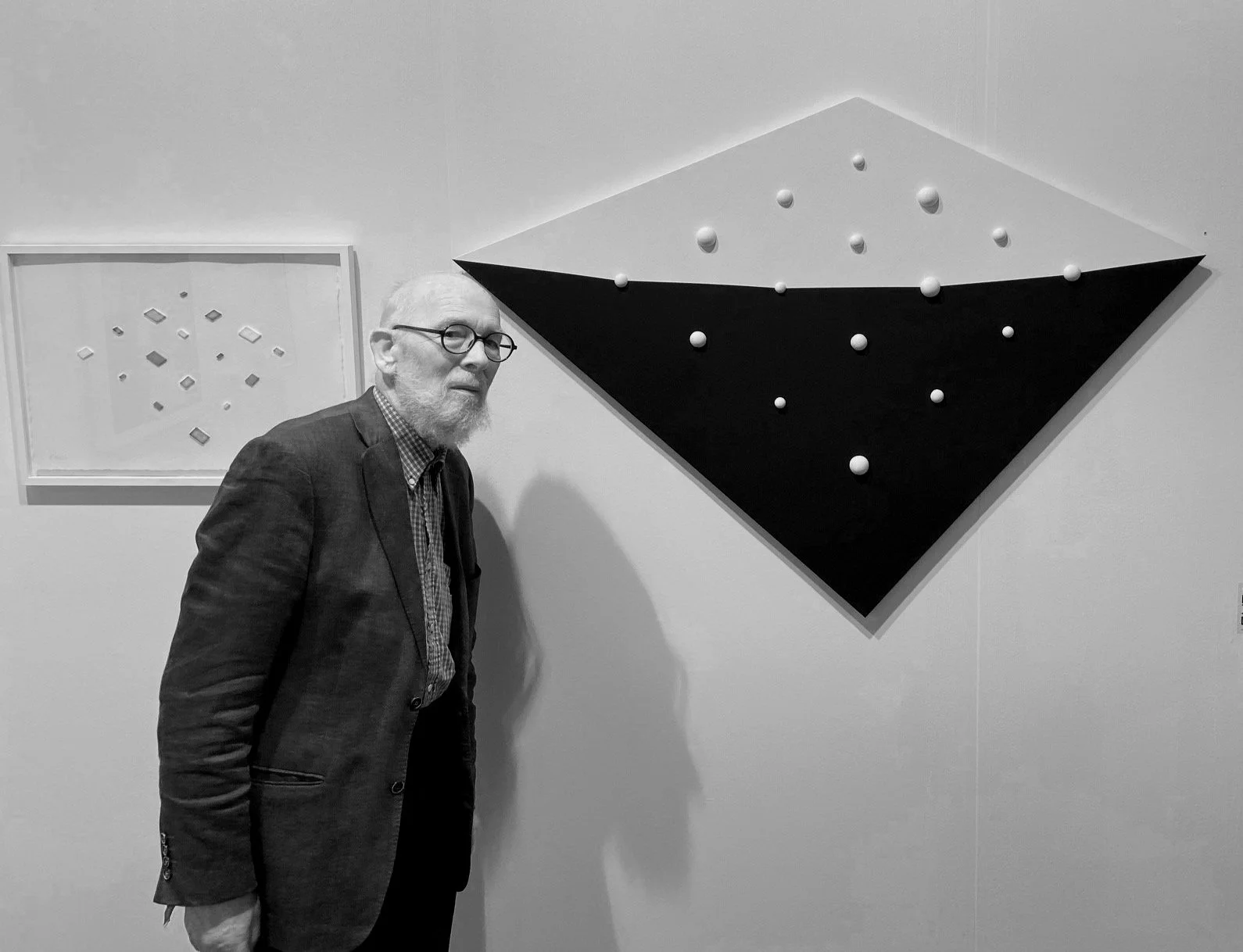
« It is in this spirit of wonder that I conceive my paintings and reliefs. And it is in this state of mind that these works fully reveal themselves to those who observe them. In and through a work thus conceived, one finds a privileged space to reflect on one's own perception, to "perceive perception," in particular the perception of space. This is the main reason why I situate my research—whose phenomenological roots are evident—within the tradition of concrete art: it is the only artistic movement that, from its origins in 1930, effected the revolution of shifting intentionality in the artwork from the signified to the signifier, from content to sign »
HANS JÔRG GLATTFELDER
Born in 1939 in Zurich, lives and works in Basel, Switzerland
The Swiss artist Hans Jörg Glattfelder is one of the leading contemporary representatives of Concrete Art. After two years of study at the University of Zurich, where he began studying law, then art history and archaeology—studies he abandoned in 1961—he became involved in a social development project in Sicily. He then attended the Academy of Fine Arts in Rome and in 1963 settled in Florence. Initially influenced by the thinking of "Zurich Concrete Art," the rigorous architecture of the Florentine Renaissance inspired in him a highly personal pictorial interpretation.
Following his studies, Glattfelder quickly presented his first solo exhibition at the "Numero" gallery in Milan in 1966. With the poet Claudio Popovich, he edited the art journal "Comunicazione" in Florence. In a pamphlet, Glattfelder proposed the anonymous production of artworks using industrial techniques. He put this theory into practice by producing pyramidal thermoplastic elements which he assembled into colorful reliefs. Over the years, the artist participated in numerous group exhibitions of the European Constructivist movement with his constructions based on systematic structures. In 1970, he established his home in Milan.
In the Lombard city he frequented the artists Mario Ballocco, Antonio Calderara, Gianni Colombo and Mario Nigro. His interest in the relationship between art and science intensified; he attended the lectures of Ludovico Geymonat; the research of the cyberneticist Silvio Ceccato awakened his curiosity to learn about the recent evolution of geometric thought and contemporary spatial representations.
Glattfelder cultivates a particular affinity for the relationship between space and surface, which is indeed the undisputed star of his art. However, Glattfelder's work reveals a second connection: while the artist is firmly rooted in the tradition of concrete art, he does not hesitate to break with order by introducing the illusionistic representation of depth. Once the threshold of Euclidean space is crossed, his plastic elements acquire new characteristics by taking on new dimensions. This shift from a two-dimensional structure to a more complex spatial structure finds an exemplary illustration in his "Non-Euclidean Metaphors" series, conceived by the artist in the late 1970s.
In 1982, he wrote a pamphlet against the cult of irrationalism in contemporary art and defined his own position as "meta-rationalism." By this term, he meant a use of visual language where rationality is simultaneously questioned and emphasized as a central theme. He saw it as a necessary first step toward a reliable dialogue between science and the arts. In 1990, he spent a year in New York on a scholarship from the City of Zurich. There, he regularly met with Leon Polk Smith. A kind of mannerism in Glattfelder's concrete abstraction adds a poetic dimension to his work, where the image risks leading the observer astray into an infinitely more complex interpretive journey.
Works in museums and public collections
Geneva Museum of Art and History
Kunsthaus Zürich
Museum of Konkrete Kunst, Ingolstadt
Josef-Albers-Museum, Bottrop
Museum of Modern Art, Parma
Museum of Modern Art, Turin
Space for Concrete Art, Mouans-Sartoux…
Price
Winner of the 2023 Nemours Prize
Selection of works available in the shop
Selection of the main exhibitions
2025, Arithmeum Museum, Bonn, Germany
2021, Zentrum für Kunst und Wissenschaft, Mainz
2020, Rappaz Museum, Basel
2019, Museum für konkrete Kunst, Ingolstadt
2013/14, Haus Konstruktiv, Zurich
2013/14, Vasarely Museum, Budapest
2010, Kunsthaus-Rehau, Germany
2008, Ludwig Museum im Deutschherrenhaus, Koblenz
2007, Museum im Kulturspeicher, Würzburg
2006, Museum für konkrete Kunst, Ingolstadt
2004, Espace de l'art concret, Mouans-Sartoux
1999, “Constructive Metaphors”, Museum of Concrete Art, Ingolstadt
1992, Retrospective exhibition, Josef-Albers-Museum, Bottrop


3000€
Acrylic on cardboard glued onto paper (framed)
38.5 x 57 cm
Free collection at the Gallery or delivery upon request (quote available).
←Hans Jörg Glattfelder | ←Original works | ←Store