
-
![Gottfried Honegger]()
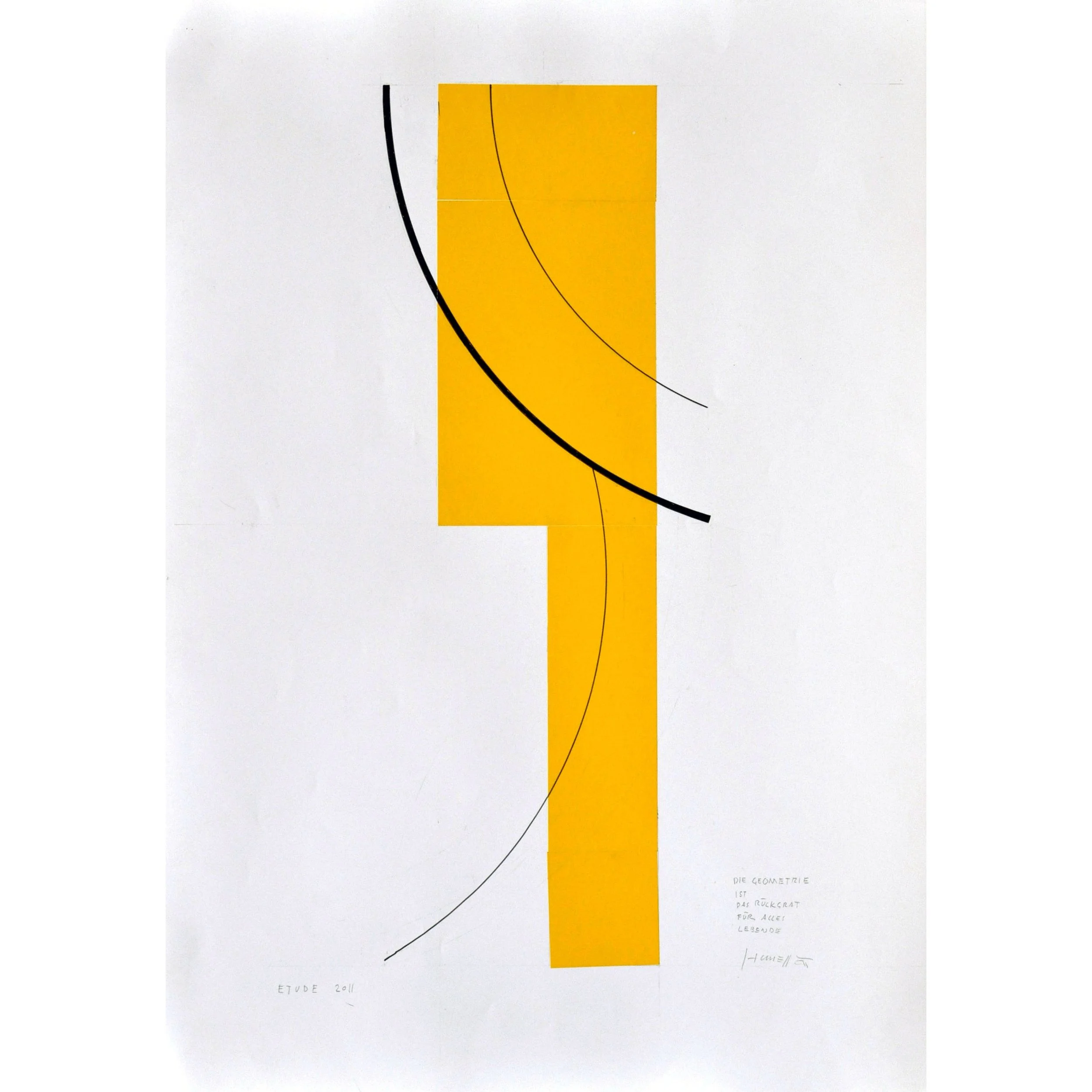
Study 2011 Die Geometrie ist...
Collage and gouache on paper, 100 x 70 cm
-
![Gottfried Honegger]()
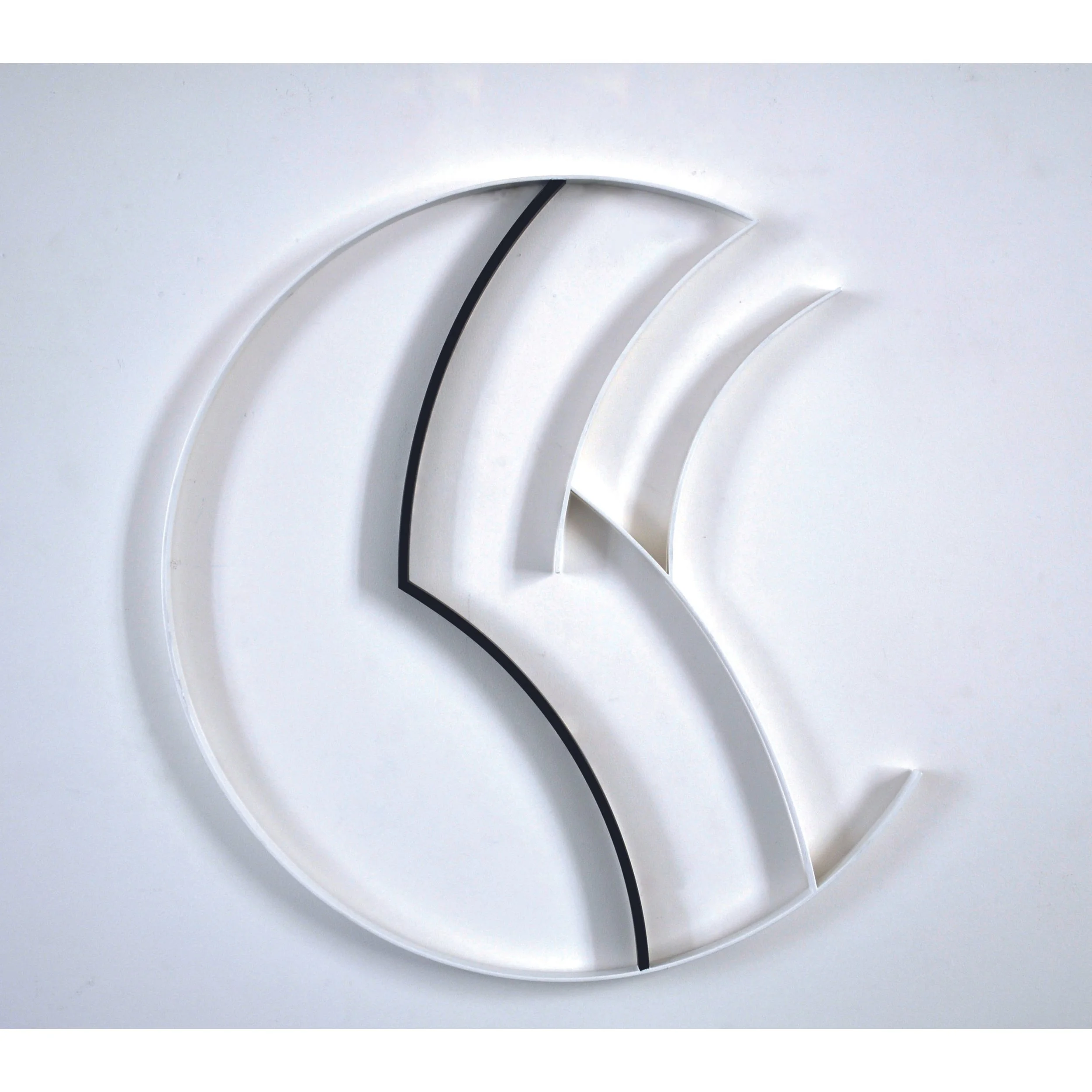
Relief Z 1477, 2007
Lacquered iron, painted aluminum, 80 cm diameter
-
![Gottfried Honegger]()
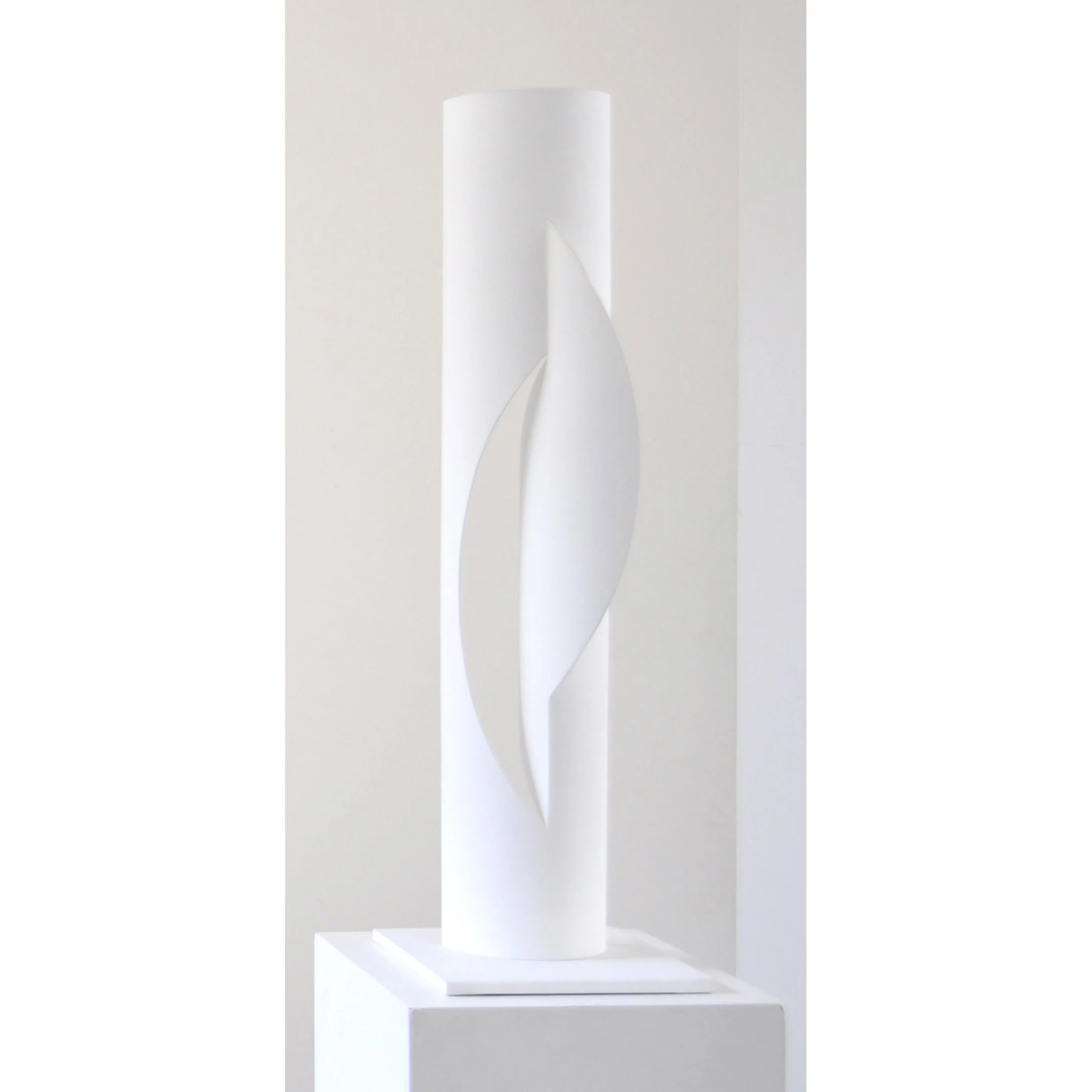
Untitled C 155 1/2, 2004
Painted aluminum, 81.5 x 24 x 24 cm
-
![Gottfried Honegger]()
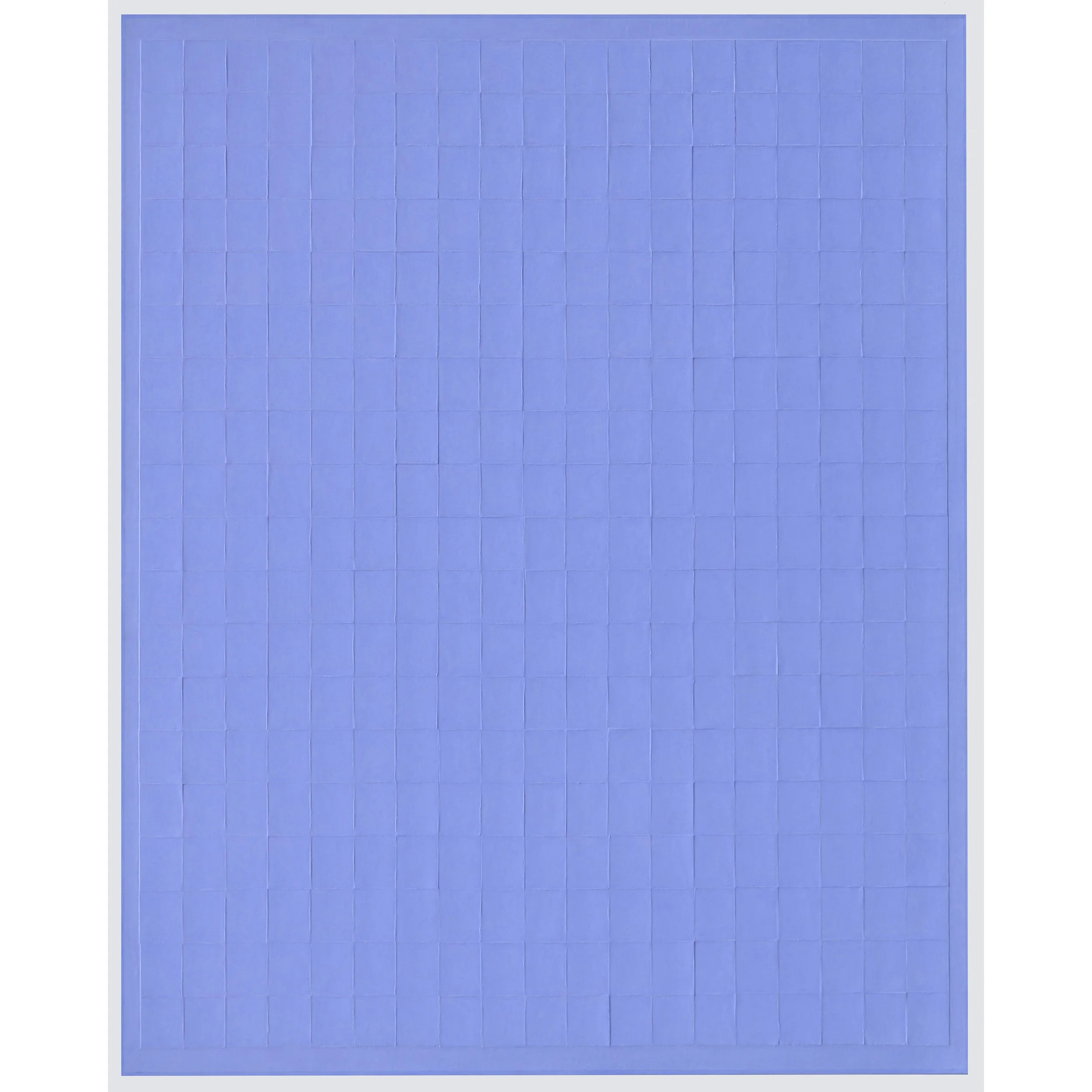
Relief Painting Z-819, 1979
Collage, acrylic on cardboard mounted on canvas, 150 x 120 cm

" The sensory and the spiritual are the two human values that we possess, that we need, and that we
must manage. "
GOTTFRIED HONEGGER
Born in 1917 in Zurich, died in 2016 in Zurich.
Gottfried Honegger is internationally recognized as one of the leading figures of Constructivist-Concrete Art. Beginning his career with an apprenticeship as a window dresser, he rented his first studio in 1936, and alongside his work as a graphic designer, decorator, and photographer, he devoted himself to artistic creation. He moved to Paris in 1939, where he discovered and became enamored with Cubism. In the late 1940s, Johannes Itten invited him to teach at the Zurich School of Applied Arts, where he had previously studied for a year. There, he forged close ties with key figures of Zurich's Concrete Art movement, including Max Bill, Richard Paul Lohse, and Camille Graeser. Ten years later, he moved to New York. There, initially working as a graphic designer, he organized his first solo exhibition in 1959 and established contacts with artists such as Mark Rothko and Sam Francis.
Back in Paris, Honegger devoted himself entirely to art, while maintaining his interest in the applied arts. He was convinced that art should be interwoven with life and everyday existence, a conviction that reflected his belief that art, life, and the everyday are inseparable. His social commitment was undeniable, and he considered art a commitment to society. For Honegger, art should not be seen as an individual pursuit, but rather as the collective expression of the spirit, contributing to the dissemination of beauty and harmony. According to him, elemental and timeless beauty inspires hope, as it testifies to the universal desire for construction, integrity, unity, health, freedom, and vitality. From the late 1950s onward, at the beginning of his career as an independent artist, Gottfried Honegger radically transformed his artistic practice, moving from the traditional canvas to an exploration of three-dimensionality. He experimented with square and rectangular pieces of cardboard, which he applied to the canvas, thus crossing the threshold of illusionistic painting into the realm of concrete abstraction. By applying oil or acrylic paint to these raised surfaces, he created plays of light and shadow that accentuated their sculptural character. In his creative process, Honegger incorporated the element of chance, even using dice to decide the arrangement of the cardboard pieces, drawn to the unpredictable forms that emerged from this genuine randomness. He also adopted computers quite early on as an experimental tool, using simulations of dice rolls to generate random configurations that would guide his compositions of circular segments. The period extending to 1980 is marked by the invention and development of the Relief Painting, a revolutionary artistic form that became a pivotal element in his work. These reliefs are produced by applying paint directly from the tube with a stick, a method that restricts personal expression and opens the door to a range of unexpected results, thus leaving room for the unknown. This deliberate gesture of minimizing personal control over the work is complemented by a painting practice in which Honegger plays on the associations between different layers of color to create a vibrant hue. The lower layers, randomly distributed and conforming to a geometric grid, do not seek to imitate but rather serve as a background to a chromatic abstraction that evokes the nuances of life.
Honegger continued his exploration of the ambivalence between conceptual structure and sensory perception through his series of relief paintings entirely covered in graphite, begun in the early 1970s. The play of light on these metallic surfaces modulates, reveals, or further complicates the geometric rigor of the compositions, thus confirming the subtlety of his approach where mathematical calculation is combined with artistic sensibility. The artwork thus undergoes a democratization, becoming collective and anonymous. The painting-I becomes the painting-we. In the early 1990s, Gottfried Honegger moved away from the tradition of painting and its limitations imposed by the frame to create "objects" in aluminum. These works follow in the footsteps of the questions raised by conceptual and minimalist artists. He turned away from the traditional techniques associated with painting, choosing instead to employ industrial methods and materials to create his sculptures. His convictions regarding responsibility, equality, and solidarity are reflected in his paintings, sculptures, reliefs, collages, drawings, graphic works, writings, and creations for public spaces. Honegger's works invite viewers to introspection stimulated by his exploration of color, geometric formal language, and the materials he employs, thus fostering the flourishing of the imagination and the search for personal meaning within his art. In 1975, Honegger had the honor of representing France at the São Paulo Biennial. His career is marked by numerous distinctions, including the City of Zurich Art Prize and the appointment as Commander of Arts and Letters, the highest artistic award in France, which was bestowed upon him in 1985. Through his stained glass windows commissioned for various religious buildings – such as Nevers Cathedral, the church of Mouans-Sartoux, or Liège Cathedral – Honegger achieves a harmony between art and architecture, where form and color meet in the brilliance of light.
Works in museums and public collections
2005, Motorway interchange, Hohenems, Austria
1999, National Gobelins Manufactory,
1998, University Dental Institute, Zurich
1997, Anagnina metro station, Rome
1997, La Défense, Société Générale, Paris
1991, Kreissparkasse, Reutlingen, Germany
1988, Public Park, Seoul, South Korea
1986, Lantern Tower, La Rochelle
1984, Régie Renault, Cacia, Portugal
1975, First National Tower Bank, Tulsa, USA
1953, Waidspital, Zurich
Selection of the main exhibitions
2025, Space for Concrete Art, From the Singular to the Plural
2015, Center Pompidou, Paris, Gottfried Honegger
2013, Galerie Lahumière, Paris, Gottfried Honegger. Reconciliation with the wall
2007, Museum Liner, Appenzell, Gottfried Honegger-Geheimnis der Geometrie
2004, La Verrière Hermès, Brussels, Gottfried Honegger. Art is liberating
1999, Cartier Foundation for Contemporary Art, Paris, Metamorphosis. Retrospective
1984, Galerie Konstruktiv Tendenz, Stockholm, Gottfried Honegger
1978, Museum of Modern Art of the City of Paris, Retrospective
1970, Grand Palais, Paris • 1968, Gimpel Fils Gallery, London, Gottfried Honegger. Painting reliefs
1963, Galerie Denise René, Paris
1960, Martha Jackson Gallery, New York, Gottfried Honegger: Swiss Purist
1949, Chichio Haller, Zurich
Selection of works available in the shop


Price on request
Painted aluminum
65 x 20 x 20 cm
Free collection at the Gallery or delivery upon request (quote available).
←Gottfried Honegger | ←Original Works | ←Store