
-
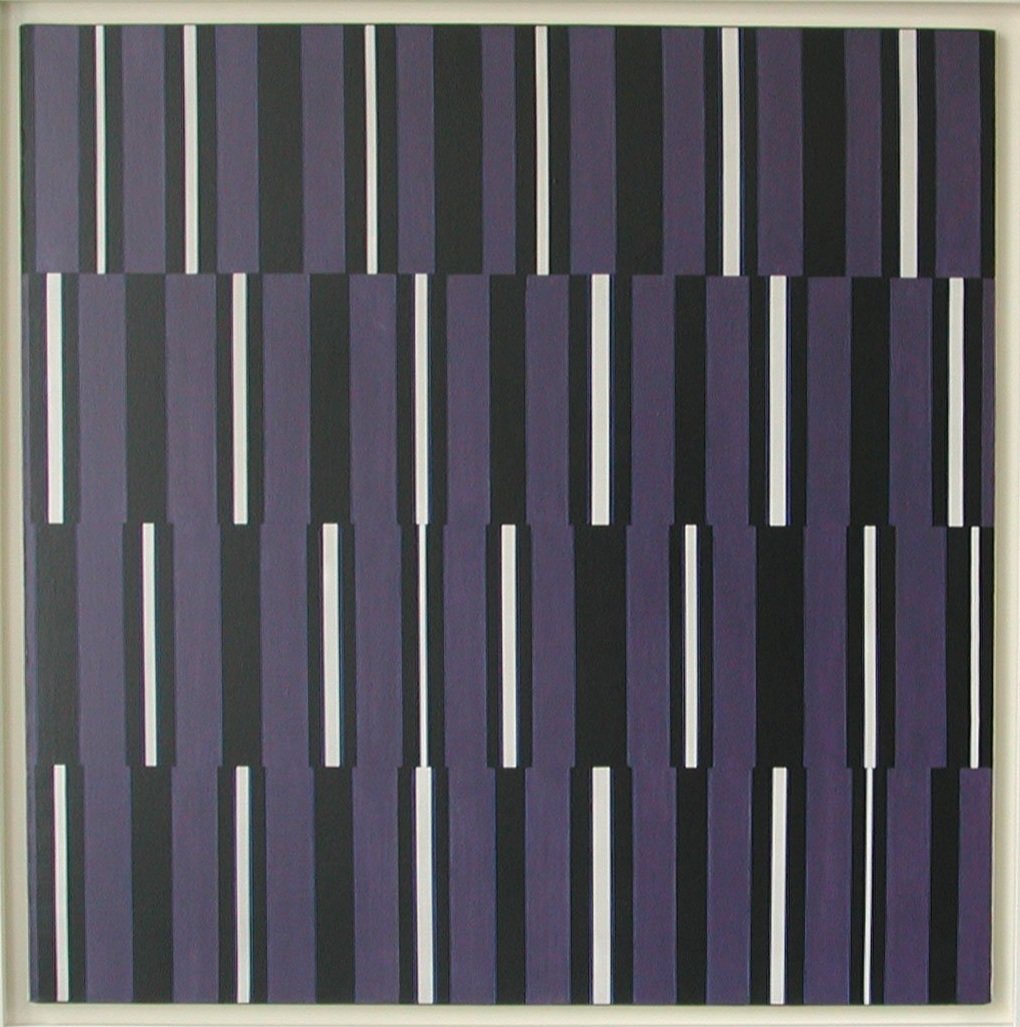
![Günter Fruhtrunk]()
Orgelpunkt, 1965
Acrylic on canvas, 124.5 x 123.5 cm
-
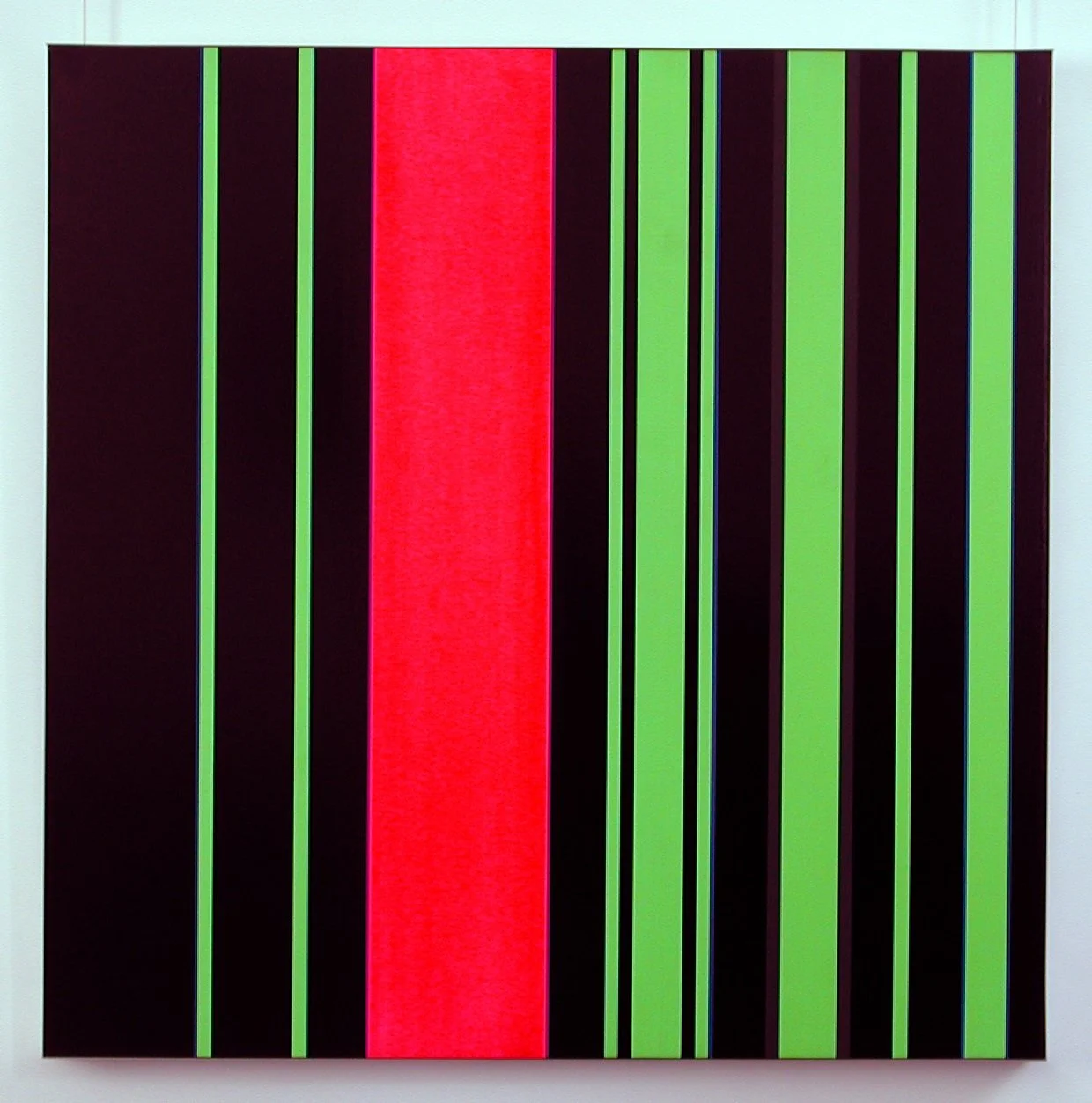
![Günter Fruhtrunk]()
Rot aus Schwarz aus Grün ca.1971
Acrylic and casein on canvas, 160 x 158 cm
-
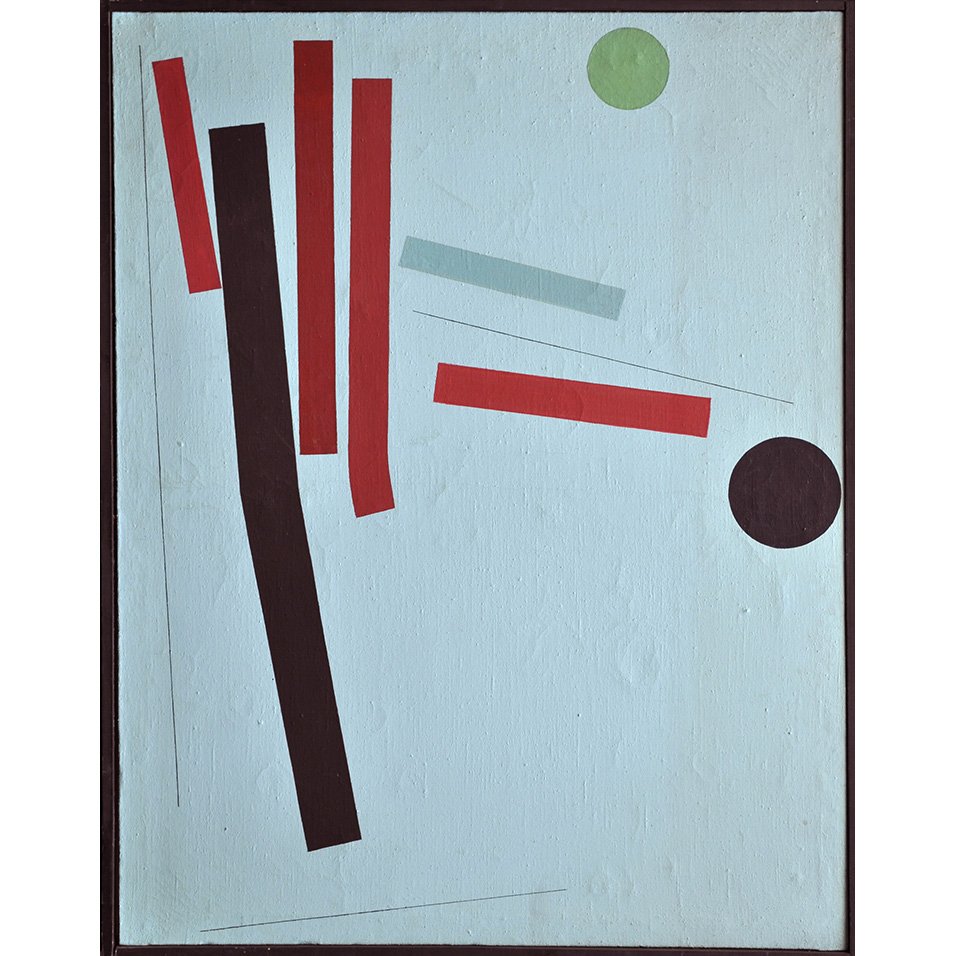
![Günter Fruhtrunk]()
Übergang zur Selbst-Bewegung, 1957
Oil on canvas, 124 x 98 cm
« My pictorial means are the action of color, sensual energy, non-color as energy, and always the setting of rhythm as the most intimate principle of the activity of the mind. »
GÛNTHER FRUHTRUNK
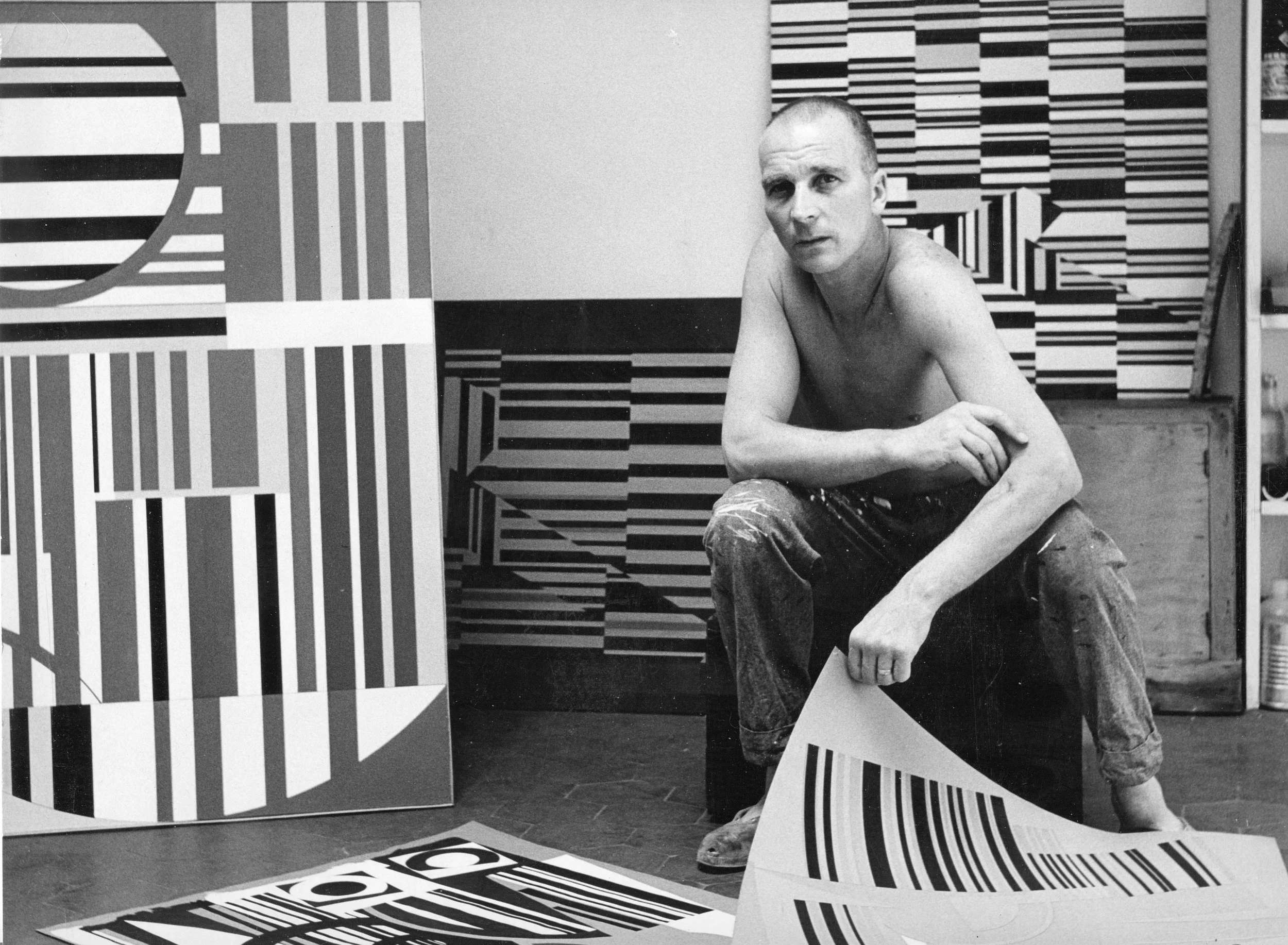
Born in 1923 in Munich and died in 1982 in Munich.
After beginning his architectural studies at the Munich Technical University, Günter Fruhtrunk volunteered for the army in 1941. During this time, he painted watercolors. In 1945, he began formal art studies under William Straube, a former student of Matisse and Hölzel. His first exhibition was held in Freiburg in 1947. Although he worked in Fernand Léger's studio from 1952, it was not until 1954 that he moved to Paris, where he lived until his appointment to a teaching position at the Munich Academy of Fine Arts in 1967. In Paris, he was particularly drawn to the "abstraction-creation" movement. He met Auguste Herbin and joined the circle of artists associated with the Denise René Gallery.
Fruhtrunk's work developed in distinct stages: he moved from constructivism and the predominance of precise geometric forms to a clearer emphasis on color. His works between 1950 and 1954, primarily small-format pieces, present geometric forms floating freely in space, where image and motif remain separate levels. In the late 1950s and 1960s, he abandoned a rich vocabulary of geometric forms—such as the circle, semicircle, square, rectangle, and cross—in favor of a style where all curves are discarded in favor of surfaces traversed by bands of varying widths, horizontal, vertical, or diagonal. In this way, image and motif merge, and color gains in importance and independence. As for the works of the 1970s and early 1980s, they follow the canvases of earlier periods, characterized by predominantly diagonal surfaces, and evolve towards simpler compositions. These compositions, resembling a continuum, are defined solely by rhythmic progressions of colored bands and their contrasting edges in a different color. The emancipation of color is fully achieved.
For Fruhtrunk, realism is fundamentally dynamism, a play of forces made up of multiple interferences. His paintings are optical provocations: they always slightly exceed the eye's capacity for accommodation. For him, it is not a matter of arranging colored surfaces in a fixed two-dimensional space. He seeks to infuse his compositions with the dynamism and mobility characteristic of the work of a Pollock or a Dubuffet, but using a radically different, even opposing, vocabulary and syntax.
It is in this unprecedented approach, and in its audacity, that the originality of his work lies. It is lyrical in a concrete sense, evoking transparency and silence, the simplicity of the series and the consequence of repetition, the clarity of sound and the freedom of association. In Fruhtrunk's work, the distribution of dynamic architectural structures and the mutual penetration of particles generate intense movement. The light-filled space emanating from his canvases is suggested by the value of this distribution and its density; it becomes perceptible only within its zones of interaction. The intensity of the optical vibrations results from the quantitative concentration of structural particles, which alter or lose their own chromatic quality depending on the zones of interaction. They destroy themselves while constantly reconstituting themselves. The erosion of sharp outlines lends maximum luminosity to the colors used in their purest form, thus creating the impression of continuous becoming. Each element only acquires meaning in relation to its surroundings, in a process of mutual destruction and reconstruction. As in a Bach fugue, the intervals establish the rhythm of the internal movement. With deliberately limited means, Fruhtrunk aims for a boundless expression where space becomes the melody of the world. Fruhtrunk manages to logically link the components of his works within a luminous atmosphere, readily introducing rupture, slippage, or displacement to avoid repetition or monotony. Thus, this exercise, in which the artist effaces himself to reveal the true nature of things, transforms, like contemplation, into a testament to a presence.
His paintings, composed of diagonals, bands, and rhythmic lines, are integral parts of the collections of numerous museums, such as the Centre Pompidou in Paris, the Kunstsammlung NRW, the Lenbachhaus in Munich, and the Neue Nationalgalerie in Berlin. With his independent and uncompromising work, Günter Fruhtrunk is one of the most remarkable representatives of geometric concrete painting of the post-war German generation.
Selection of prints available in the shop


Works in museums and public collections
Neue Nationale Galerie, Berlin, Germany
Daimler Chrysler Contemporary, Berlin, Germany
Museum of Konkrete Kunst, Ingolstadt, Germany
Kunstmuseum Bochum, GermanyLenbachhaus, Munich, Germany
Price
Bourdelle Prize, 1959
Jean Arp Prize, 1961
European Prize (silver medal), 1966
Burda Prize, 1967
Selection of the main exhibitions
2024, Lenbachhaus, Munich, Germany
2023, Kunst Museum, Bonn, Germany
2008, Städtische Galerie im Lenbachhaus & Kunstbau, Munich, Germany
2007, Museo de Arte de Sao Paulo, Brazil
2006, Neue National Galerie, Berlin, Germany
2005, Museum Wurth, Kunselsau, Germany
1993, Retrospective, Neue Nationalgalerie, Berlin, Germany
1984, Kunstverein, Braunschweig, Germany
1979, Staatsgalerie für moderne Kunst, Munich, Germany
1974, Galerie Denise René, Paris, France
1970, Retrospective, Museum of Modern Art of the City of Paris, Paris, France
1965, The Responsive Eye, Museum of Modern Art, New York, USA
1972 edition.
Original silkscreen print numbered and signed on the back - 70 x 48 cm – edition of 125 copies.
←Günter Fruhtrunk | ←Prints | ←Store