
-
![Claude Pasquer]()
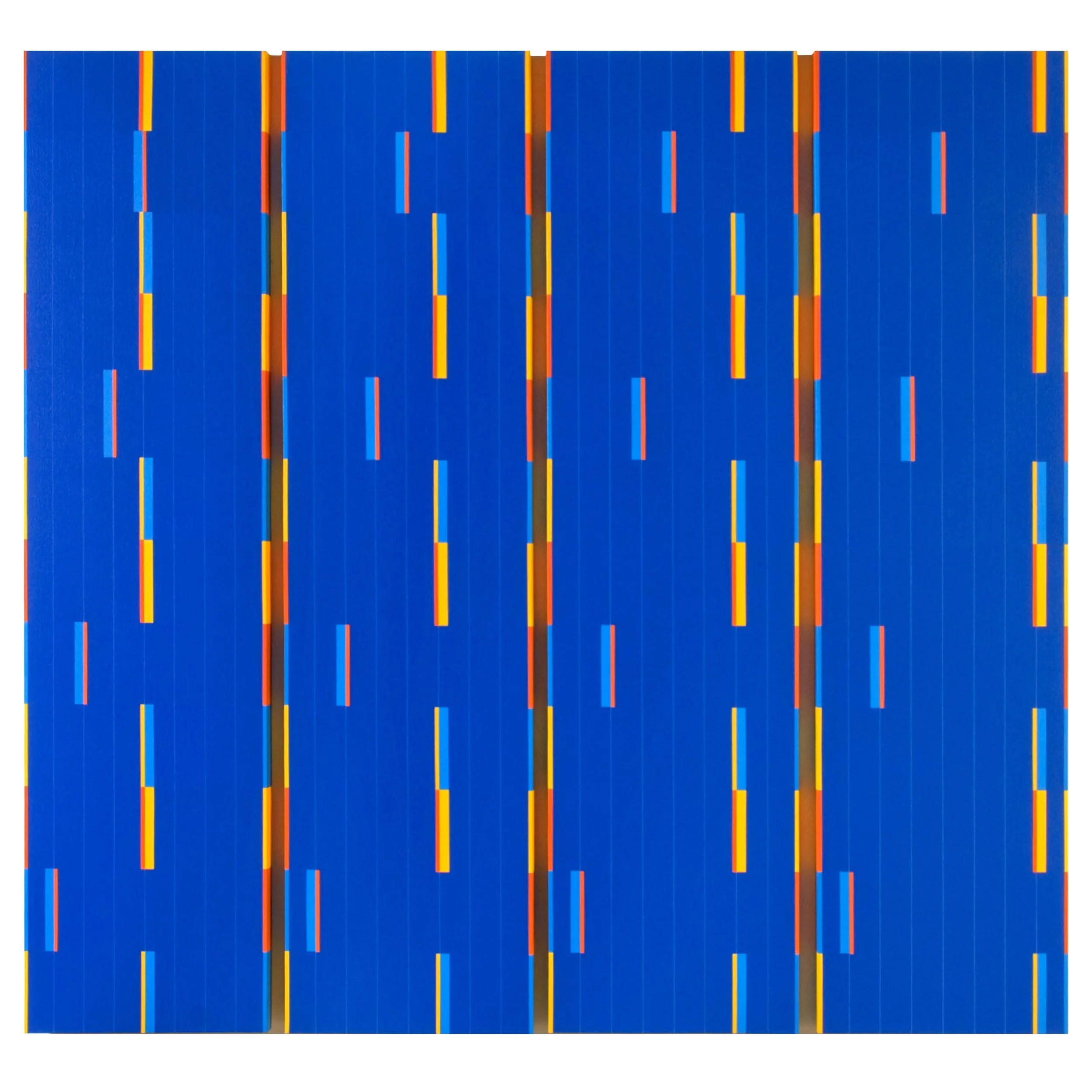
Vertical score no. 168, 2010
Acrylic on canvas polyptych, 160 x 40 cm (x4)
-
![Claude Pasquer]()
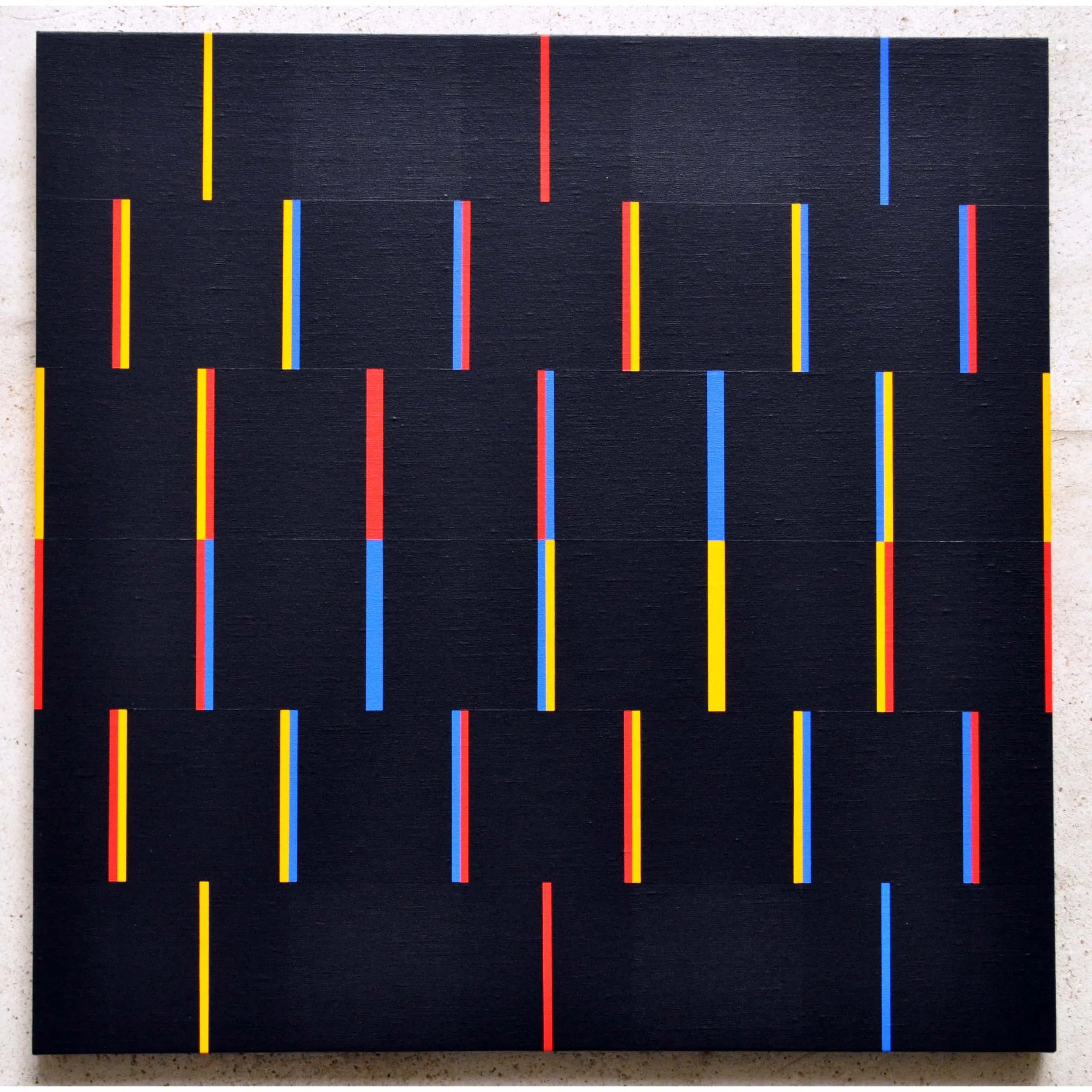
Vertical Partition No. 5, 2005
Acrylic on canvas, 100 x 100 cm
-
![Claude Pasquer]()
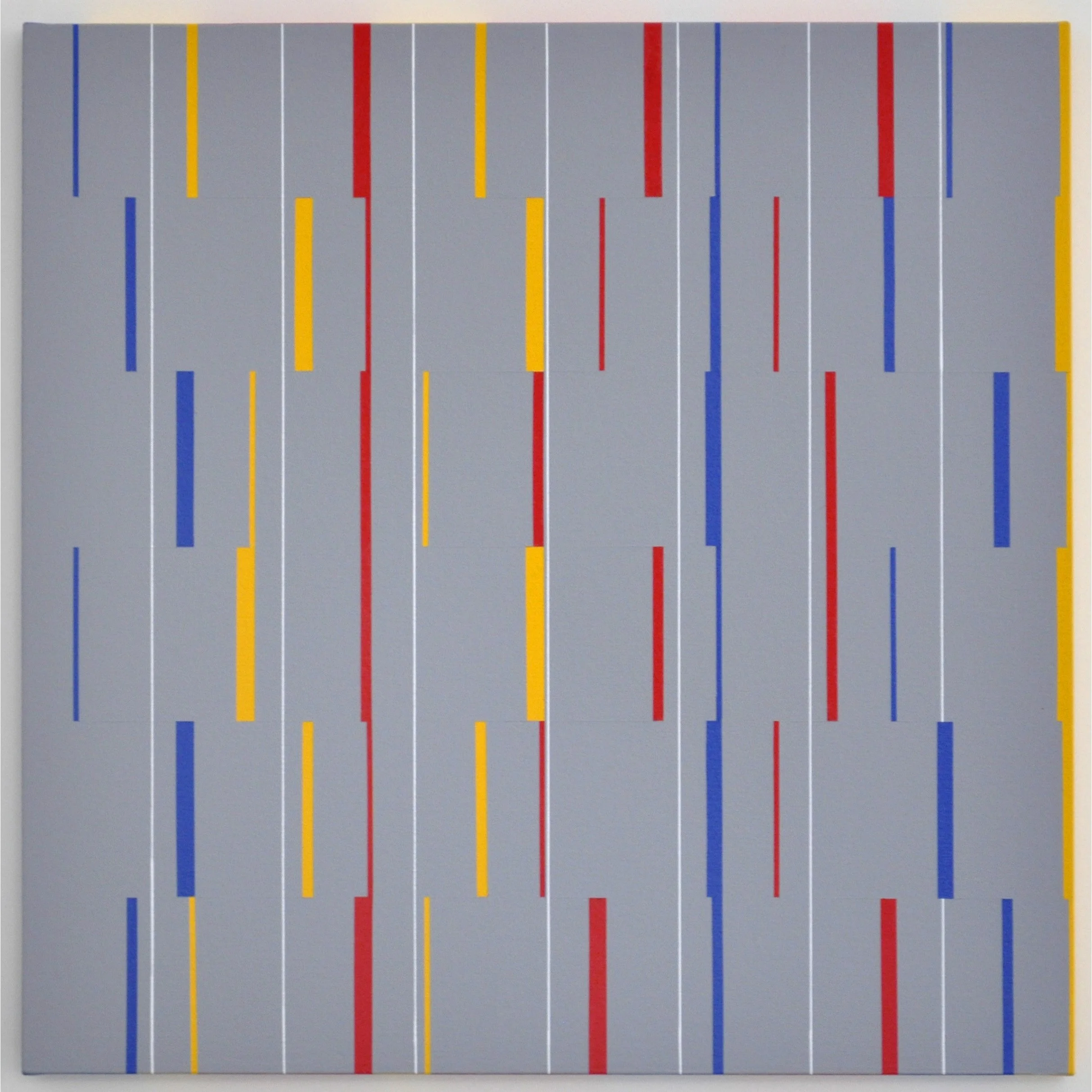
Vertical partition 3-6-9 n°XIII, 2005
Acrylic on canvas, 60 x 60 cm
-
![Claude Pasquer]()
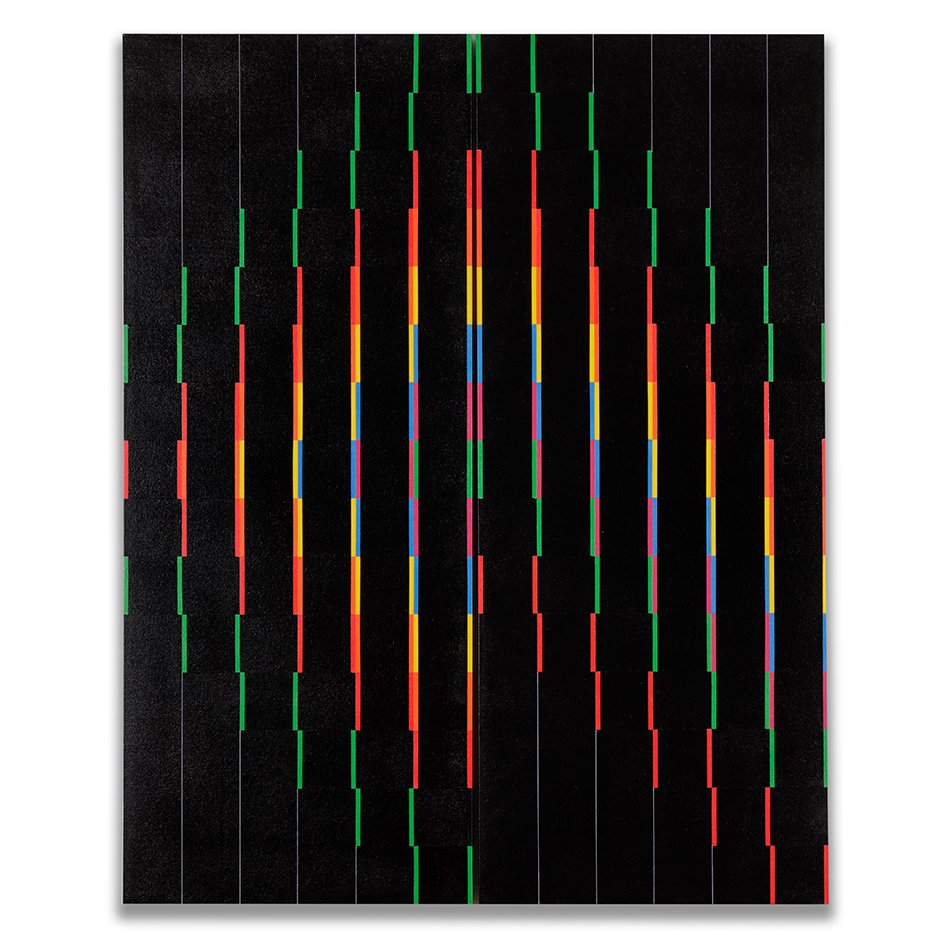
Diptych "Polyrhythm" No. 30, 2018
Acrylic on canvas, diptych, 120 x 100 cm
-
![Claude Pasquer]()
Polyrhythm No. 16 (diptych)
Acrylic on canvas, 96x100 cm
CLAUDE PASQUER
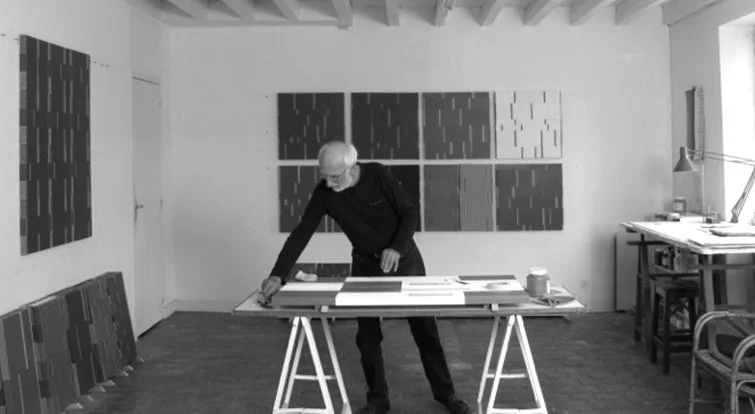
Born in 1937 in Le Mans, died in 2024 in Marogues (18).
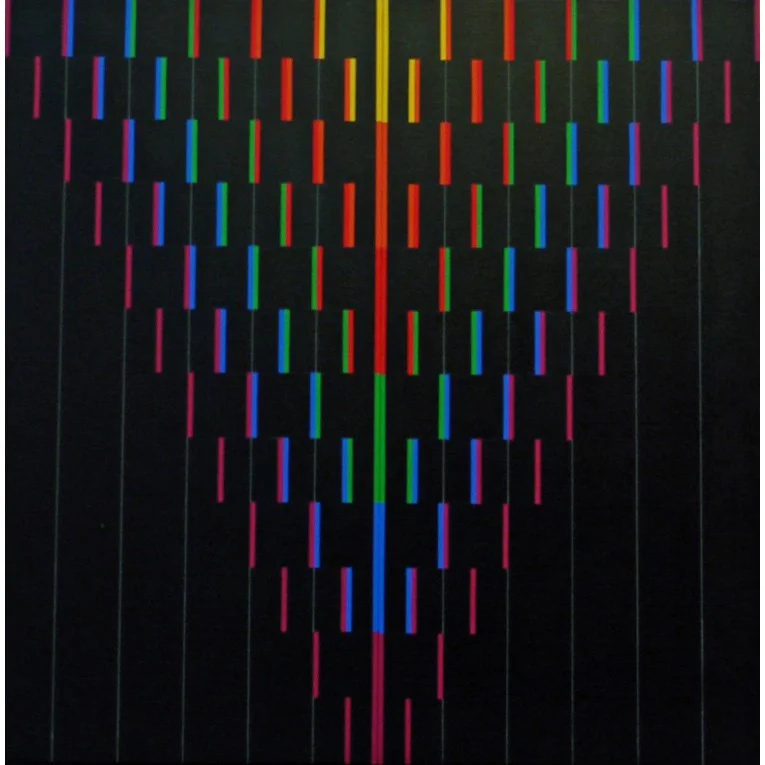
The artist constructs his pictorial space according to a network of horizontal and vertical lines, subdivisions supported by a pre-established digital scheme based on the principles of permutation, repetition, and translation.
Thought thus guides execution; the work cannot be different from what has been previously conceived, a postulate faithful in this sense to the principles of concrete art. These different spaces are first painted, then sufficiently covered with a layer of black, or white, or another color so that only marginal linear traces remain visible, punctuating the surface of the painting. Their colored presence at rhythmic intervals creates an optical illusion where motif and ground tend to reverse. This effect of animation, of back and forth, of movement, is further accentuated by the imperceptible presence of the concealed surface, which alters the luminosity of the background color.
These variations encourage the eye to follow the movement of the colors, to follow their progression within the limits of the painting and even beyond.
Movement, theme, rhythm, progression—these are all terms from the musical sphere that one finds oneself using to describe the works of Claude Pasquer. Like a composer, he takes hold of a theme and explores its variations methodically. His numerical combinations systematically construct the score. And from this rigor, unhindered by emotion, arise harmony and a contemplative dimension.
Laurence Fasel
“Following the strict logic of erasing the gesture, Claude Pasquer’s painting is applied with a roller to eliminate any subjective effect of the brushstroke. The forms are geometric and treated in flat planes. The entire surface of the canvas is taken into account. The planes, sometimes black and white, but more often colored, shift without ever leaving a void. The conception of the painting as a set of independent frames—treated as so many modules—allows for the continuation of the composition in a complex way by transferring the permutation to the fragmentation of the painting into a polyptych.”.
While the modules are constantly being recomposed, the series always project new plastic combinations. Consequently, the work generates its own dynamic. It is in perpetual becoming. What does it matter, then, if, of all the series conceived, premeditated, calculated, drawn, and catalogued, only a few figures or arrangements of figures find the opportunity to be implemented? The visitor who comes into contact with it quickly understands that they are entering a game that engages both the eye and the mind
Hubert Besacier
Works in museums and public collections
France: Rouen, Macon, Pontoise, Cambrai
Holland: Amersfoort
Switzerland: Zurich
Germany: Reutlingen, Hünfeld, Erfurt,
Italy: Milan, Calasetta
Sweden: Kiruna Lapland
Poland: Chelm
Hungary: Budapest
United States: Dallas
Argentina: Buenos Aires
Brazil: MADI Sobral Museum
Japan: Satoru Sato Museum
Selection of the main exhibitions
2025 “Tributes” Les Tanneries, Amilly (F)
2019 “Paintings” Labo24 gallery, La Borne (F)
2017 “Chromatic Fields” La Vitrine Gallery, Fribourg (CH)
2013 “Black: what it hides, what it reveals” La Vitrine gallery, Fribourg (CH)
2012 “Vertical Partitions” Lahumière Gallery Paris (F)
2012 “From black to white, color in motion” gallery Fribourg (CH)
2012 “System, Sequence, Series” work on paper Olivier Harlingue Buc (F)
2008 “Paintings” Atelier du soleil, Fraisse des Corbières (F)
2007 “Vertical Partition” Art in the chapels of St. Dedreno and St. Gérand
2005 “Trio suite n°2” with Janos Saxon, Orion Gallery, Paris (F)
2005 “Vertical Partitions 3,6,9” Art Tension Gallery, Bourges (France)
2004 “Journey 1964-2004” Maison de la Culture Bourges (F)
Selection of works available in the shop


1800€
Acrylic on canvas
60 x 60 cm
Free collection at the Gallery or delivery upon request (quote available).
←Claude Pasquer | ←Original Works | ←Store