
-
![Aurelie Nemours]()
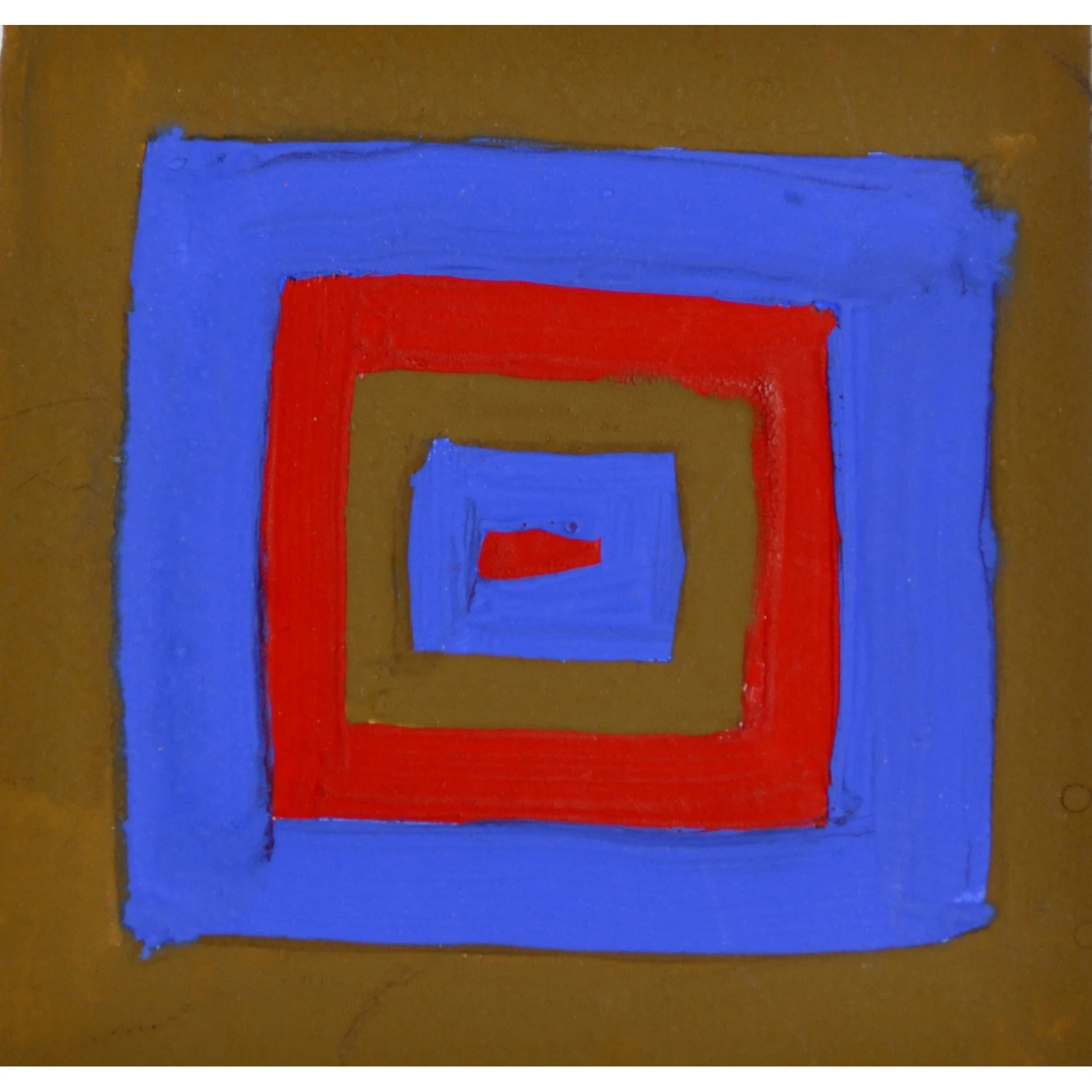
Untitled Re Rom 427 A4
Gouache, 8.5 x 9 cm
-
![Aurelie Nemours]()
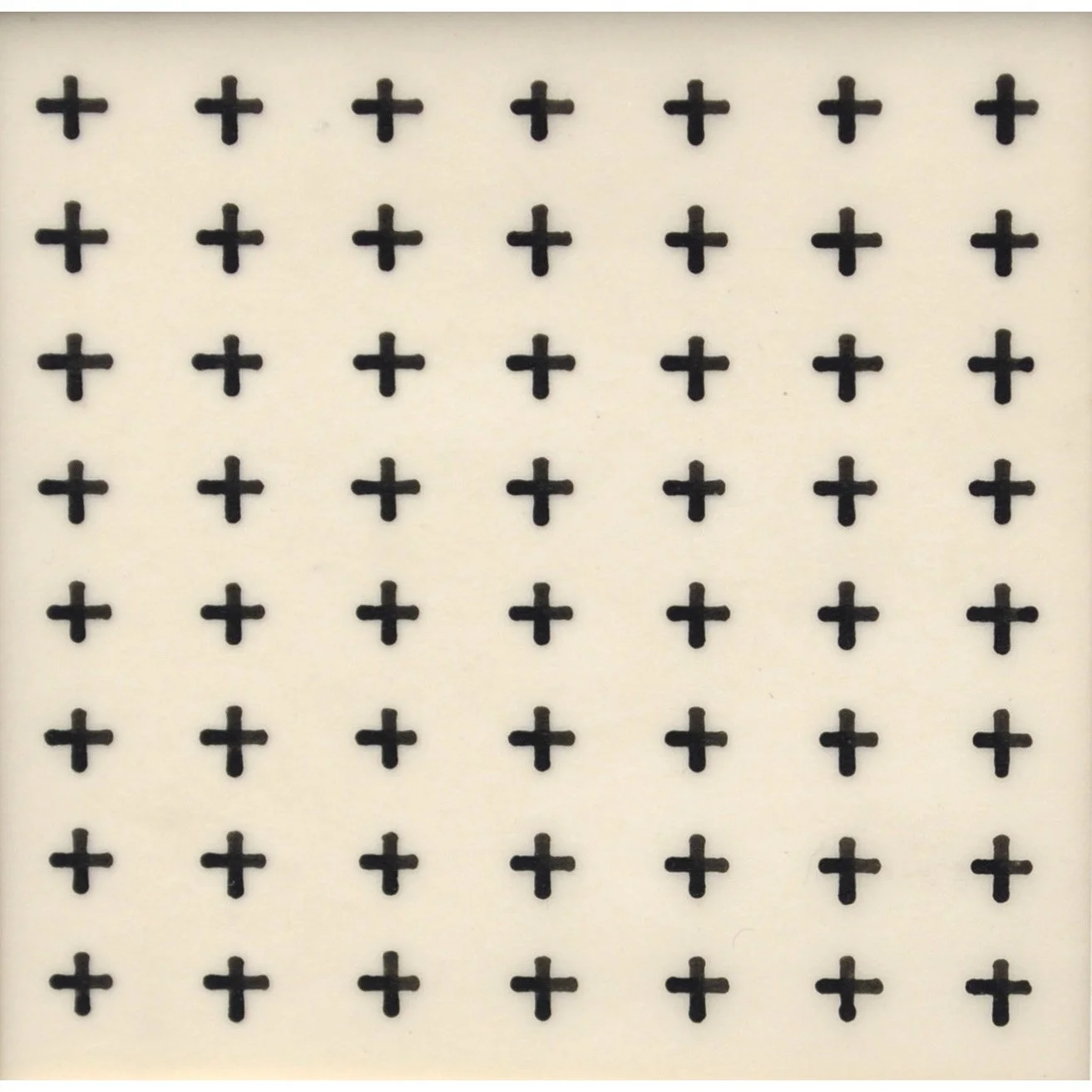
Millimeter rate after 1975 Re Rm 9
Ink on tracing paper, 20 x 12.5 cm
-
![Aurelie Nemours]()
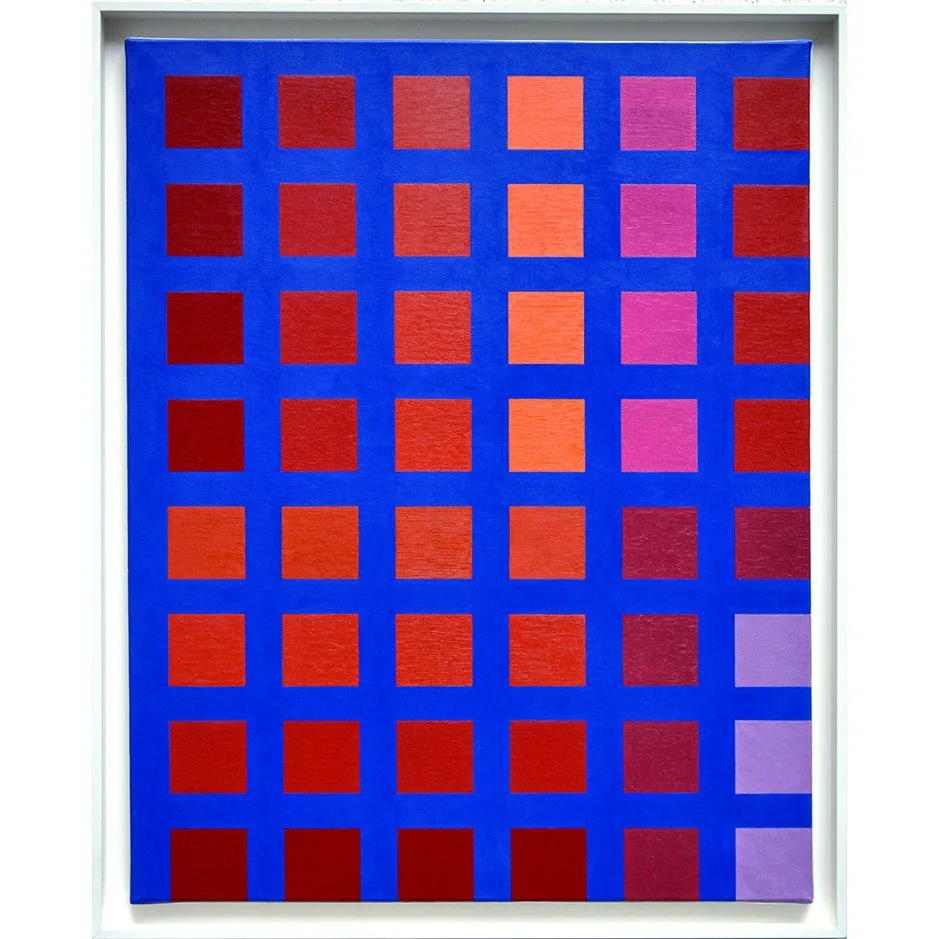
Untitled, 1966
Oil on canvas, 92 x 73 cm
-
![Aurelie Nemours]()
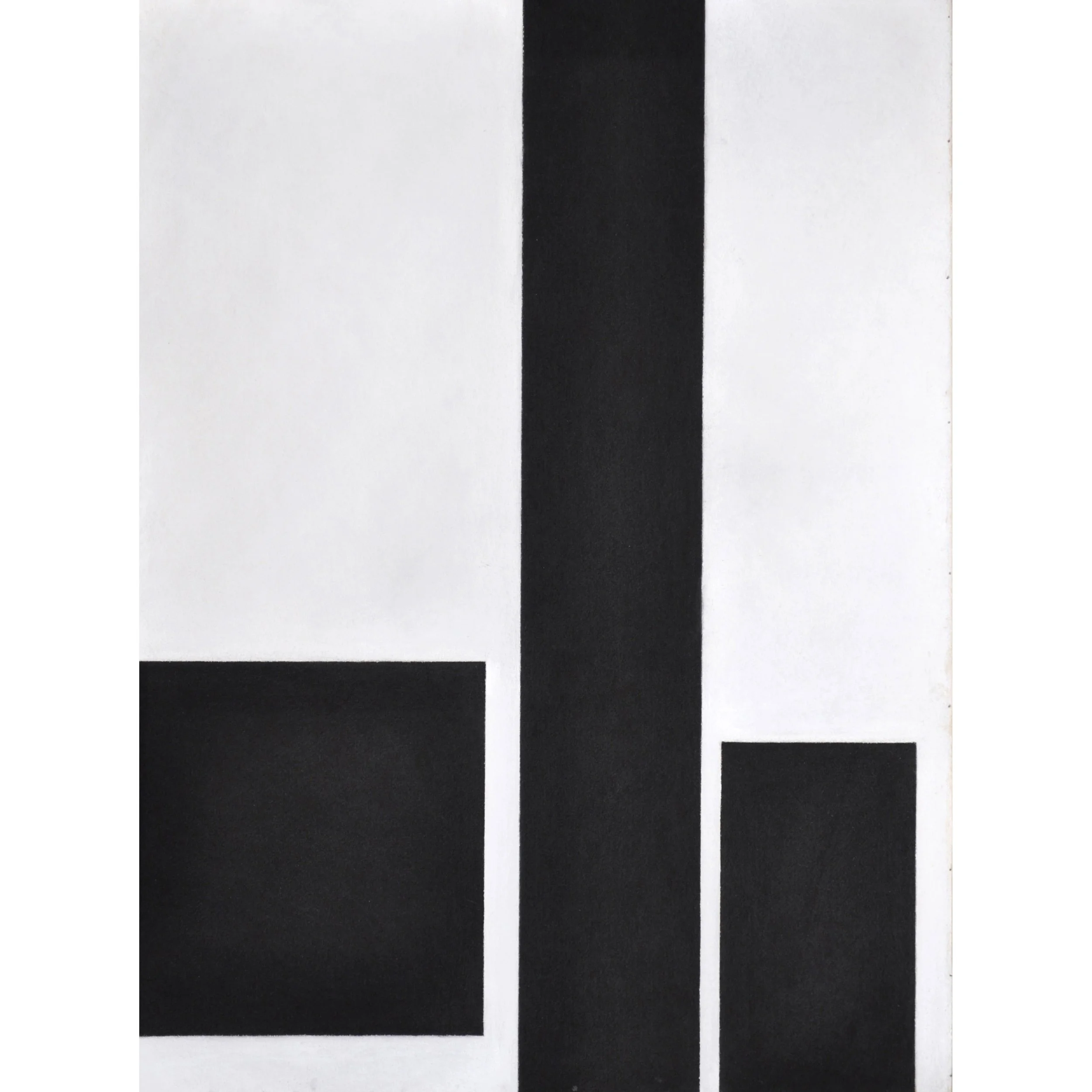
Residence T, 1959
Pastel on paper, 73 x 60 cm
-
![Aurelie Nemours]()
Untitled, 1970
Oil on canvas, 27 x 21 cm
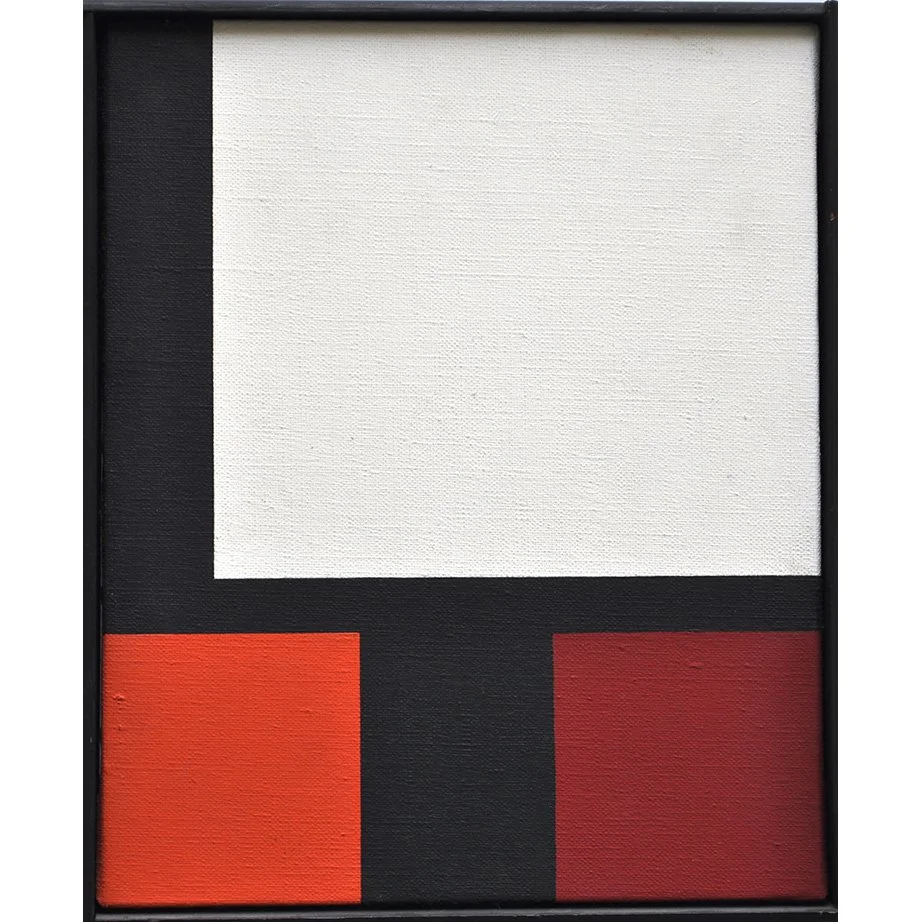

© Horst Schäfer
« Believing that art is a fight against the disarray of our civilization, I firmly believe that the spiritual charge of art is the only recourse and the only salvation. »
AURELIE NEMOURS
Born in 1910 in Paris, died in 2005 in Paris.
Born in Paris in 1910, painter, engraver, and writer Aurélie Nemours is a major figure whose art is rooted in both the tradition of European geometric abstraction and American art movements such as Color Field painting and Minimal Art. Born Marcelle Baron, Aurélie Nemours began her training in 1929 at the École du Louvre, where Egyptian and Byzantine art quickly captivated her. She soon decided to define her career as an artist rather than an art historian. Following this path, she began studying in various studios: Paul Colin (1937-1940), André Lhote (1941-1944), and Fernand Léger (1948-1951). Her apprenticeship lasted more than 20 years, but she began exhibiting as early as 1944. Auguste Herbin took note of her work, which was presented at the Salon des Réalités Nouvelles in 1949. At the same time, she devoted herself to writing and published her first poems in 1945. She held her first solo exhibition in 1953 at the Colette Allendy Gallery. From then on, her works were characterized by simple forms and a limited palette of flat colors, executed with a neutral technique. In 1965, the square became the central element of her creations. She saw it as a form that allowed for the balance of masses. Rhythm was created through its repetition and the use of variations. In 1994, she received the Grand Prix National de Peinture in France. She founded the Aurélie Nemours Association in 1998, which is responsible for compiling the catalogue raisonné of her work and awarding an annual prize to an artist whose work is similar to her own.
Aurélie Nemours turned to abstraction in 1949. Initially working with still lifes, drawings, and sketches, she gradually moved towards the essential: line and color, which she perceived as pure energies. This reduction of colors and forms transforms her works into spaces for meditation, where one encounters a cosmic universalism that prompts reflections on the visible and the invisible. While her works became more complex, precise, erudite, and even ordered from 1953 onward, her method of composition remained intuitive; she sought to give the pictorial space its own vital rhythm. Although her color palette and geometric forms were limited, this did not prevent her from offering a response, because horizontality and verticality define the fundamental rhythm of all things in this world. It is thanks to the restriction of her artistic vocabulary that the viewer has "all possibilities," as she puts it. From then on, her art was always ready to open a humanist path to constructed art. Throughout different periods, Aurélie Nemours created her "families" of works, within which each painting is distinguished by a letter or a number. She liked to work on the same forms, bringing a new dynamism each time. Moreover, she often used the polyptych: diptychs and triptychs are frequent in her work. She marveled at the properties of numbers—even, odd, prime, square—objects of contemplation that replaced the live model for her. This inner mathematics offered a spiritual intoxication. Aurélie Nemours spoke of entering painting as one enters a religion: "One enters into creation. It is a state. One has taken on this state." This spiritual dimension of her art reached its zenith in the stained-glass commission she received in 1998 for the church of the priory of Notre-Dame de Salagon in Haute-Provence, where she chose to treat all the windows in a single crimson red. As for her monumental installation, unveiled in Rennes in 2006, a year after her death, Alignment of the 21st Centurypays homage to rhythm, a concept that profoundly marked the philosophy of her art. Aligned with the sun's path, this work poetically shapes nature through the verticality of the columns, the alternation of solids and voids, and the repetition of elements. All of Aurélie Nemours' major themes are present. From her beginnings to her end, Aurélie Nemours' art uses appearances to reveal something else, in a constant dialogue between the sensory, the intellectual, and the spiritual, in which she invites us to participate before her works.
Works in museums and public collections
Museum of Grenoble, Grenoble
Museum of Strasbourg, Strasbourg
The National Museum of Modern Art in Paris,
Cohue Museum, Vannes
MNAM Center Georges Pompidou, Paris
Museum of Fine Arts of Rennes, Rennes
Wilhelm-Hack-Museum, Ludwigshafen
Kunstmuseum Liechtenstein, Vaduz
Louisiana Museum of Modern Art, Humlebaek
Espace de l'Art Concret, Mouans-Sartoux
Kunstmuseum, Stuttgart
Museum Haus Konstruktiv, Zurich
Museo Nacional Centro de Arte Reina Sofia, Madrid
Museum of Art, Tel Aviv
MACBA, Buenos Aires
Selection of the main exhibitions
2015, Aurelie Nemours, The Measurement of Rhythm, Lahumière Gallery, Paris
2007, Haus Konstruktiv, Zurich
2006, Martin-Gropius-Bau, Berlin
2004, Wilhelm-Hack Museum, Ludwigshafen
2004, Aurelie Nemours, Rhythm Number Color, MNAM, Centre Pompidou, Paris
2002, Aurelie Nemours, Museum of Modern and Contemporary Art of Strasbourg, Strasbourg
1999, Nemours, Percussive, Museum of Fine Arts of Rennes, Rennes
1996, Stories of Black and White, Grenoble Museum, Grenoble
1994, Nemours. Research, Haus für konstruktive und konkrete Kunst, Zurich
1990, Nemours, National Center for Visual Arts Paris
1984, Aurelie Nemours, Paintings, Tavet Delacour Museum, Pontoise
1983, Aurelie Nemours, Mori Gallery, Tokyo
1961, Structures, Gilbert-Nemours, Paintings, Gouaches, Drian Galleries, London
1953, Aurelie Nemours, Galerie Colette Allendy, Paris
Selection of works available in the shop

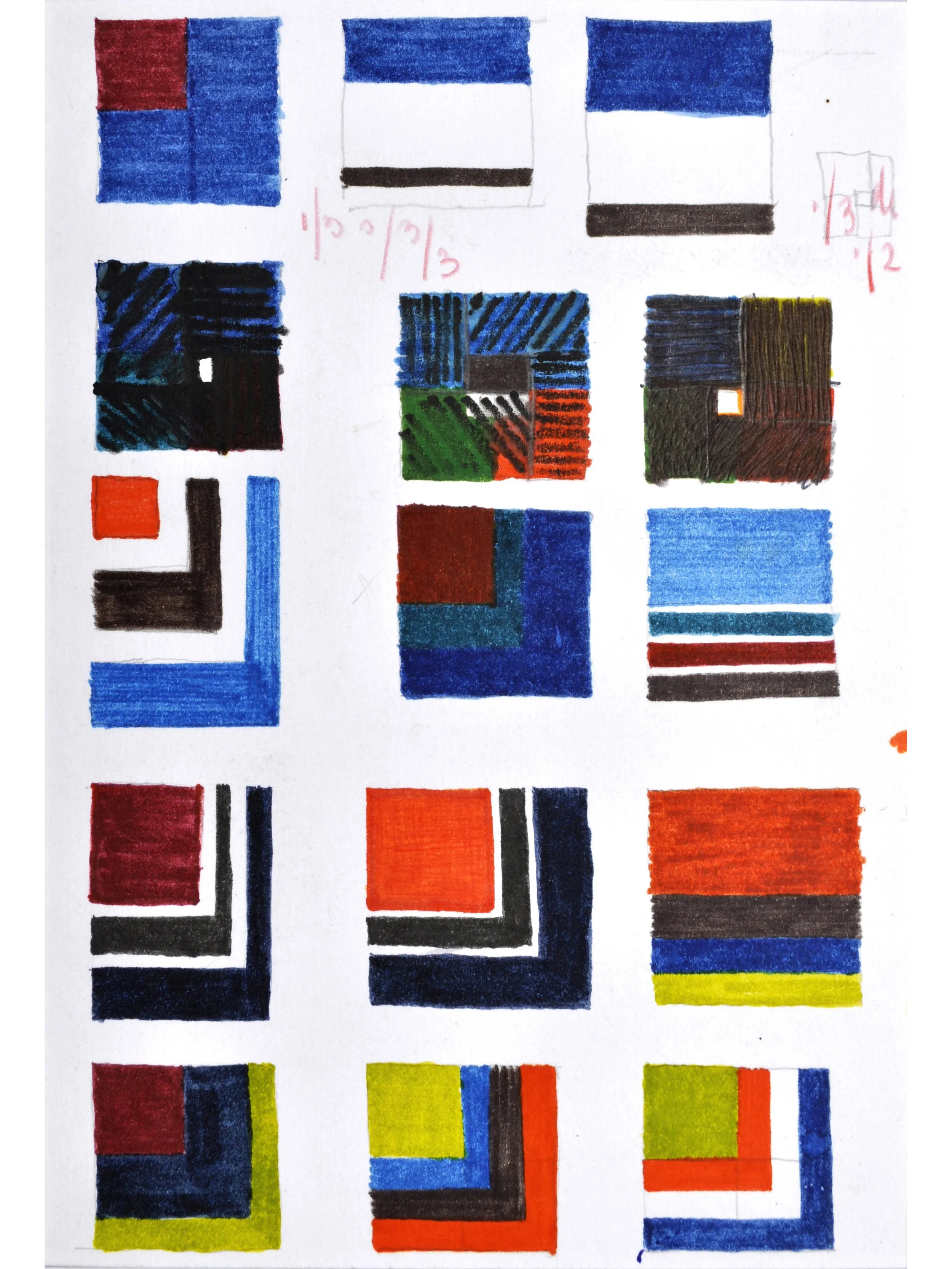
Price on request
Gouache on paper: 36.5 x 24 cm, framed: 52 x 40 cm
Free collection at the Gallery or delivery upon request (quote available).
←Aurélie Nemours | ←Original Works | ←Store