
-
![Alberto Magnelli]()
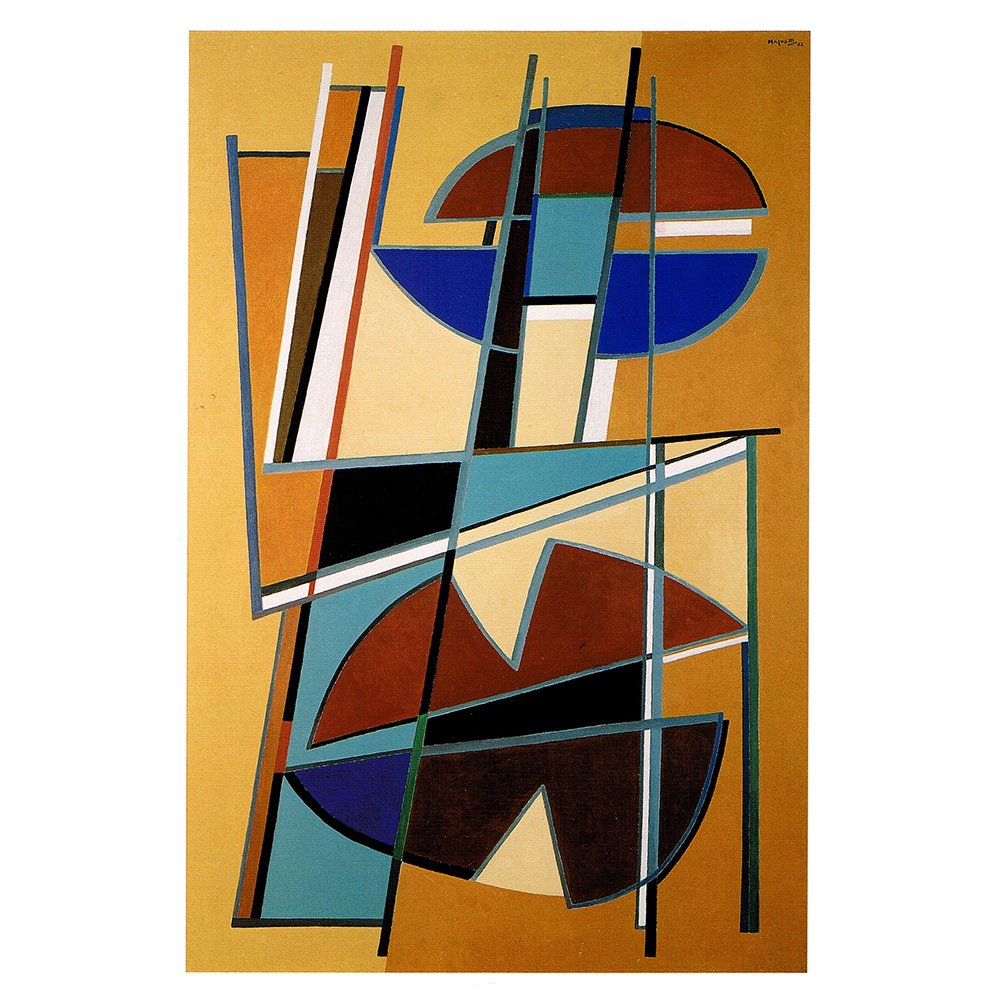
Volunteer No. 5, 1962
-
![Alberto Magnelli]()
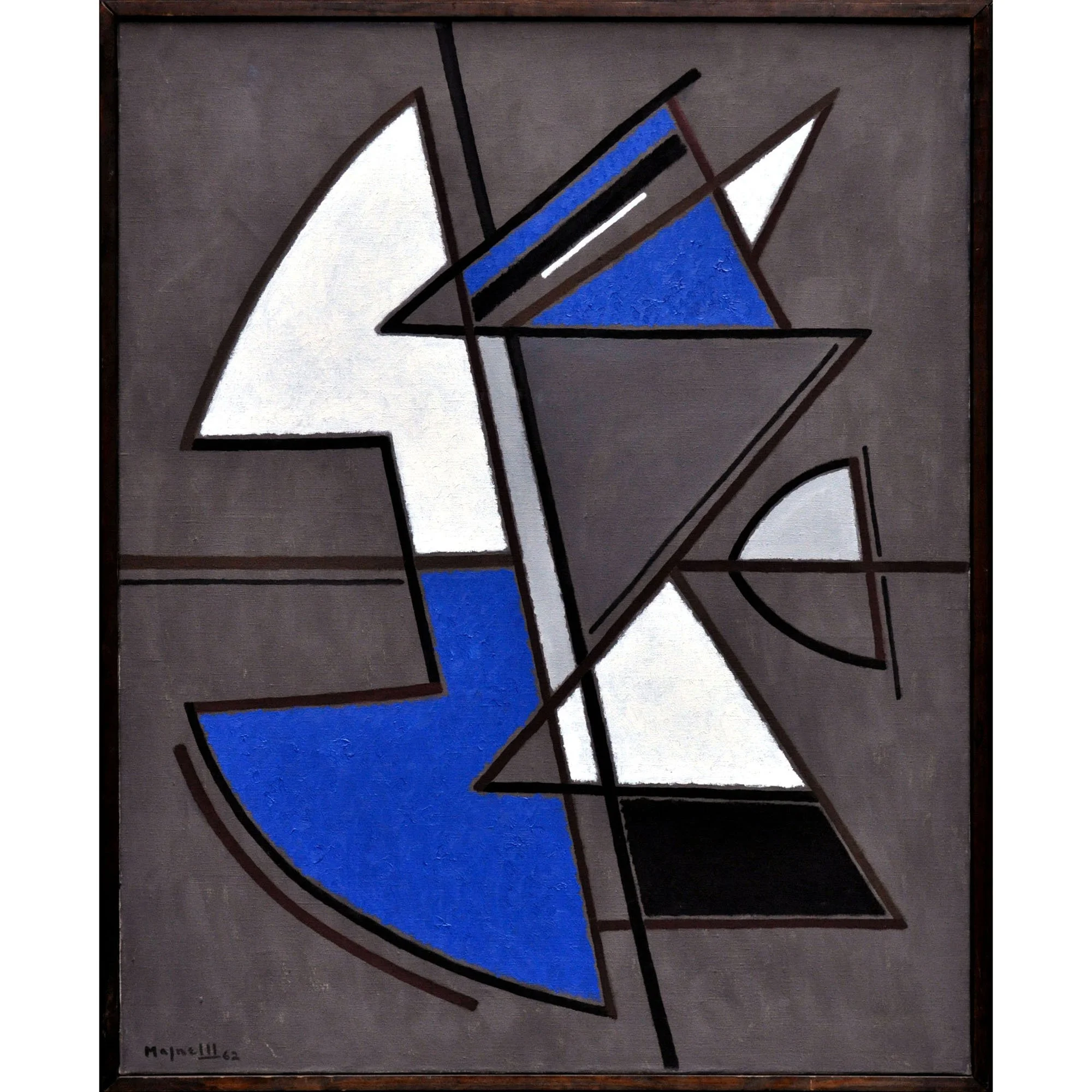
Gathered Angles, 1962
Oil on canvas, 162 x 130 cm
-
![Alberto Magnelli]()
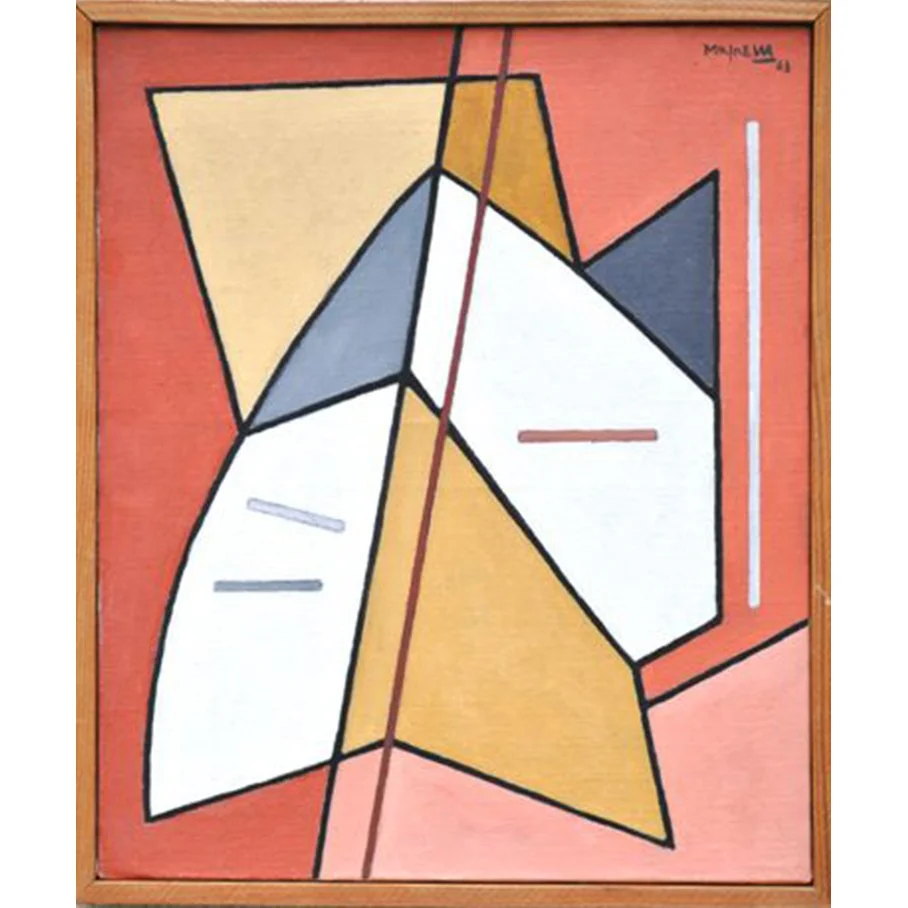
Illumination, 1963
Oil on canvas, 66 x 55 cm
-
![Alberto Magnelli]()
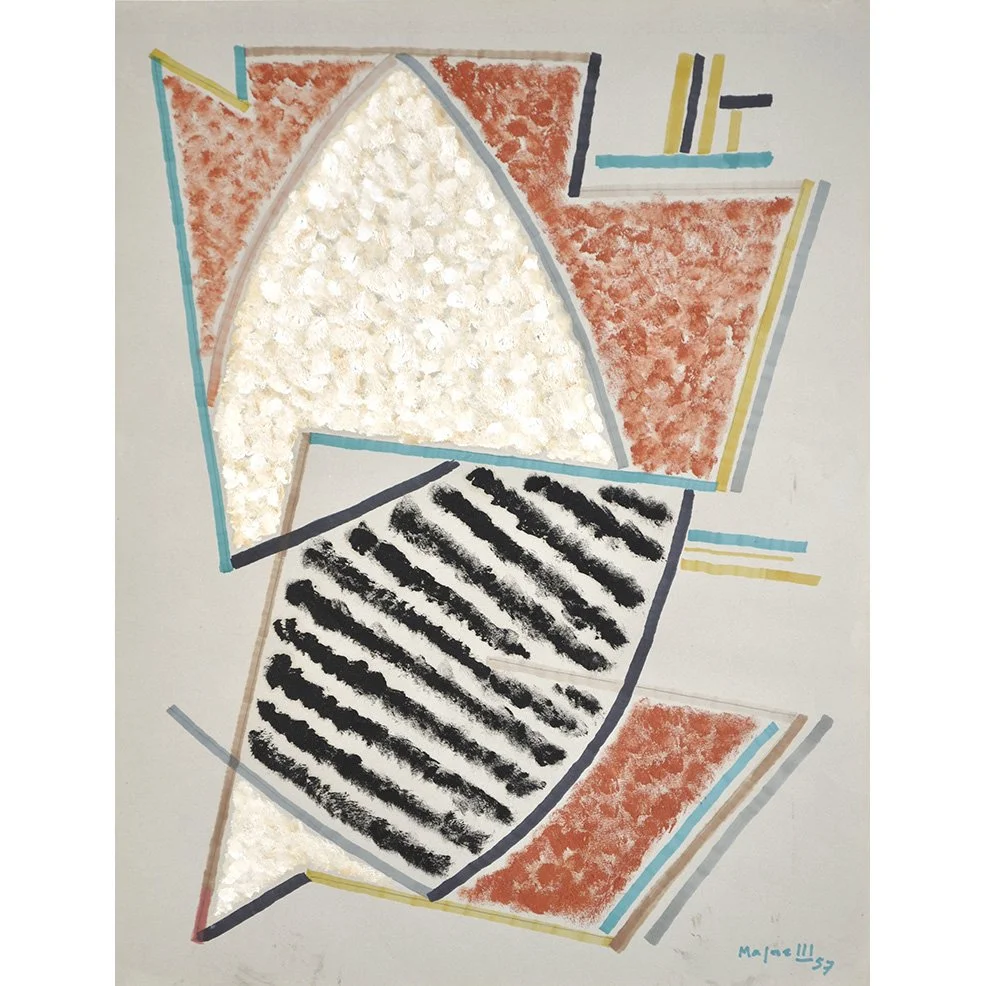
Untitled, 1957
Painting and felt-tip pen on grey paper, 65 x 50 cm
-
![Alberto Magnelli]()
Still a night owl

© Peter Willi
« Reality is rhythmic vitality and tactile possibility. »
ALBERTO MAGNELLI
Born in 1888 in Florence, died in 1971 in Paris.
A contemporary and friend of great artists, Alberto Magnelli features prominently in the annals of art history. Wise and innovative, the Florentine painter was also one of the first to explore the path of abstraction. Born in Florence in 1888 into a family of textile manufacturers, like so many others of his generation, Magnelli was self-taught. After a brief flirtation with Futurism, he went to Paris (the city where he later settled in 1932) and subsequently aligned himself with the classical "return to order" shared by so many artists during the Roaring Twenties. Finally, from the mid-1930s until his death in 1971, he marched (in his own unconstrained way) in the ranks of geometric abstraction.
Early in his career, Magnelli was fascinated by Cubism. The Florentine artist, unfamiliar with the originals, added his own intensely vivid colors to this style, ultimately closer to the exuberance of Matisse than the tones of Picasso. Like all artists of his time, Paris beckoned, and he visited the city in late spring 1914, finally able to see Cubist paintings for himself. He met Apollinaire, Picasso, Fernand Léger, as well as Max Jacob, Alexandre Archipenko, and others, and also Umberto Boccioni and other Italian avant-garde artists living there. Magnelli's paintings from these years are simply dazzling: crisp, clear, jovial, and prosaic everyday scenes, always rendered with precise forms and vivid colors, as well as some geometric still lifes. Magnelli's first fully abstract paintings date back to 1915; these paintings feature juxtaposed geometric forms and vibrant colors, framed by an approach sometimes reminiscent of Robert Delaunay. Immediately afterward, around the 1920s, Magnelli's work evolved in harmony with a metaphysics he called "imaginary realism." His works thus moved toward the spatial experimentation practiced in the metaphysical paintings of De Chirico. He settled in Paris in 1932. In the French capital, Magnelli became, along with Auguste Herbin, Wassily Kandinsky, Franz Kupka, and Piet Mondrian, one of the leading figures of the Abstraction-Création. Magnelli's most important paintings from the early 1930s include the Stones, inspired by his 1932 visit to the Carrara marble quarries. Stones, which many years later, in 1981, inspired a text by Italo Calvino, helped Magnelli smoothly transition from figuration to abstraction. These paintings are characterized by extreme compositional and chromatic restraint, depicting rocks in gray, ochre, blue, and white against desolate backgrounds, sometimes floating in the space of the canvas. The transparencies and empty forms that would become important hallmarks of his abstract painting are already readily apparent in this series.
In 1934, Magnelli held his first solo exhibition in Paris, at the Galerie Pierre. From 1935 onward, leaving behind his series of Stones, he discovered his own definitive artistic space. Geometry and organic forms now formed a partnership in his painting, definitively abandoning figurative references to become purely abstract. From 1938 until practically the end of his life, Magnelli practiced the art of collage with great imagination and talent, sometimes on sheets of steel, other times on fiberboard or cardboard panels, pieces of ceramic, bits of rope, and even dried branches and leaves. In the 1940s and 50s, his works were presented in group exhibitions with Domela, Kandinsky, and Nicolas de Staël. He later appeared in the flourishing Salons des Réalités Nouvellesand in the magazine Art d'Aujourd'hui.
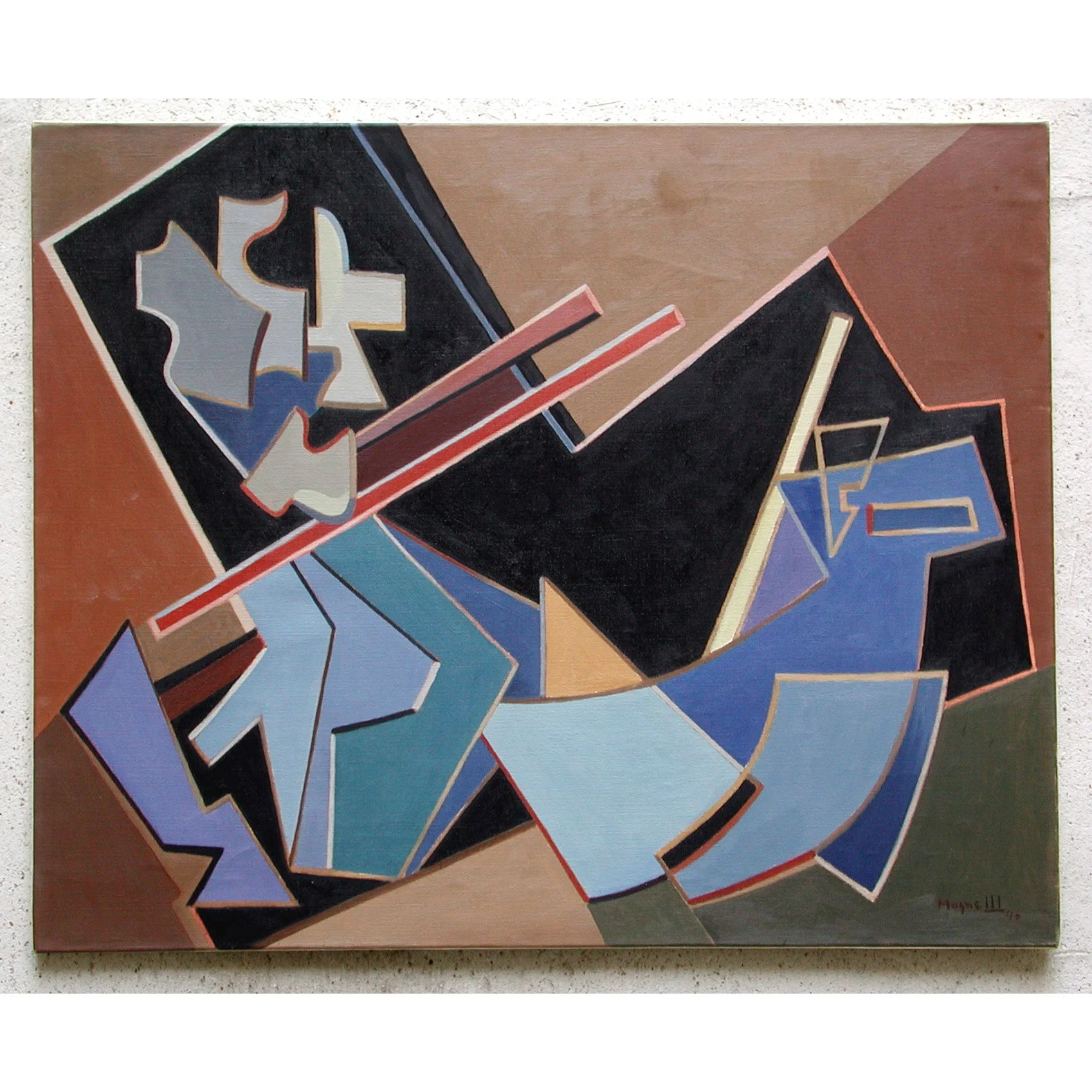
Alberto Magnelli was never indifferent to the formal proposals of the movements around him, but always fiercely protective of his independence, he did not participate in any movement or join any group. Despite his friendships with avant-garde artists, Magnelli's true source of inspiration was the Florentine fresco painters. It was from them that he learned everything that would give his painting its distinctive and singular character, such as a sense of monumentality, the breadth of composition, the sobriety of forms, the contrast between solid volumes and empty spaces, and above all, the austerity of color, which, without shying away from the most vibrant tones, favored subtle nuances, earthy and ochre hues. Magnelli was particularly influenced by the idea that painting should not only be a narrative or an image, but first and foremost a plastic phenomenon, a precise and rigorous construction of color.
Magnelli's work derives its strength from its formal and visual values, which unfold within the autonomous space created by the work itself. Simplification and reduction are key aspects of his approach, which he describes as guided by imagination and a sense of rhythm rather than a rigid method. Although he rejects the idea of an overly methodical process, his work of progressive elimination is deliberate and has led him from the realm of representational forms to that of pure forms. A recipient of the Guggenheim Prize for Italy in 1958, Magnelli devoted his later years to the rediscovery of Constructivist dreams, reworked with his traditional expressive chromaticism, followed by a sequence of increasingly succinct geometries, forms, and structures of forms. The use of overlapping lines and shapes, the variation in the color of the outlines, and the relationship between different color areas recall the studies on the "weight of colors" that captivated Magnelli early in his career. The result is a new space in each painting, an "atmosphere in which one can travel," in the artist's own words.
Hans Arp, a friend of Magnelli, described his work as "floral geometry, stormy abstraction." Magnelli's paintings emphasize subtle details of line, such as slight irregularities that reveal the artist's hand, as well as shifts in plane that create the illusion of transparency. Furthermore, the almost imperceptible interplay of lines and colors creates a texture that gradually unfolds for the attentive viewer. Ultimately, as in the Florentine frescoes so admired by the artist, his art, beyond the subject matter, reveals, to those who know how to see, the secrets of painting.
Works in museums and public collections
Pitti Palace, Florence
Magnelli Museum, Vallauris
Miró Foundation, Barcelona
Sara Hilden Art Museum, Tampere
Museu de Arte Moderna Muril Mendes, Juiz de Fora, Brazil
Wilhelm-Hack Museum, Ludwigshafen
The Solomon R. Guggenheim Museum, New York
Kunstmuseum, Basel
National Gallery of Modern Art, Rome
Price
Guggenheim Award, 1958
Honorary Award, Mentone Biennial, 1955
Critics' Award, Brussels, 1955
Foreign Artist, Sao Paolo Biennial, 1951
Selection of the main exhibitions
2007/2008, Harbour Master's Office of La Grande Motte
2006, Palazzo Magnani, Reggio Emilia
2005, Museum Wurth, Kunzelsau, Germany
2004, Galleria d'Arte Moderna e Contemporanea di Bergamo, Bergamo
2001, Museum of Fine Arts of Verviers, Verviers
1981, Museum of Fine Arts of Rennes, Rennes
1968, Museum of Modern Art, Paris
1947, Galería René Drouin, Paris