
-
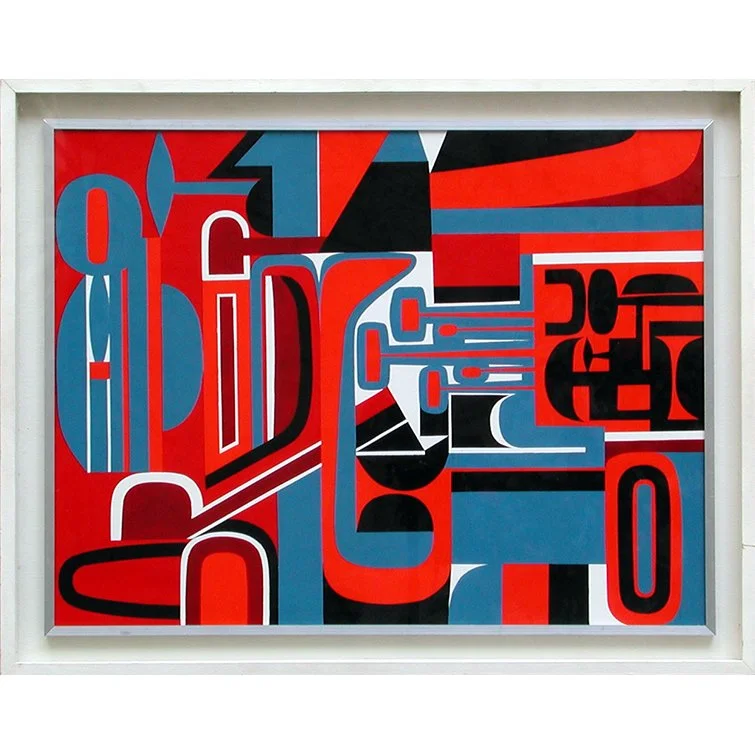
![Jean Dewasne]()
Composition, 1961
Lacquered paint / Hardboard, 50 x 65 cm
-
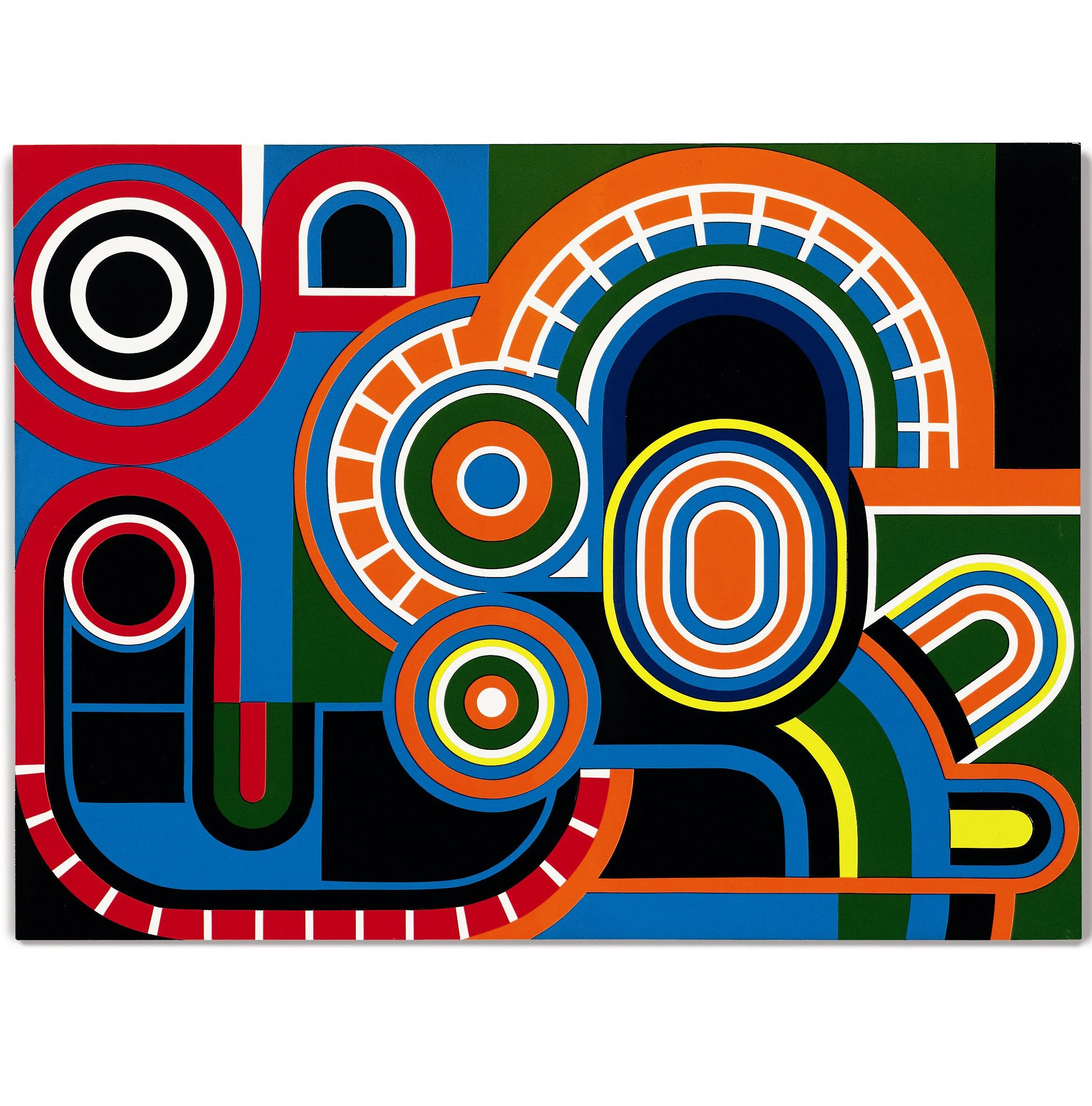
![Jean Dewasne]()
Free Heart, ca. 1973
Lacquered paint on chipboard, 97 x 130 cm
-
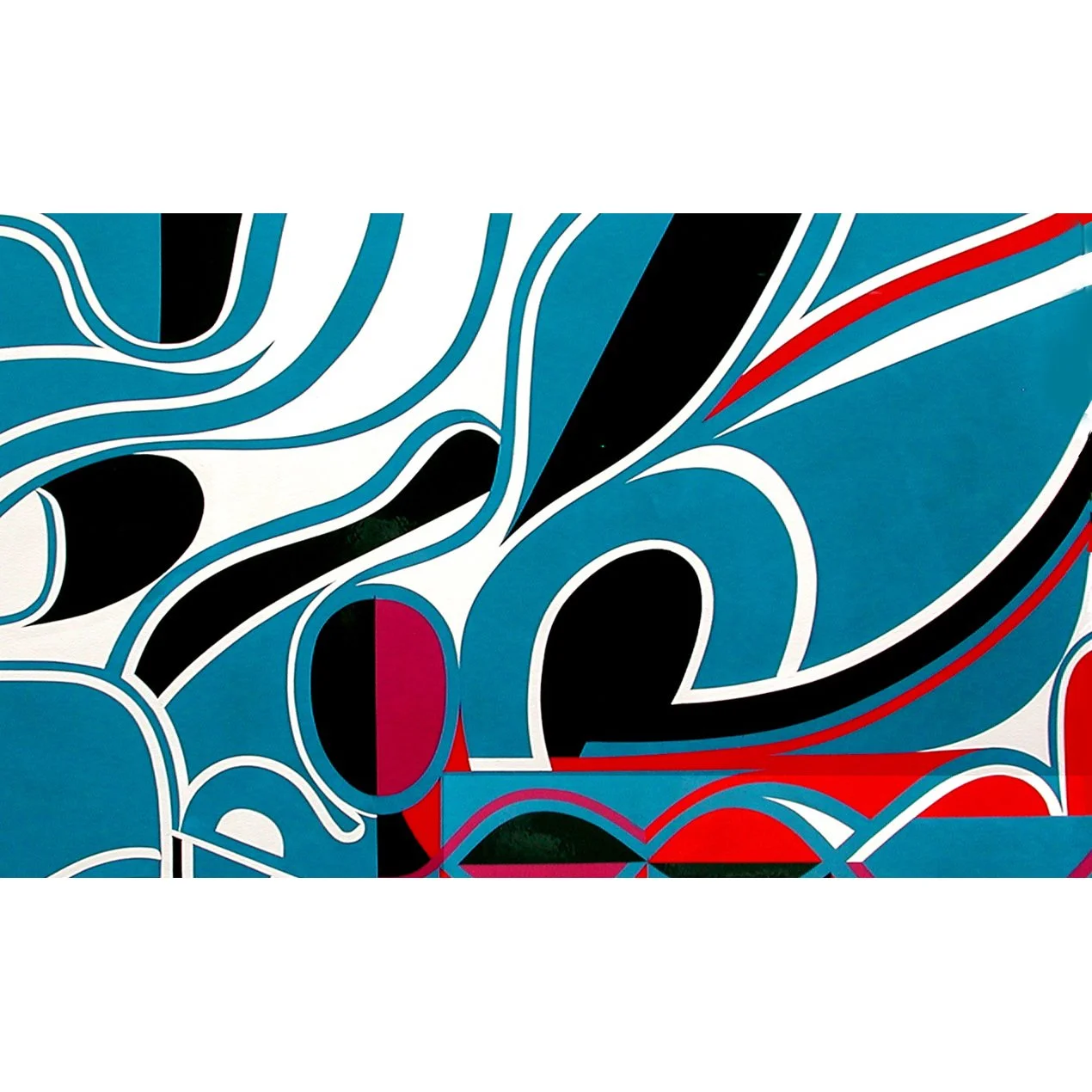
![Jean Dewasne]()
Baby doll, 1968
Lacquered paint, hardboard, 97 x 130 cm
-
![Jean Dewasne]()
Bohemia, 1968
Painting on polyester, 114 x 67 x 42 cm

« Abstraction is an ethic, a way of life that adapts. »
JEAN DEWASNE
Born in Lille in 1921 and died in 1999 in Paris.
Both a practitioner and a theorist, Jean Dewasne developed his own artistic system from the late 1940s onward, tirelessly pursuing the path he had forged. A key figure in geometric abstraction and constructed art, he possessed a multidisciplinary background, having studied architecture, music, philosophy, mathematics, and fine arts. He championed his theories within the renowned Atelier d'Art Abstrait (Workshop of Abstract Art), which he founded in 1946 with his friend Edgar Pillet, and which trained numerous artists from around the world. To understand Jean Dewasne's approach, it is important to remember that his artistic journey was shaped by his passions for music, but also for science. Beyond his articles on the links between mathematics and abstract art, he notably studied non-Euclidean geometry, topology, n-dimensional spaces, fuzzy logic, and the Möbius strip. These mathematical concepts offered artists the opportunity to move beyond the traditional framework of the flat surface and explore curved, even spherical, spaces. Dewasne himself exploited these ideas, expanding upon them: "There are no longer any true straight lines or true parallel lines. Right angles widen or narrow depending on whether they are on a curved or concave surface. Quantities of surface will never again be stable."
Jean Dewasne's priority was capturing the maximum intensity of color while respecting the principles of topology. This required working in flat areas on an unalterable support and led him to abandon canvas in favor of a new material, Isorel. This exploration led him to become interested in industrial objects used as supports. He then invented "Antisculptures," a term that aptly reflects his approach, explaining: "The principle of the Antisculpture: I found ready-made forms in industry that served as my support, and on which I painted as if they were paintings." Unlike his usual method of creating paintings, Dewasne did not use any preparatory drawings or gouaches for his Antisculptures; he worked directly and improvising on the form. For him, there are two ways to understand color: "light color," through the study of the solar spectrum to extract colors in their pure state; and "material color," obtained from chemical pigments, which he studied in publications by Philips engineers. Dewasne's artistic achievements allowed him to create increasingly large-scale works, both in France and abroad, countries where he was regularly invited. Besides his Antisculptures, screen prints, and tapestries, it is worth mentioning, among his monumental and defining works of visual language, the murals created for the Gori factory in Denmark (1979), the Grenoble Ice Stadium (1968), the Grande Arche de la Défense (1989), and frescoes for the Hanover (1975) and Rome metro systems.
Jean Dewasne, the illustrious co-founder of the Salon des Réalités Nouvelles and winner of the first Kandinsky Prize in 1946, left his mark on the Venice Biennale in 1968 as France's representative. His influence is particularly palpable in the colorful and distinctive architecture of the Centre Georges Pompidou. Indeed, the building would have had a completely different appearance without his contributions, lacking its emblematic shades of blue, green, and red. The story of this contribution is fascinating: in 1970, while living in the Marais district, Jean Dewasne visited Renzo Piano and Richard Rogers, the project's architects, in their Parisian office on Boulevard Sébastopol. They presented him with an entirely gray model of the future cultural center. Convinced that he could improve upon this concept, Dewasne invited them to his studio on Rue du Bourg-Tibourg, where he had already applied his chromatic vision to the pipes, transforming them into works of art.
A consistently avant-garde body of work, that of the artist who elevated abstraction by materializing a new realm born from the dizzying discoveries of contemporary mathematics, while remaining faithful to painting, its sister in the sensory worlds. Such was Jean Dewasne's aim: to build a new world, "the world of passions and creative impulses intertwined with that of the most subtle mathematics. Then the universes of dreams, magic, and the highest rationality will unite with the most precious essence of humankind."
Selection of prints available in the shop


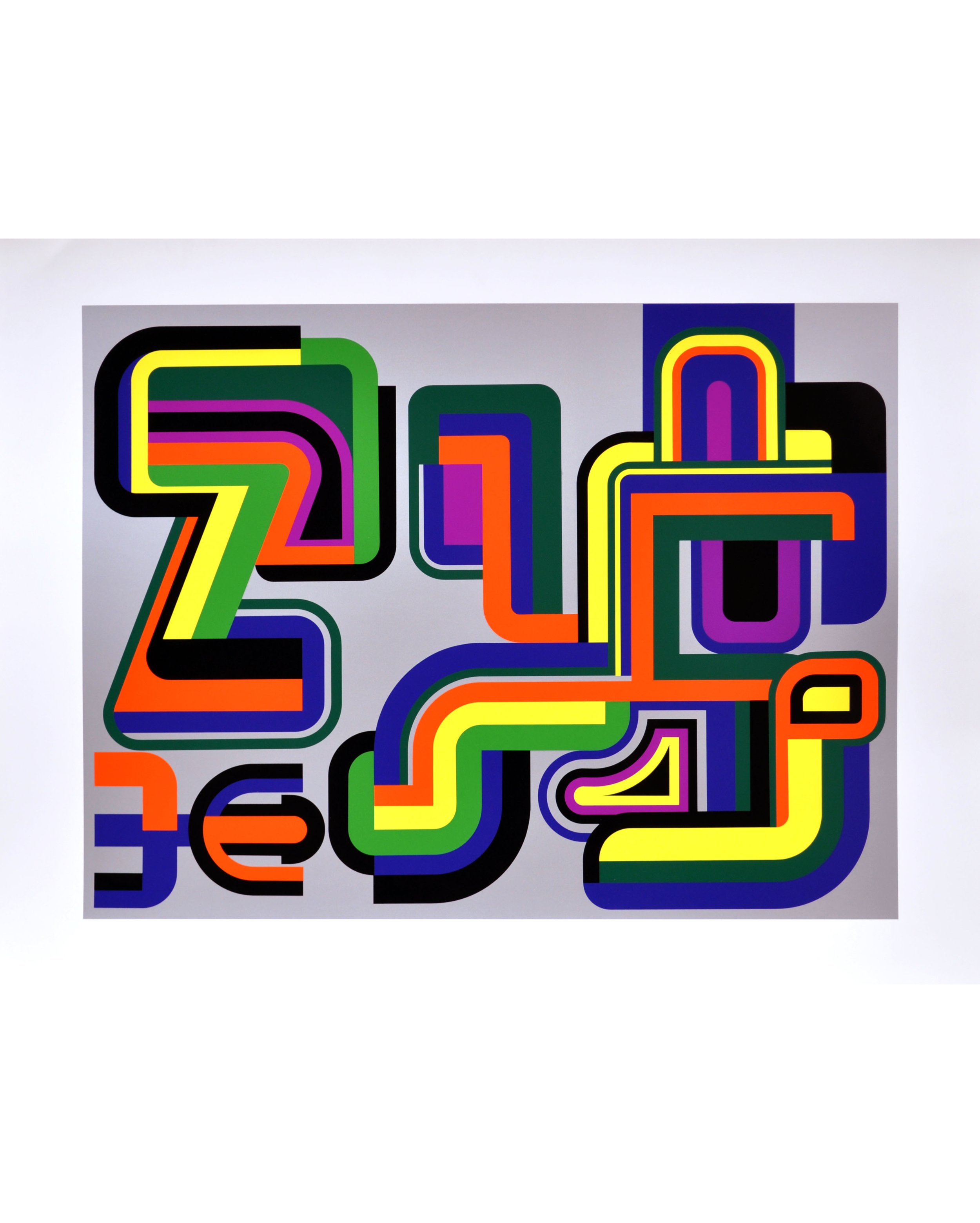

Exhibition Selection
• 2015, LAAC, Dunkirk, France
• 2014, Musée des Beaux-Arts Cambrai, Cambrai, France
• 2014, Musée Départemental Matisse, Le Cateau-Cambrésis, France
• 2010, Messmer Foundation, Riegel, Germany
• 2009, Stattgalerie Klagenfurt, Austria
• 2008, Ingres Museum, Montauban, France
Works in museums and public collections
• MNAM Center Georges Pompidou, Paris, France
• Childminding Centre of the City of Paris, Paris, France
• Grenoble Museum, Grenoble, France
• The Grande Arche de la Défense, Paris, France
• Matisse Departmental Museum, Le Cateau-Cambrésis, France
• Cambrai Museum of Fine Arts, Cambrai, France
• LAAC, Dunkirk, France
Price
• Kandinsky Prize, 1946
Original signed silkscreen print
42 × 14 cm, folded in the middle – edition of 100 copies.
←Jean Dewasne | ←Prints | ←Store