
-
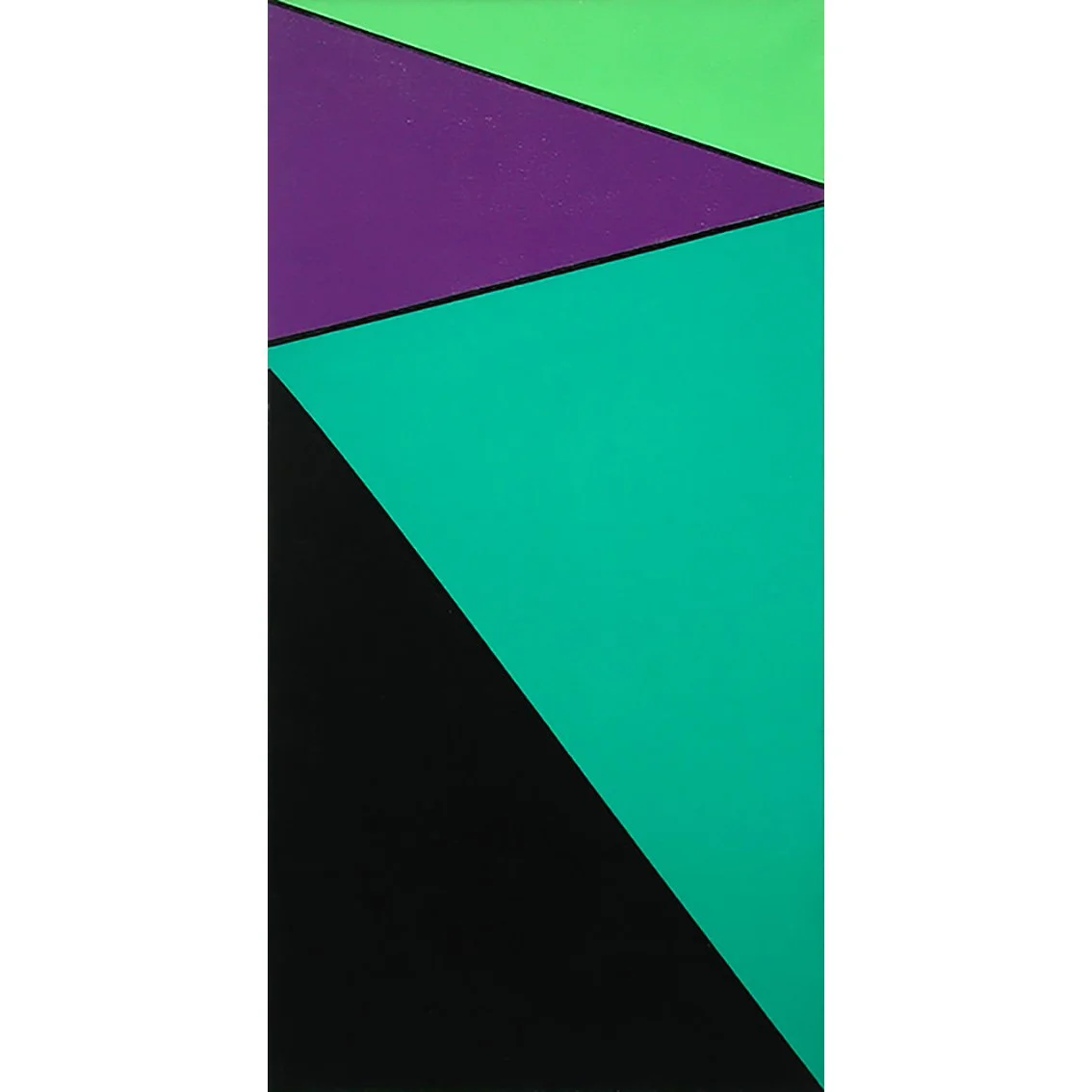
![Olle Baertling]()
Vebama, 1965
Oil on canvas, 180 x 92 cm
-
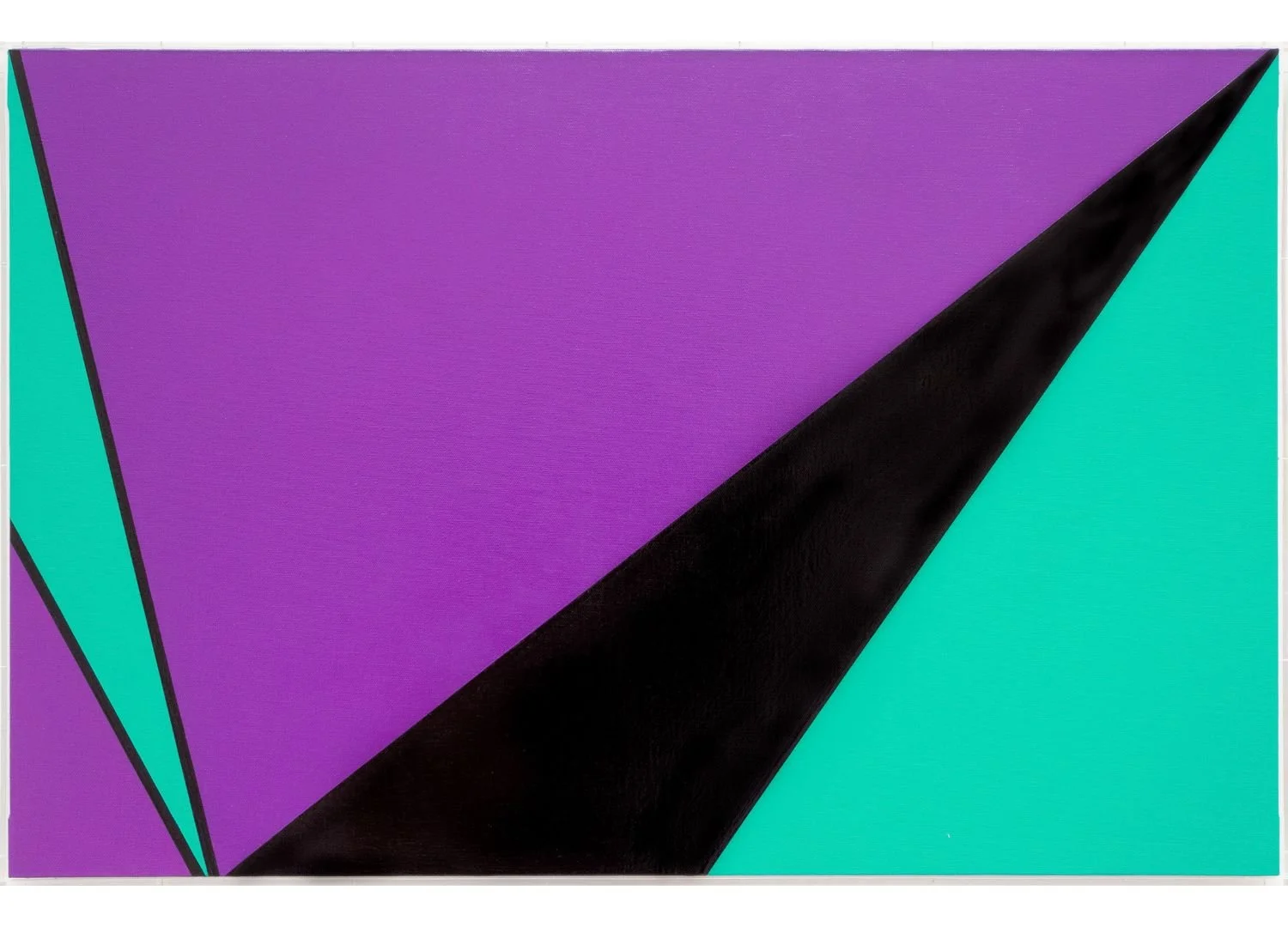
![Olle Baertling]()
Geram, 1965
Oil on canvas, 89 x 130 cm
-
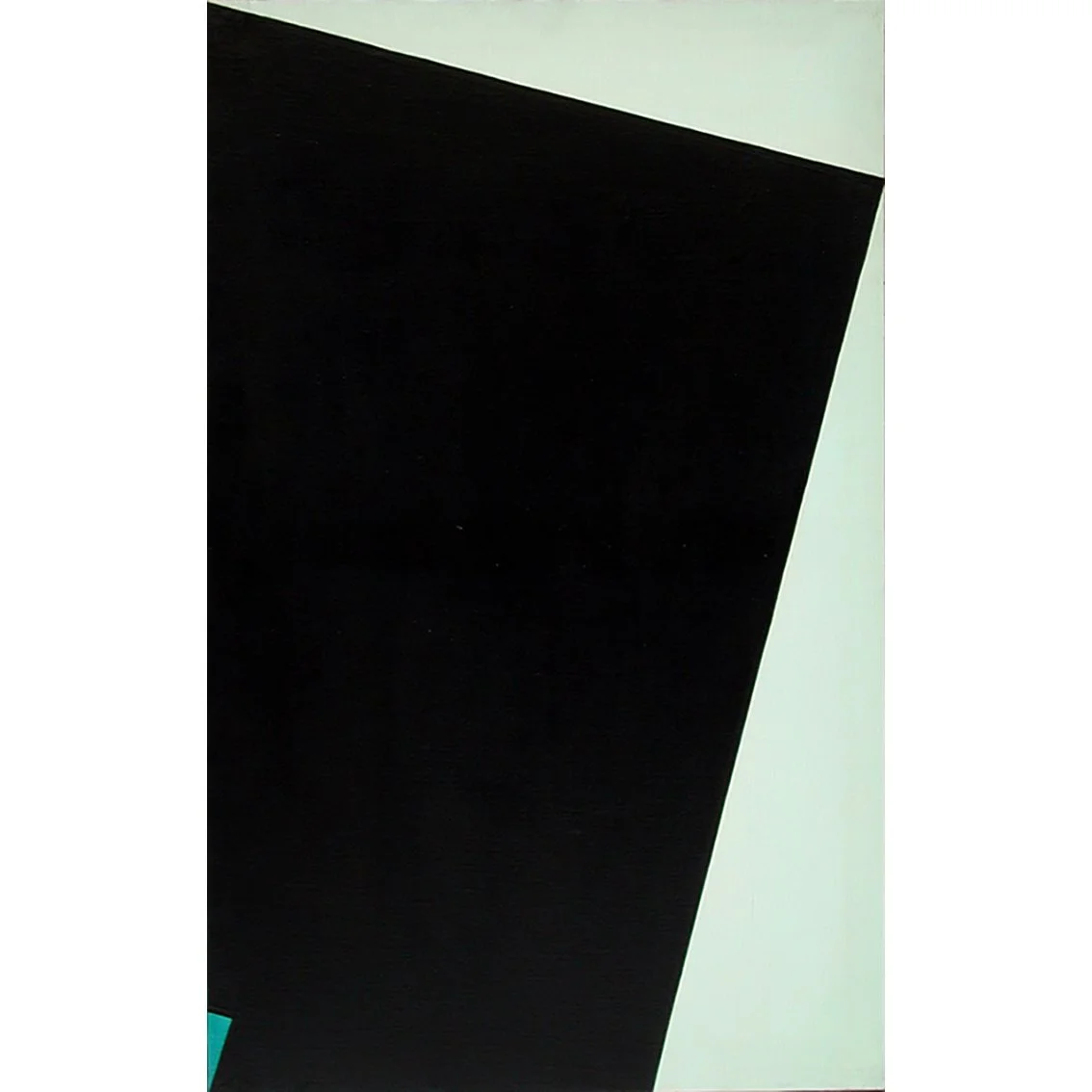
![Olle Baertling]()
Force, black, white, blue, 1953
Oil on canvas, 130 x 81 cm
-
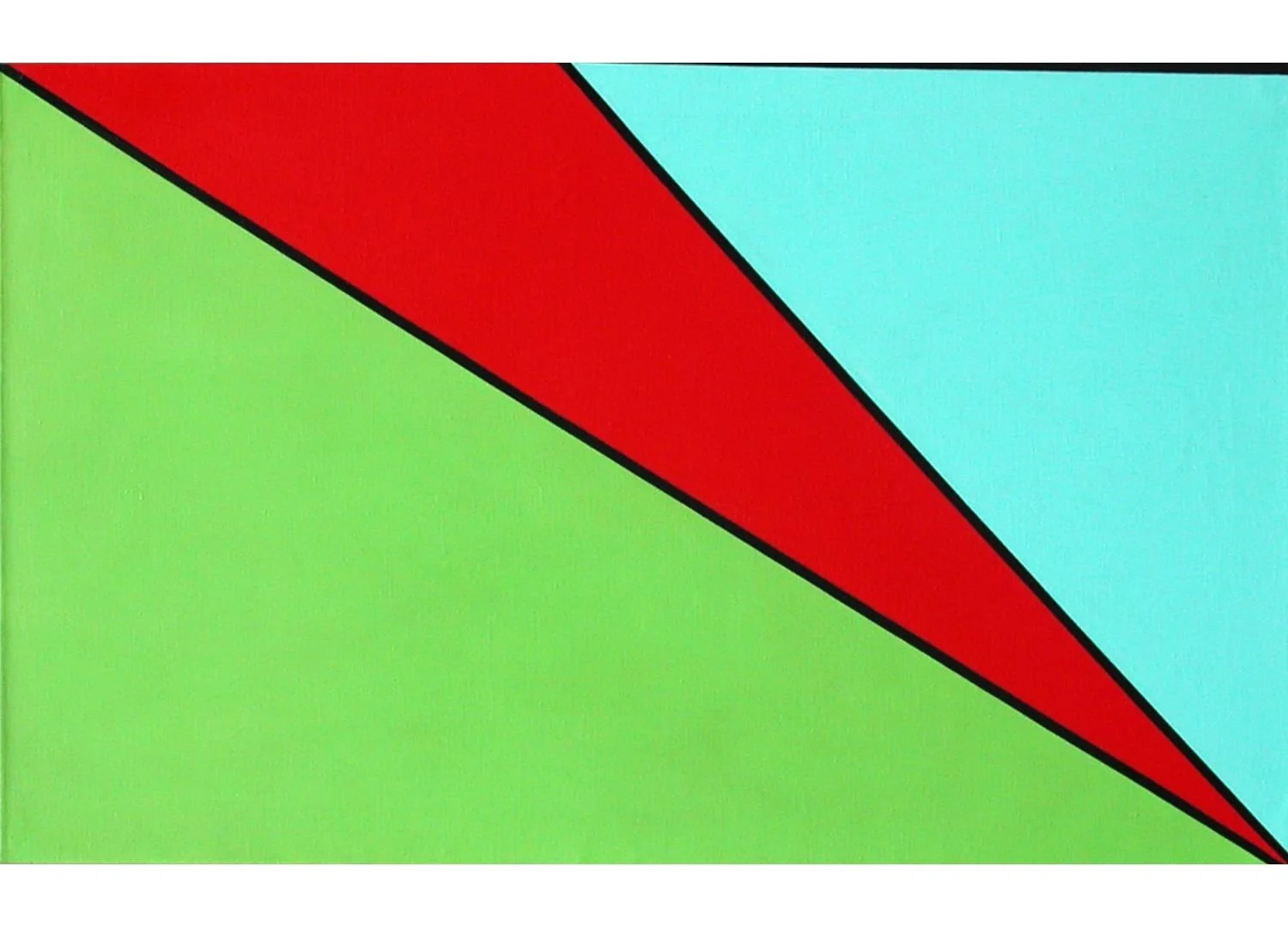
![Olle Baertling]()
Xolgia 1956
Oil on canvas, 81 x 130 cm

Olle Bærtling, Liljevalchs konsthall, 1961 Photo: Harry Dittmer/Tio
« The art of open form can be likened to the unknown forces and grandeur of the sky, of infinite spaces. »
OLLE BAERTLING
Born in 1911 in Halmstad, Sweden, died in 1981
Initially an expressionist, then a portraitist, he studied under André Lhote in 1948, and later under Fernand Léger. His admiration for Auguste Herbin led him to abstraction. He began exhibiting at the Salon des Réalités Nouvelles very early on. Baertling's painting, characterized by large black areas, often dominated by touches of green and red, achieves an extreme degree of simplification and power.
The Swedish painter and sculptor Olle Baertling is one of the few Nordic artists of the second half of the 20th century to have achieved international renown. Lacking any formal art training, Baertling worked as a banker until 1956. He developed as a painter from his early days in the Nordic Expressionist style, under the influence of Matisse, and later continued his studies with Fernand Léger in Paris. Olle Baertling began exploring the foundations of the pictorial language that would captivate him for the rest of his life in the early 1950s. During this period, he traveled from Stockholm to Paris, immersing himself in the emergence of abstract art in the French capital. It was at this time that he abandoned his earlier figurative artistic practice to devote himself fully to abstraction. His admiration for Auguste Herbin inspired him to find his own path in this direction, notably using powerful black lines to deconstruct the image. Subsequently, his paintings began to feature precise arrangements of triangles of varying sizes—corner-shaped pyramids whose apexes never lie within the canvas but seem to exist in a metaphysical space beyond. He called these "Open Forms," which give the impression of pulling the image in different directions and at different speeds. He wished to introduce his Open Forms into as many contexts as possible, convinced that they represented the shapes of the future until the end of his life.
After his first solo exhibition at Denise René's gallery in Paris in 1955, he exhibited regularly in France and Scandinavia. From the beginning, he participated in the Salon des Réalités Nouvelles. In 1964, he was invited to exhibit at the Guggenheim Museum's annual exhibition in New York. That same year, Columbia University held his first major solo exhibition in New York. During the 1960s and 70s, the forms in his paintings became simpler: fewer in number, with larger expanses of vivid, vibrant color. The discovery revealed by this painting led to a new use of the image, blending architecture and sculpture. Olle Baertling's sculptures are themselves composed of lines that capture space. Like his paintings, the sculptures demonstrate an interest in elementary forms and the activation of energy. Olle Baertling's characteristic sculptural form takes the form of a steel zigzag, evoking a lightning bolt, as if the outline lines of the paintings had been torn from the canvas to be represented in three dimensions.
Each period in Olle Baertling's work is characterized by typical forms and colors, demonstrating the artist's systematic and meticulous exploration of painting. For example, his canvases from the 1950s are known for their dynamic forms, vibrant colors, and distinctive dimensions. In the 1960s, the artist focused on black, purple, and his characteristic greenish-white. The paintings of the 1970s are characterized by their monumentality and their red and magenta tones. In his artistic practice, Olle Baertling studied, learned, and repeated processes, methods, and techniques. However, each new application gave rise to a unique variation, never identical and always different, thus creating his own forms, paths, and perspectives. Olle Baertling was a futuristic optimist with utopian visions, including a keen interest in urban space. He championed the idea of establishing a new capital in Hallandsåsen, in southern Sweden, because he felt Stockholm was too isolated. His projects included the paintings for the lobby of the first high-rise building in Hötorget, Stockholm, as well as the embellishment of Stockholm University and the Kulturhuset (Cultural Center). His perspective on postwar European modernism found admirers worldwide, including in the United States, where he held seventeen solo exhibitions before his death in 1981. Olle Baertling, by liberating our sensitivity to color, understood that the surface of the image and geometric forms are merely the starting point for an inner experience, the unfolding of a metamorphosis. Before our eyes, the surface transforms into a dematerialized space. It is an art that transforms our perception and imprints a new direction on the creation of the surrounding environment. A source of absolute energy, his art commands a dynamic interplay of open forms and sharp angles, without beginning or end, whose indomitable dynamic governs infinity.
Works in museums and public collections
Georges Pompidou National Centre for Art and Culture, Paris
National Museum of Modern Art, Paris
Museum of Modern Art, New York
Solomon R. Guggenheim Museum, New York
Tate Gallery, London
Galleria Nazionale d'Arte Moderna, Rome
Museum des 20. Jahrhunderts, Vienna
National Gallery, Berlin
Stedelijk Museum, Amsterdam
Royal Museums of Fine Arts of Belgium, Brussels
Museum of Modern Art, Mexico City
Selection of the main exhibitions
1956 Kunstakademien, Copenhagen, Denmark with Jacobsen and Mortensen
1966 Allen Memorial Art Museum, Ohio, USA
1977 Kunsthalle Düsseldorf, Germany
1981 Moderna Museet, Stockholm, Sweden
1983 Quadrat Bottrop, Germany
1990 Konstakademie, Stockholm, Sweden
2003 Retrospective Mjellby Konstmuseum, Halmstat, Sweden