
ART BASEL 2026
Jo Delahaut, Georges Folmer, Gottfried Honegger, Jean Leppien, Fritz Levedag, Vera Molnar, Aurelie Nemours, Alan Reynolds, Hans Steinbrenner, Victor Vasarely, Yvaral
From June 18 to 21, 2026
Hall 2.0 Stand G07
Black suits you so well
Black is elegance, a color that defies easy categorization, a subtle element that adorns, yet remains timeless, a primal hue. A non-color, the sum of all others, it reveals light, defines forms, and exalts contrasts. Many artists have experimented with black: some have found purity and simplicity in it, others have seen it as a way to get to the heart of the matter. As Matisse said, "Black is a color in its own right, which both encompasses and consumes all others."
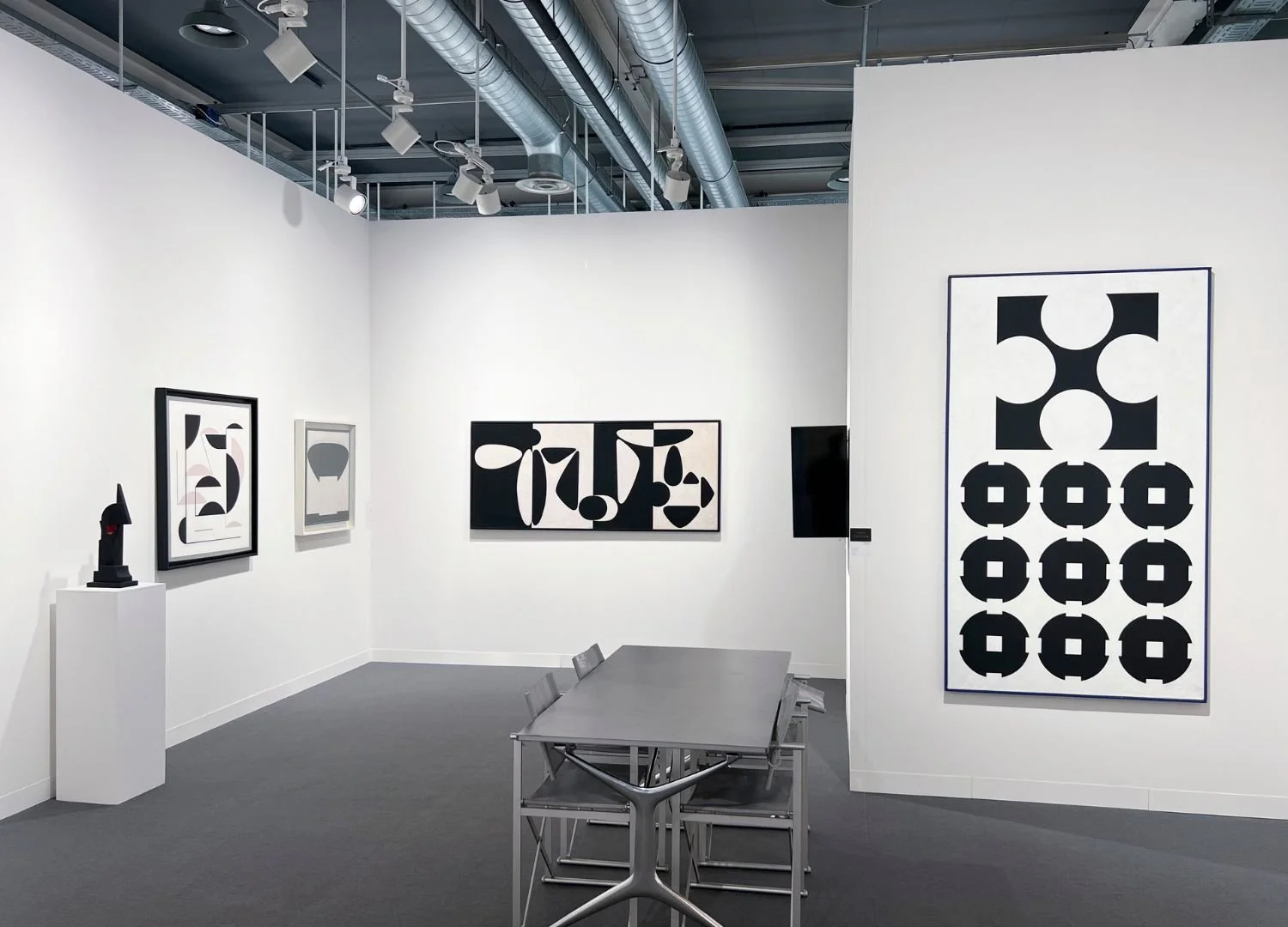
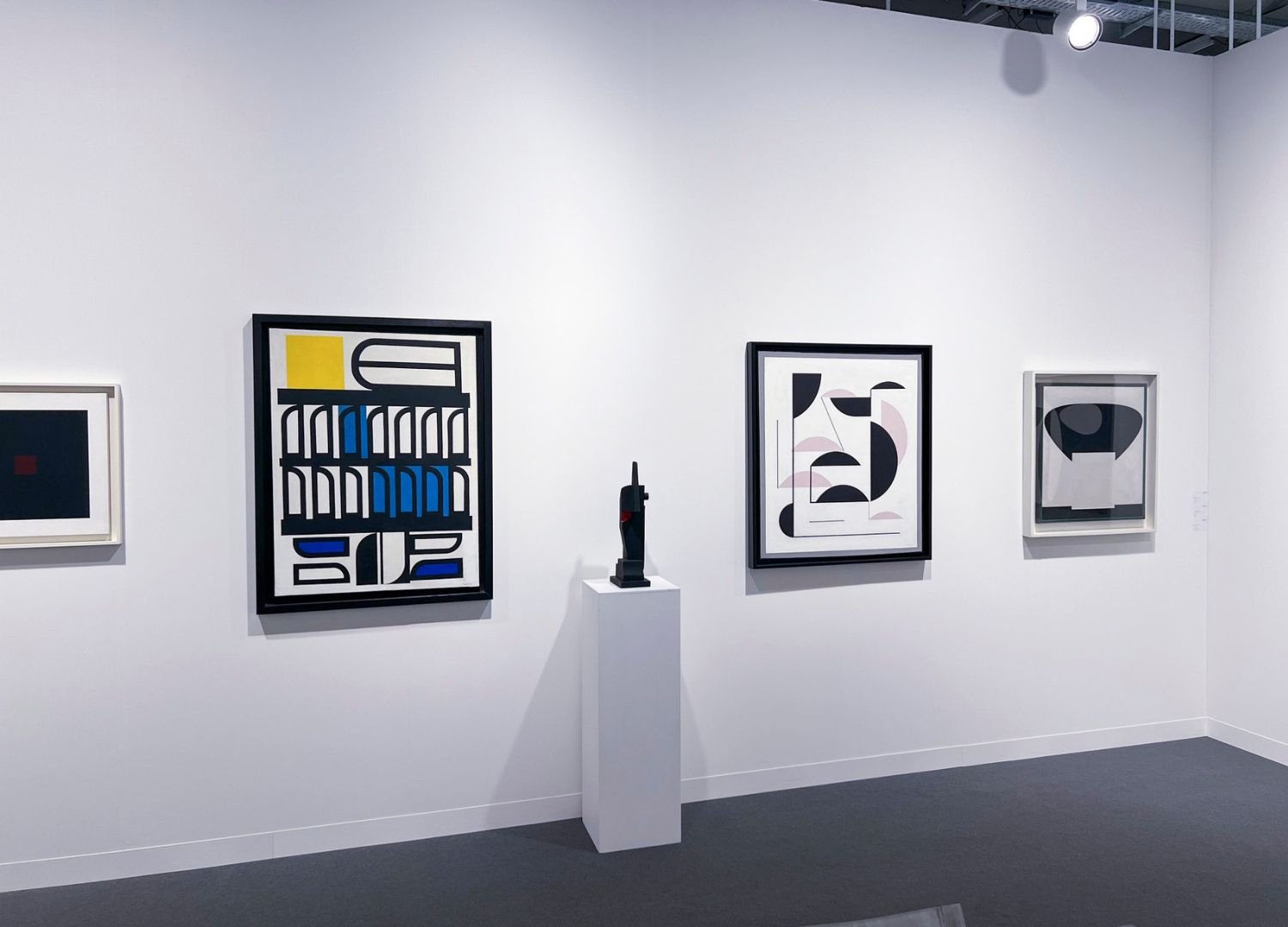
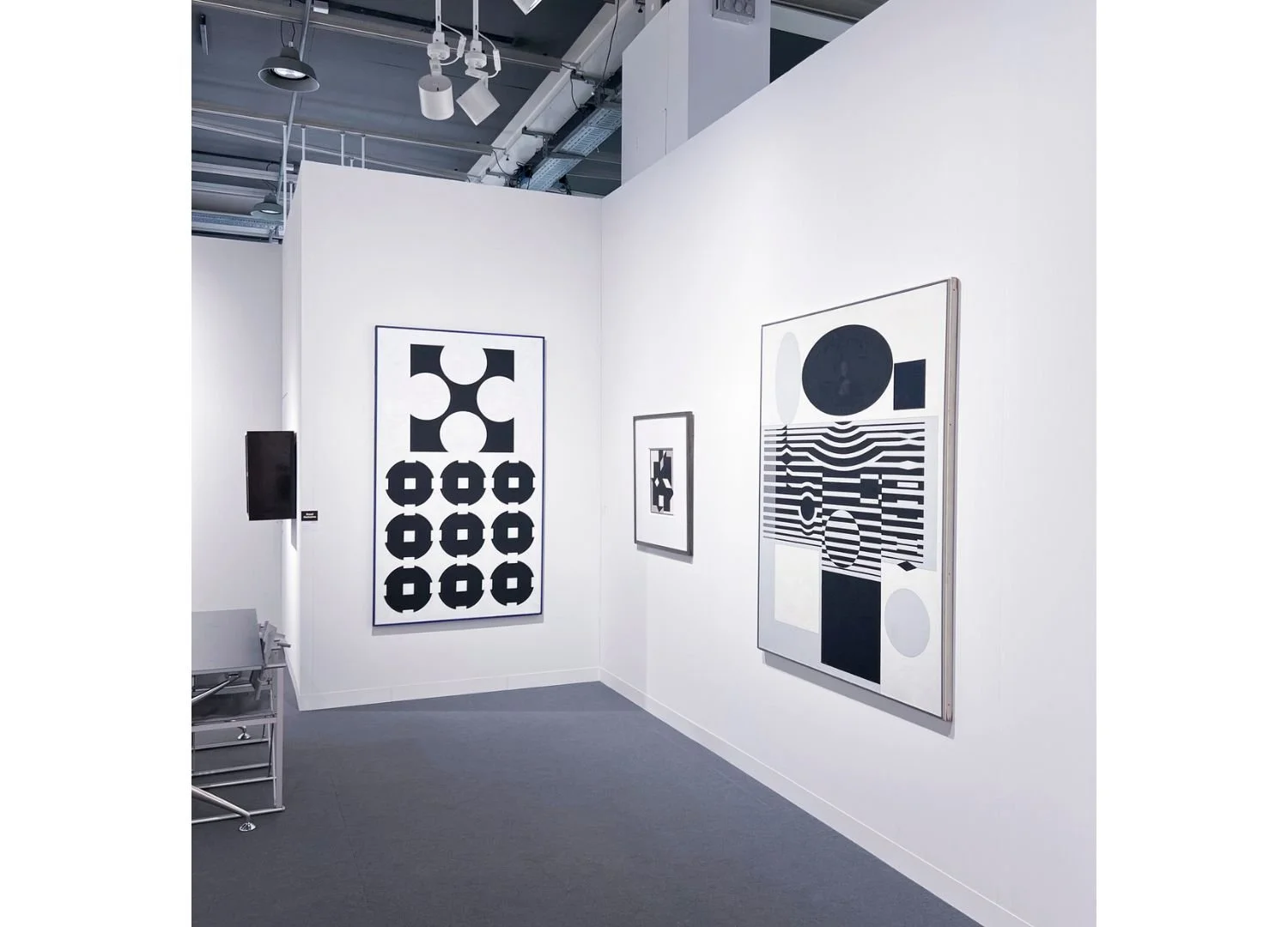
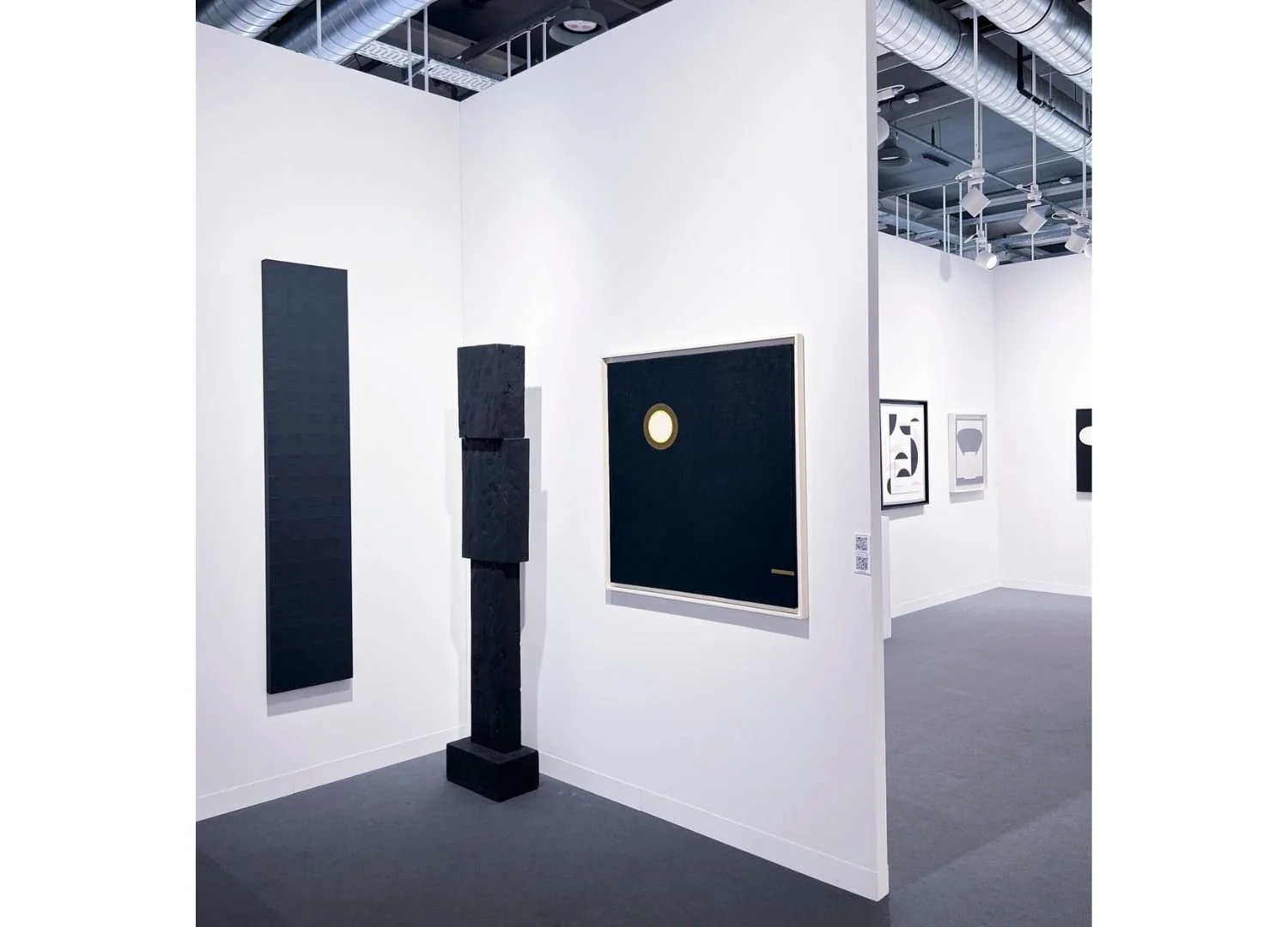
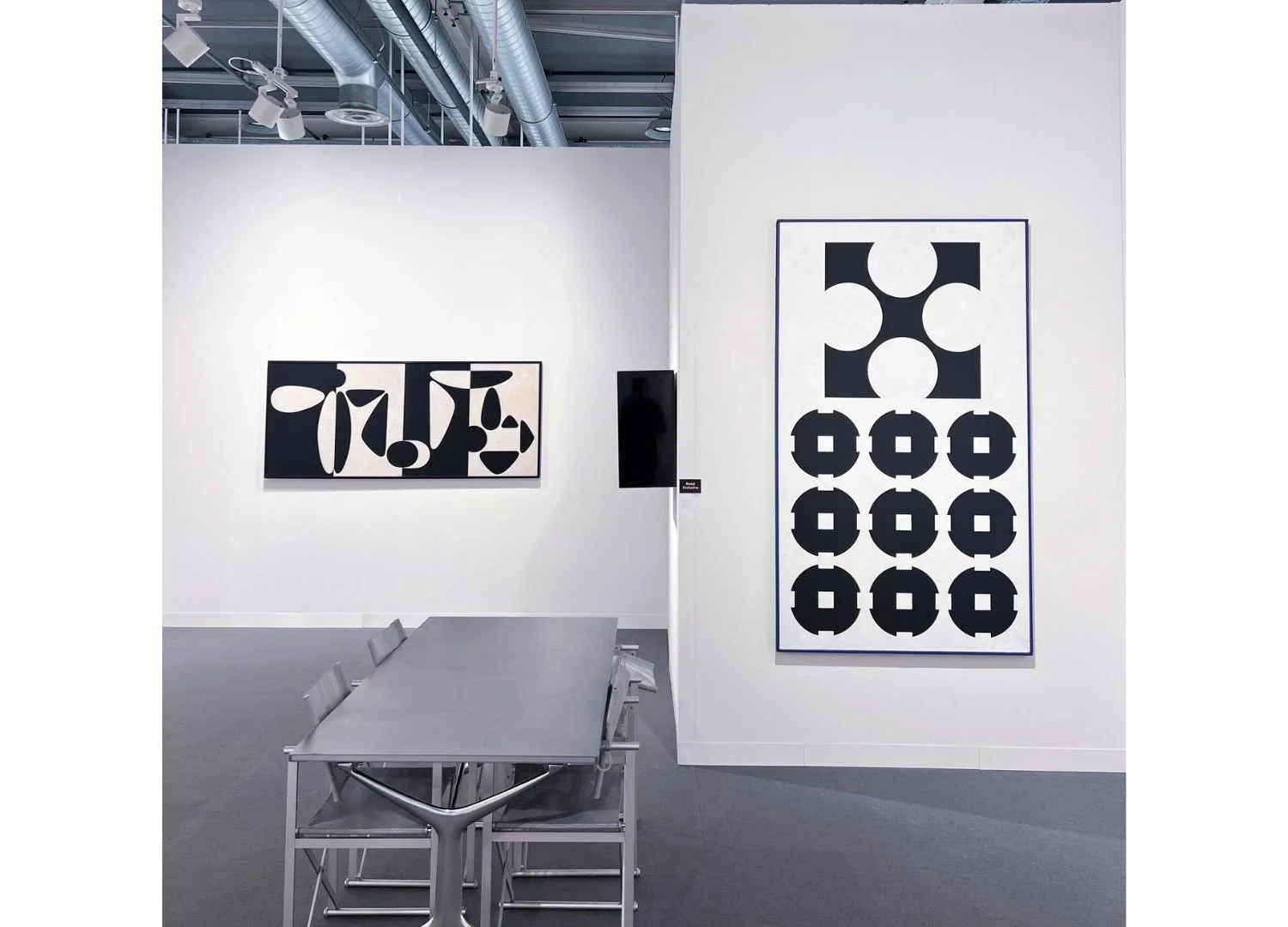
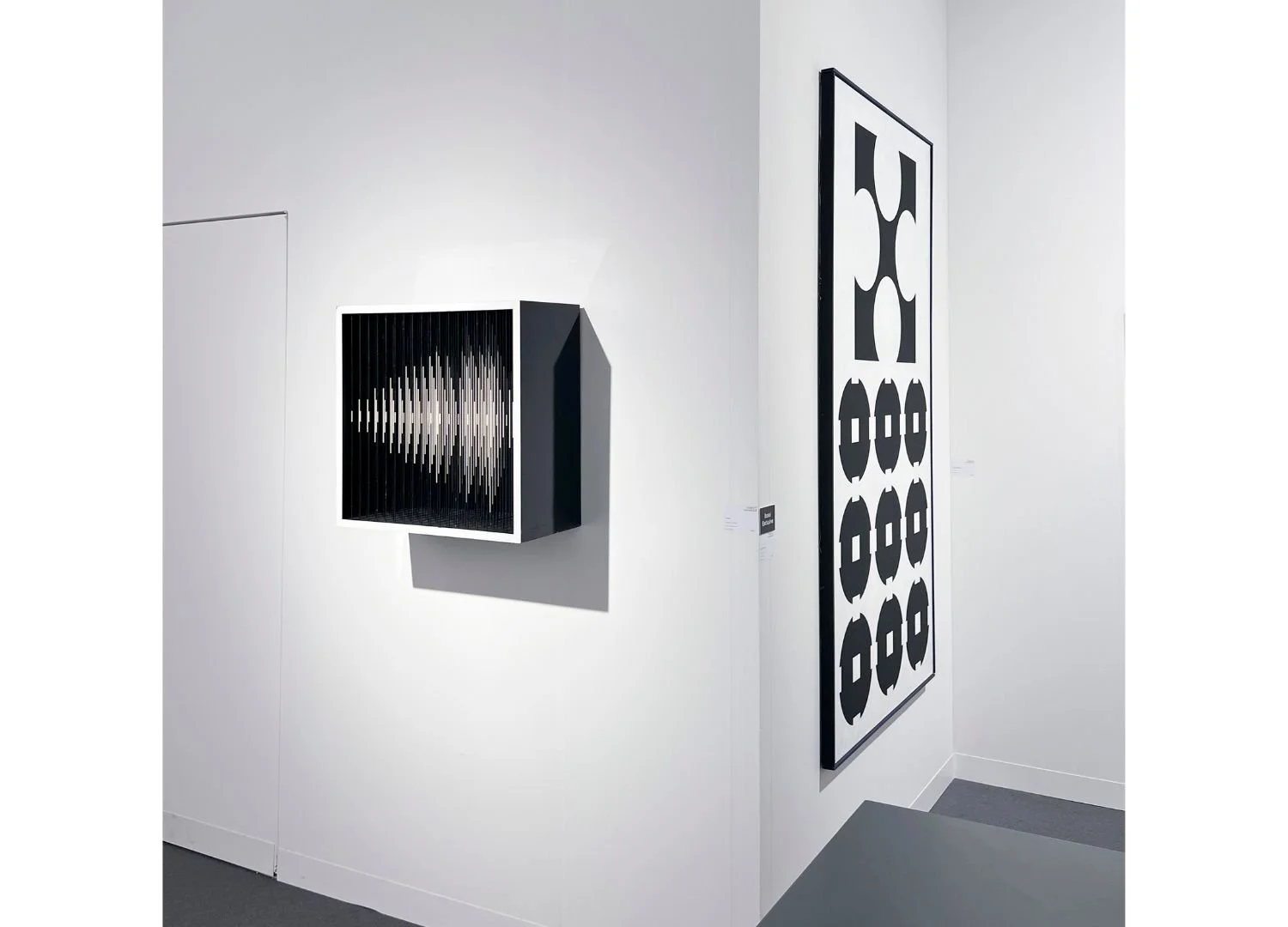
Each artist interprets it in their own way: Victor Vasarely renders it kinetic, Aurélie Nemours elevates it touch by touch, Jo Delahaut structures it, Jean Leppien confronts it, while Gottfried Honegger illuminates it. Hans Steinbrenner sculpts it, Fritz Levedag and Alan Reynolds give it rhythm, Georges Folmer composes it, Yvaral animates it, and Vera Molnar modulates it. Here is a brief overview of the works of all these artists presented at our booth, where black becomes an almost visceral visual adventure, but also the feeling of an absolute.
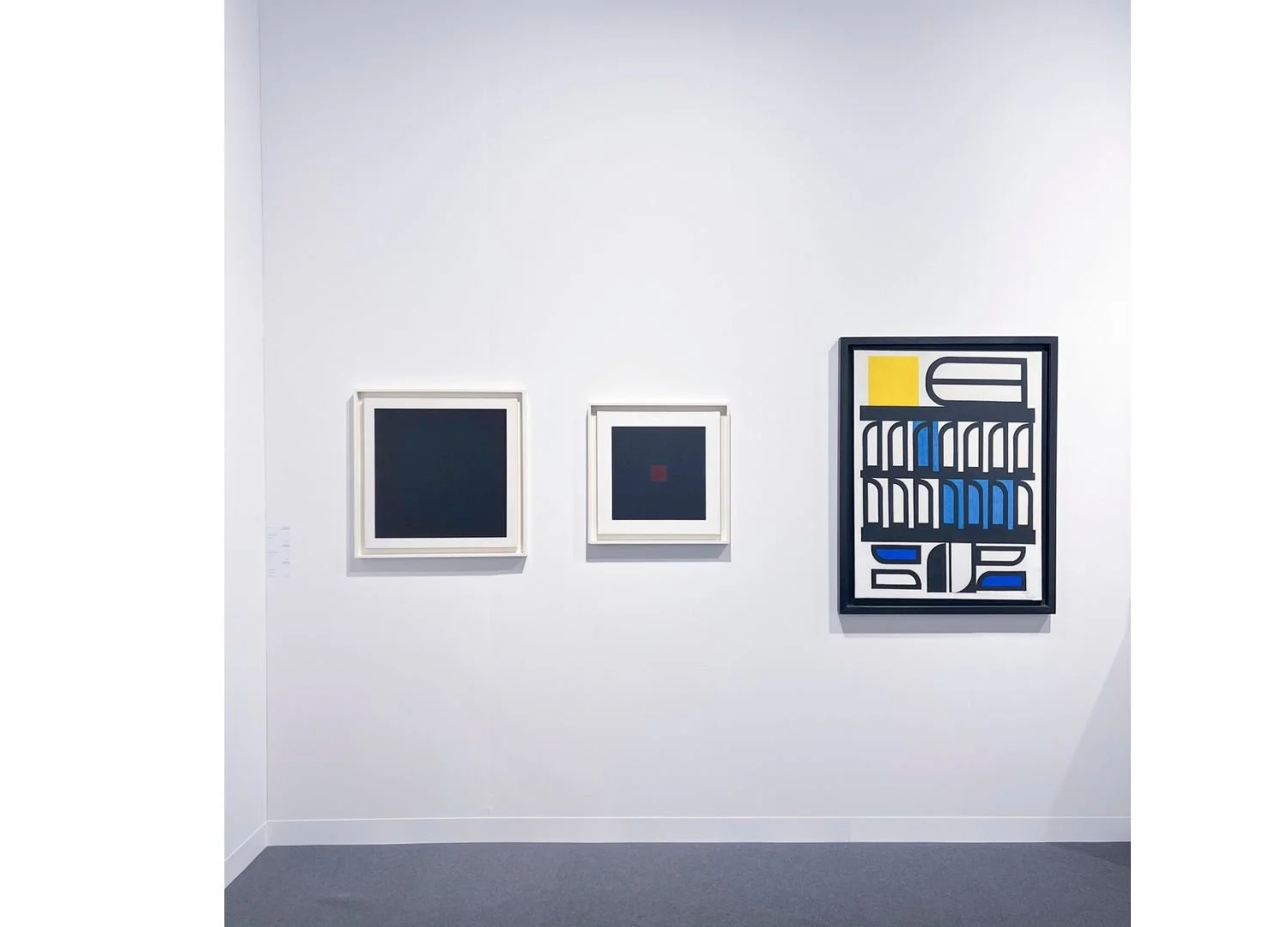
In Jo Delahaut's work (1911-1992), black acts as a framework: its powerful contours surround exploded geometric shapes, allowing color to emerge in the background to rhythmically and spatialize the canvas.
For Georges Folmer (1895-1977), the surface of the painting is not simply a support but a space structured by internal dynamics: tensions are organized within it and actively direct the viewer's gaze through a construction of interlocking planes. This logic, marked by the legacy of Cubism, extends to his sculptures, where form emerges from an arrangement of fragments and assembled surfaces.
Gottfried Honegger (1917-2016) plays on the associations between different layers of black to create a vibrant and absorbing surface. In his reliefs, the voids that allow the wall to show through reinforce this architectural construction where the forms seem to balance and converse.
For Jean Leppien (1910-1991), the key lies in the relationships between tones: black acts as both a force of attraction and contrast. However, the canvas appears to him as a limit, calling for a vaster, boundless space, like ephemeral traces in the sky, such as airplane contrails—an intuition that runs particularly through his "UFO" series.
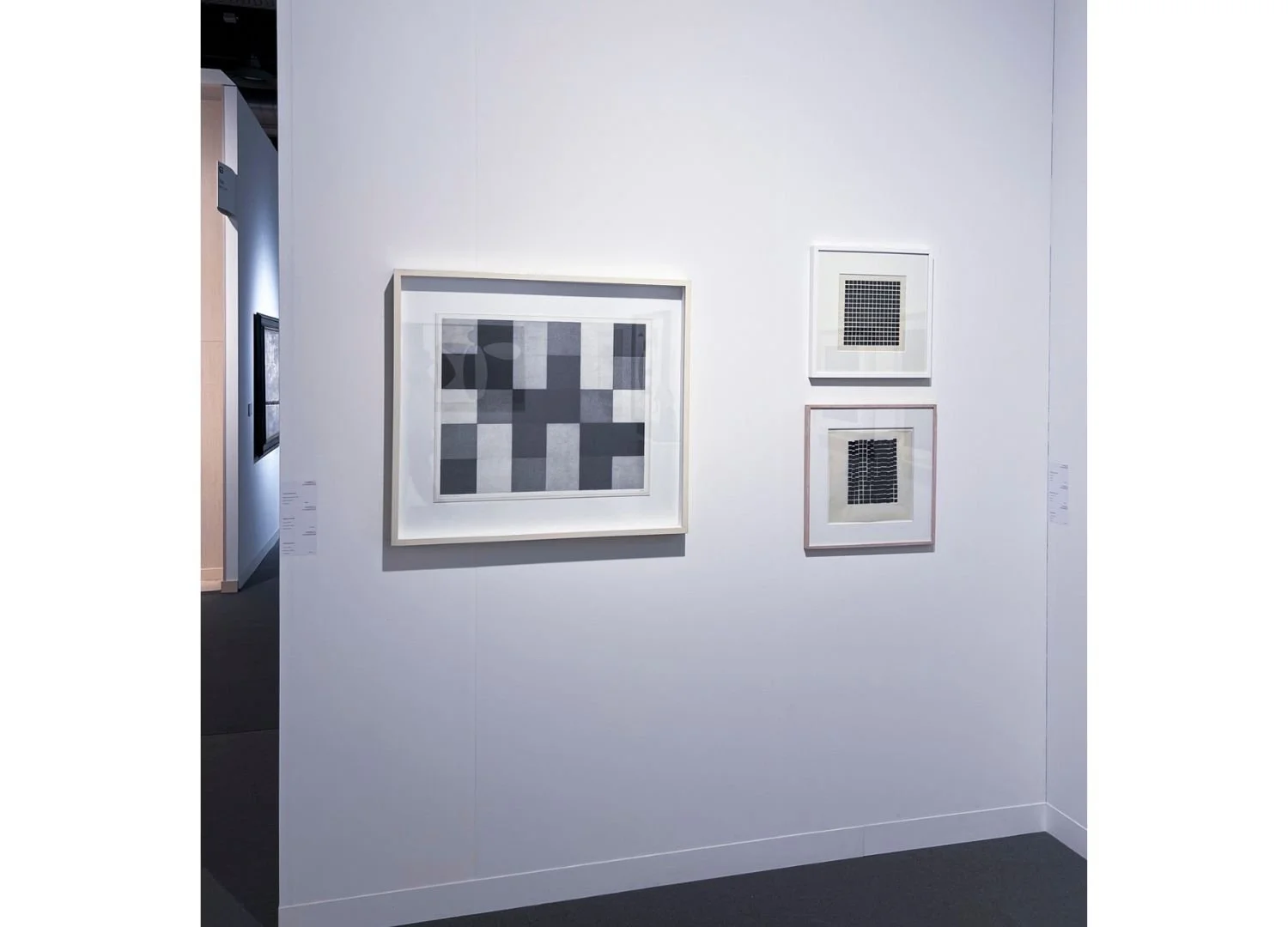
Fritz Levedag (1899-1951) explored the plastic possibilities of black, white, and various shades of grey using graphite. Through the juxtaposition and repetition of geometric forms, he created a play of visual tensions where contrasting tones produced an oscillating rhythm: some elements seemed to advance on the surface while others receded, in a subtle dance of appearances and disappearances.
Vera Molnar (1924-2023) calculated repetition and variation in black and white. By applying algorithmic rules to simple motifs like the square, she generated grids where subtle variations and shifts created a latent movement. This structured approach made the surface shimmer with a slight iridescence, transforming geometric rigor into a dynamic work where order engenders infinity.
Aurélie Nemours (1910-2005) employed a refined visual language, where squares, crosses, and grids are arranged in flat planes of neutral colors, creating a subtle rhythm through their multiplication and variations. This geometric rigor, far from being cold, engenders a balance of masses that transforms each work into a space for meditation.
In Alan Reynolds' (1926-2014) work, the orthogonal grid became a field of exploration of density: the application of graphite on paper reveals a subtle gradation of values, where each square vibrates with its own intensity.
Hans Steinbrenner (1928-2008) assembled carved wooden blocks, stacking them to create an imposing vertical structure. Black stain seeps into the carved textures of each face, visually unifying the different elements. This fusion through color transforms the assembly of distinct blocks into a single form, giving the impression of a monolithic whole sculpted from a single mass.
In the work of Victor Vasarely (1906-1997), the pieces presented, unified by a rigorous black and white palette, exploit the power of contrast to make the surface vibrate and reveal the emergence of movement. This polarization allows for a strong contrast and a reversibility between the two tones, contributing to creating a sense of unease on the surface of the image. The compositions are organized into patterns and grids where lines, circles, and squares, subjected to rotation and stretching, cease to be mere figures and become forces. The surface then begins to move, heralding the advent of kinetic art.
Finally, Yvaral (1934-2002) began developing his "planes-espaces" (space-planes) in 1960, relief works that alter perception depending on the viewer's position. The image, stable when viewed head-on, transforms when the angle of view changes. Through the use of relief and optical effects, Yvaral makes perception a fluid and dynamic experience.
Through these unique approaches, each of these artists makes black not an absence, but a presence: active, vibrant, thoughtful.