
Auguste Herbin
Lenbachhaus, Munich
From June 3 to October 19, 2025
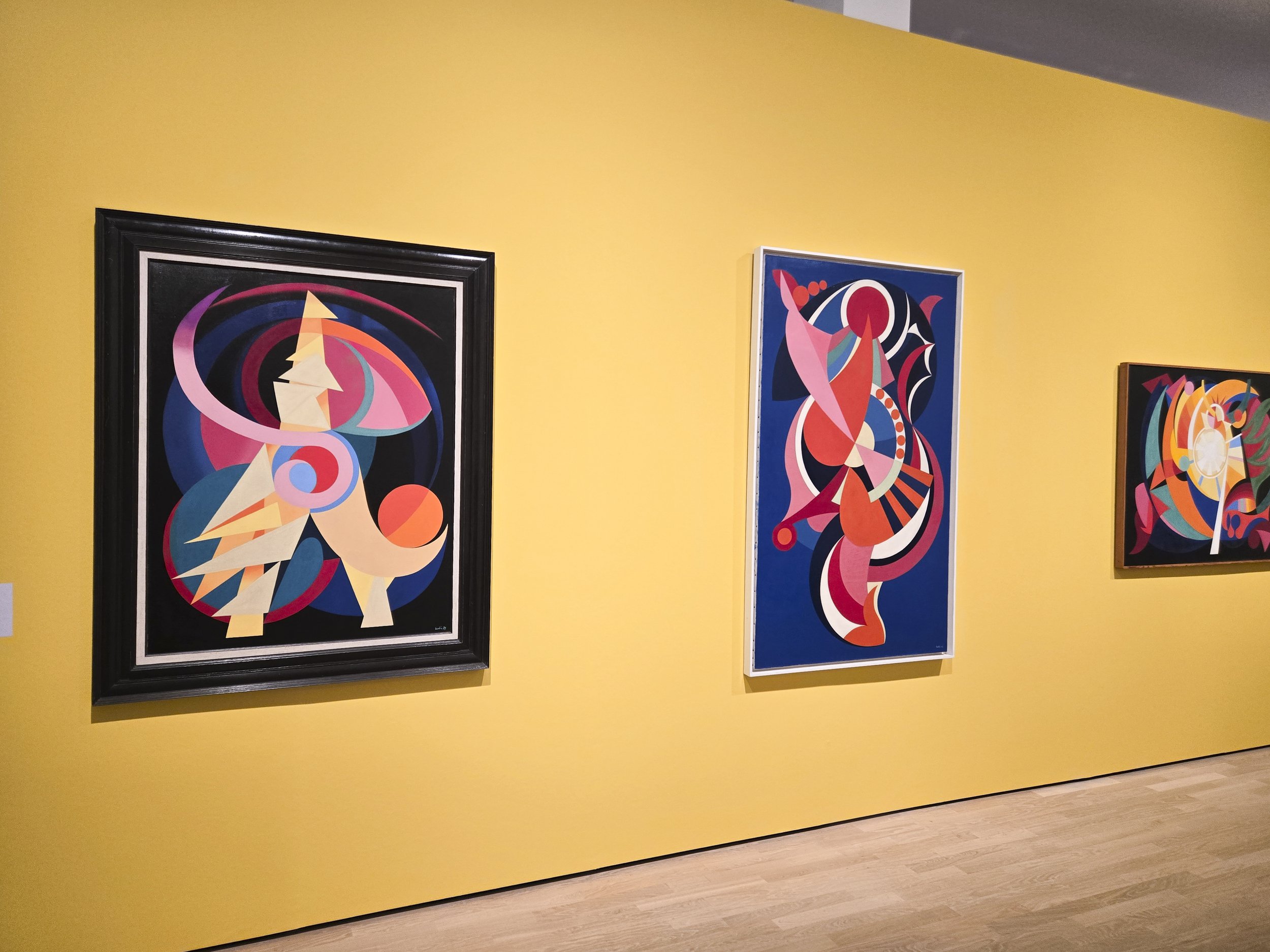
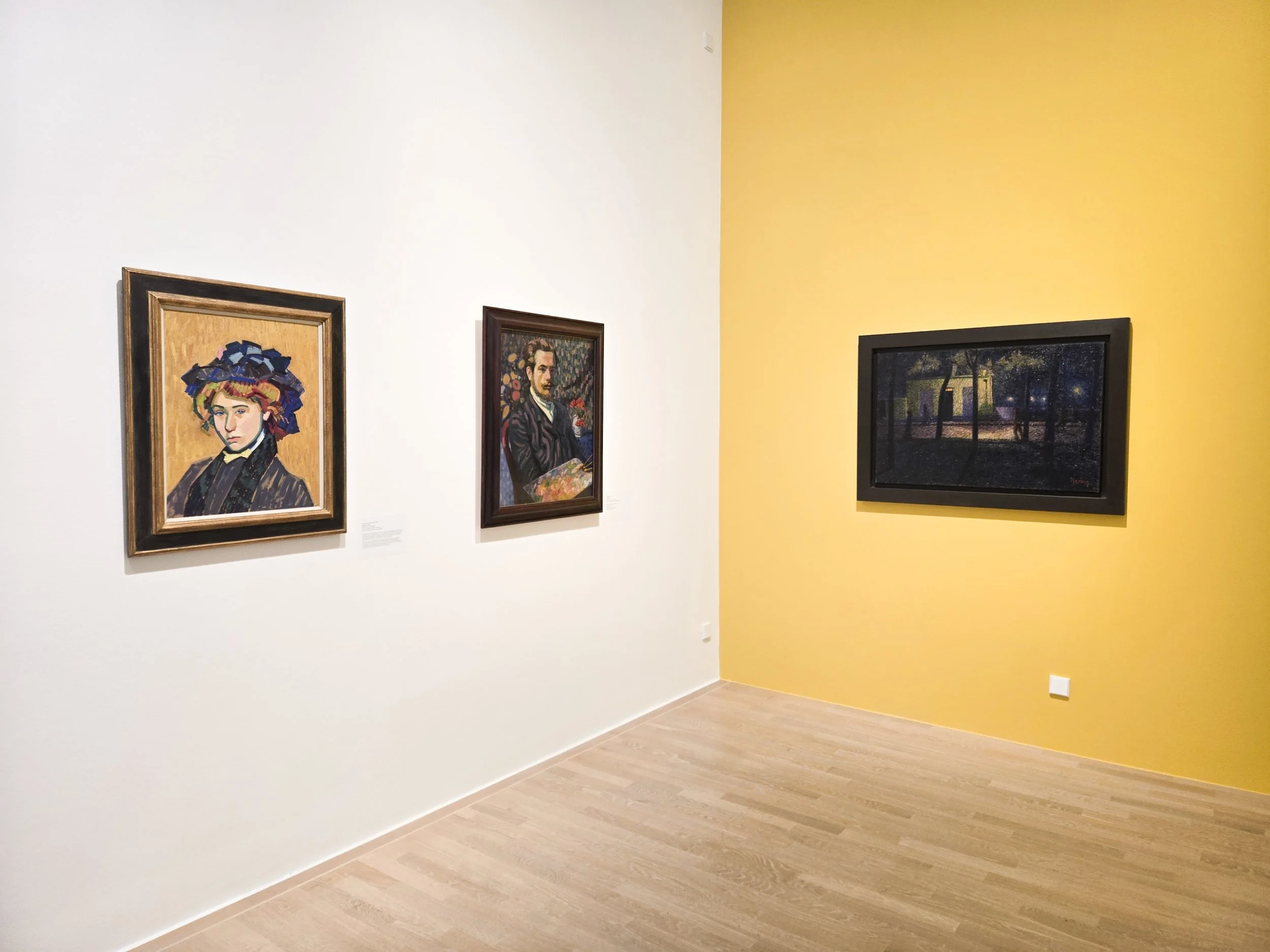
The French painter Auguste Herbin (1882–1960) is recognized as a revolutionary figure of modernism and one of the pioneers of abstraction in France. He began, at the start of the 20th century, with landscapes, still lifes, and portraits inspired by Post-Impressionism, which already demonstrated his taste for luminous and harmoniously controlled colors. His palette became flamboyant during the Fauvist phase that followed, and remained so throughout his life.
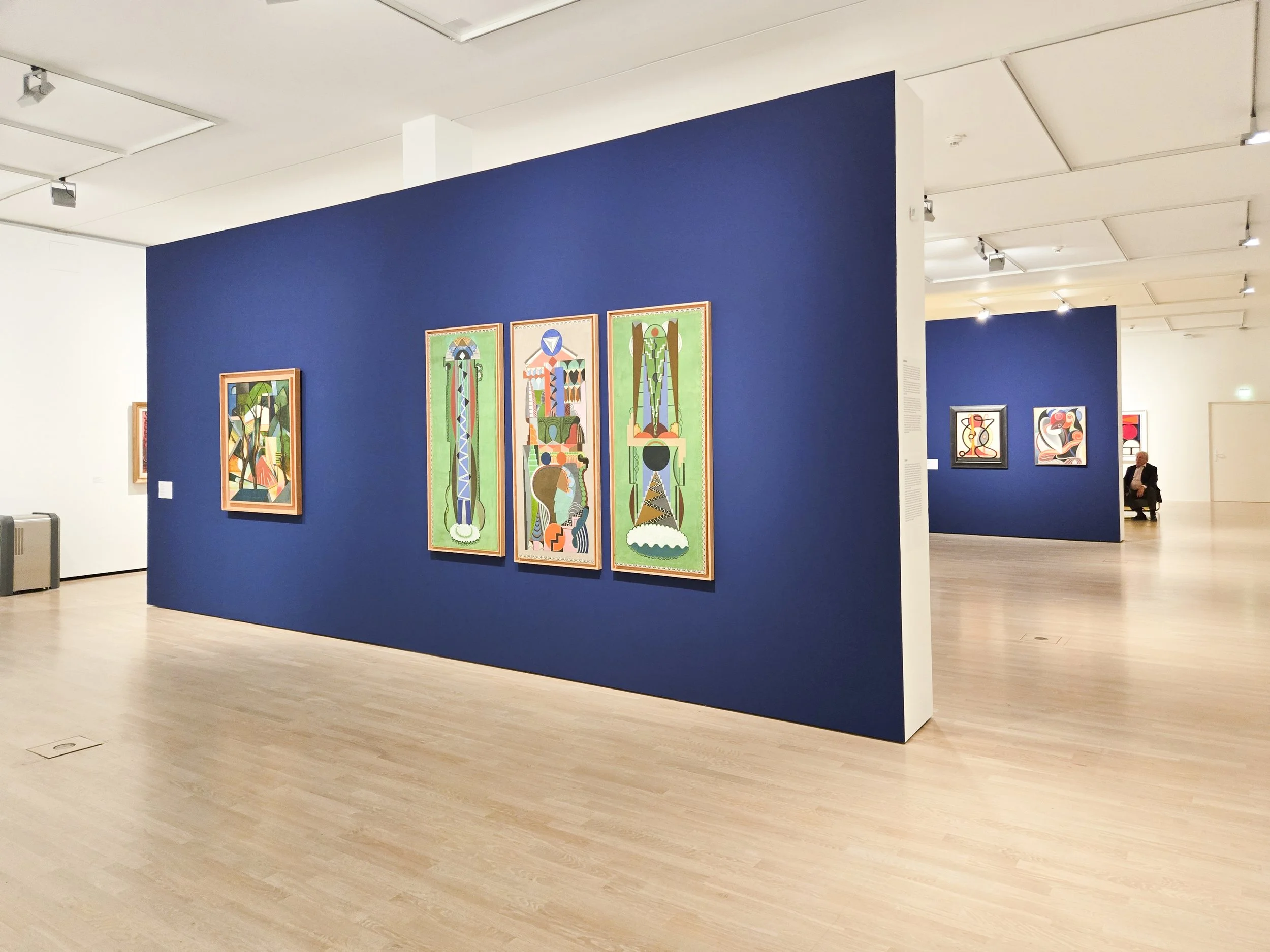
In 1904, he met the German art critic and gallery owner Wilhelm Uhde, who also introduced him to the German public—with lasting consequences: his work is still exhibited and collected there today. As early as 1909, he painted his first Cubist canvases, establishing himself among the inventors of this visual language. Here again, his Cubist work is distinguished by the boldness of its colors. In 1909, he moved into a studio in the famous Bateau-Lavoir in Montmartre, where Picasso and Van Dongen were among his neighbors.
Herbin painted in various regions of France, from the Belgian border to the Spanish border; but also in Bruges, Belgium, the port of Hamburg, and Corsica. Each change of scenery inspired new forms and often led to innovations in his pictorial vocabulary. It was only in the 1930s, when he fully embraced abstraction, that he settled permanently in Paris.
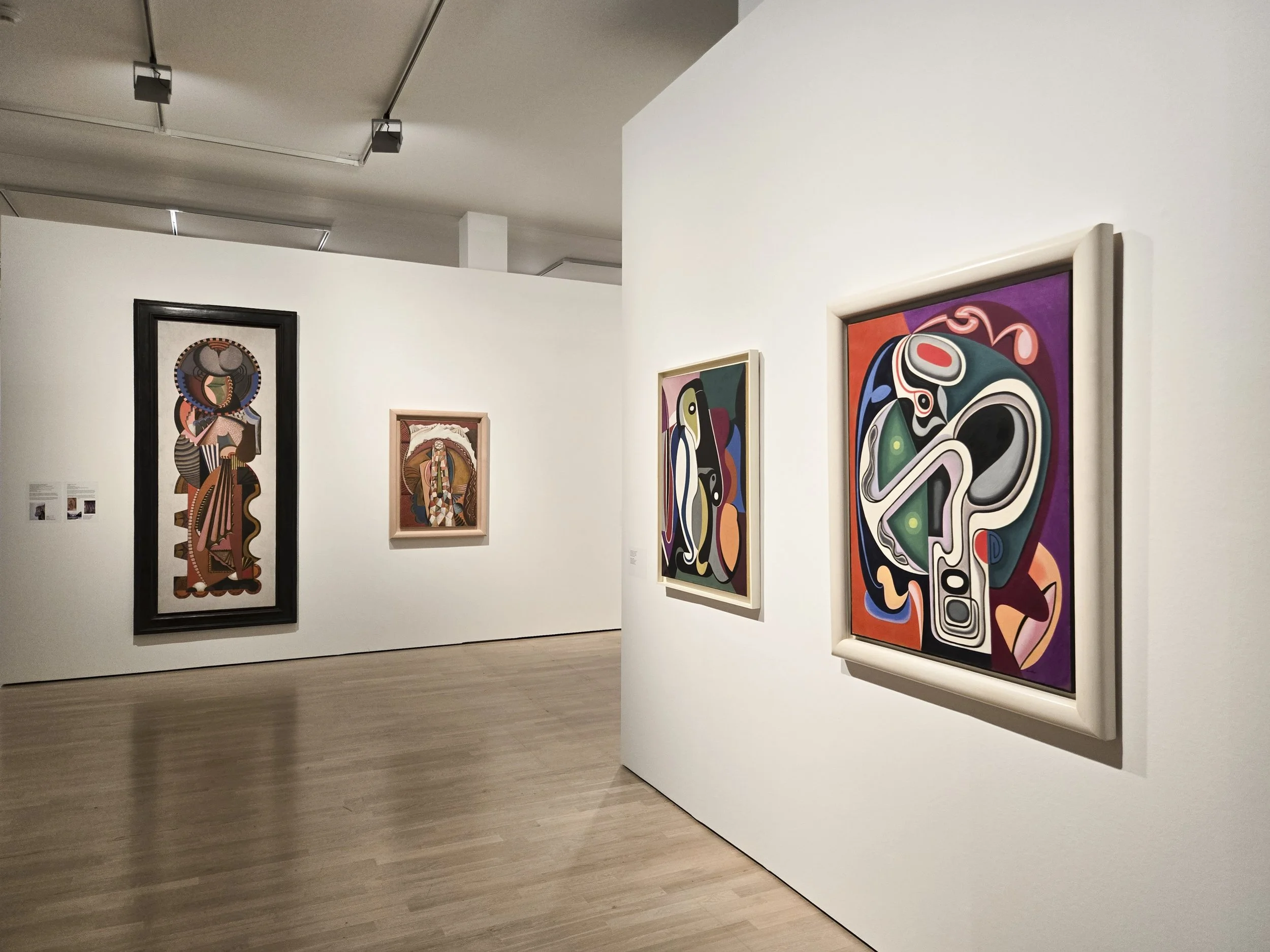
During the First World War, he designed camouflage patterns for aircraft. At the end of the conflict, he developed a completely abstract vocabulary of geometric forms for decorative wooden objects. A committed artist and, for a time, a member of the French Communist Party, he conceived these works as a form of "monumental art for all." His later return to figurative painting, in a vein of magical realism, was not a repudiation of his previous work, but a metamorphosis: as in other developments in his prolific oeuvre, the old nourished the new. A few years later, he returned to abstraction, beginning with rounded forms, volutes, and spirals.
An organizer of exhibitions and artists' associations, he championed abstract art; in 1931, he became president of the Abstraction-Création group. In the late 1930s, he became interested in color theories, particularly anthroposophical adaptations of Goethe's theory of colors. In 1942, this research culminated in his "plastic alphabet," a set of rules combining pure colors, geometric forms, musical notes, and letters. He thus "spelled out" words or names in images, which he treated creatively according to their inherent emotional qualities. After 1945, Herbin became a leading figure for proponents of concrete art, kinetic art, and op art. His work was then featured in numerous solo exhibitions. Until his death, he remained a source of innovative inspiration for French abstraction.
Our exhibition traces the major stages of Herbin's career, presenting around fifty major works as well as abundant documentation.
Exhibition curator: Susanne Böller
To learn more, click here.