
-
![gallery lahumière glattfelder honegger]()
-
![]()
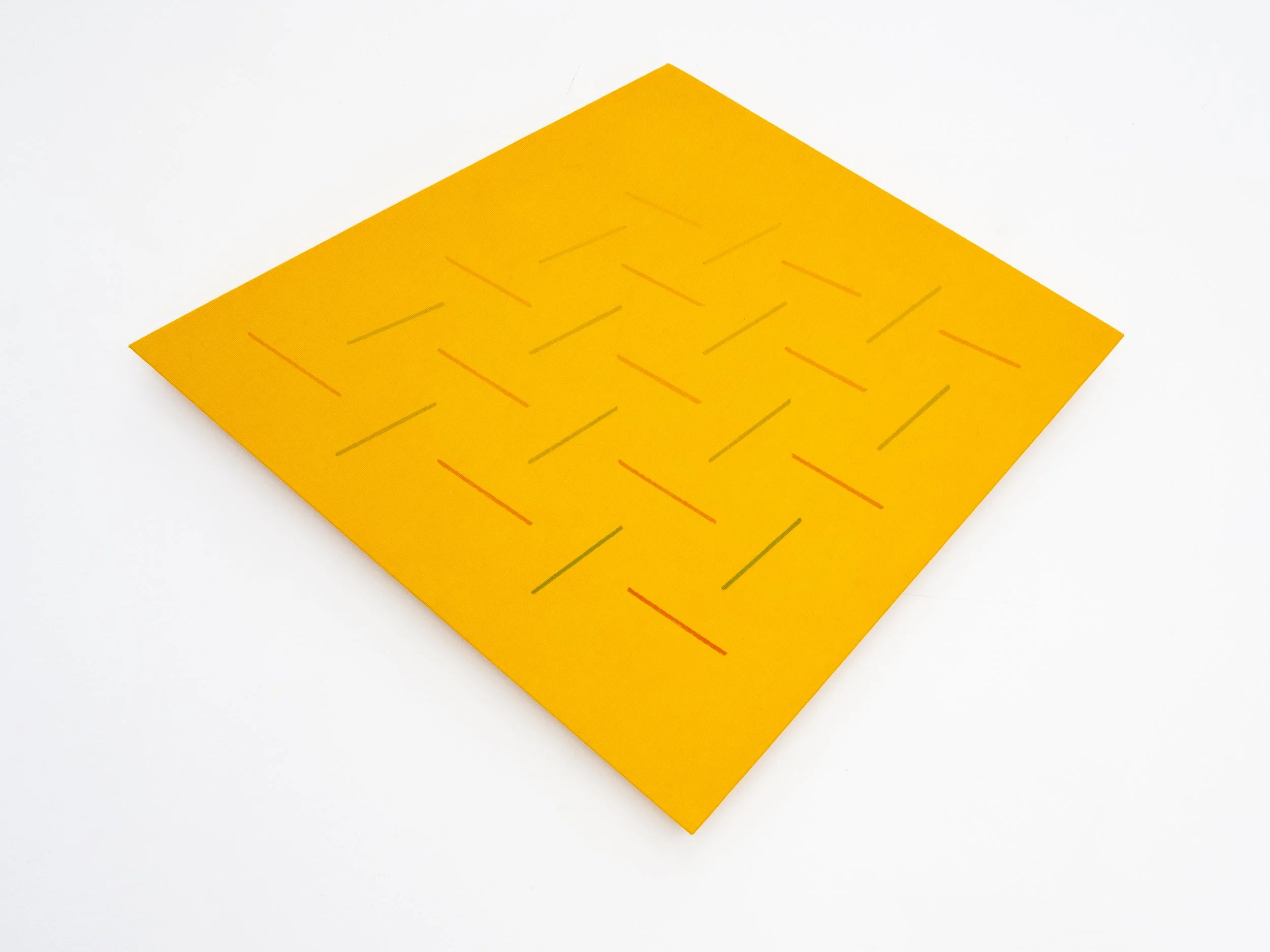
Hans Jörg Glattfelder, Imbricato evanescente, 2007, acrylic on canvas mounted on wood, 43 x 38 cm
-
![gallery lahumière glattfelder honegger]()
-
![Hans Jörg Glattfelder Galerie Lahumière]()
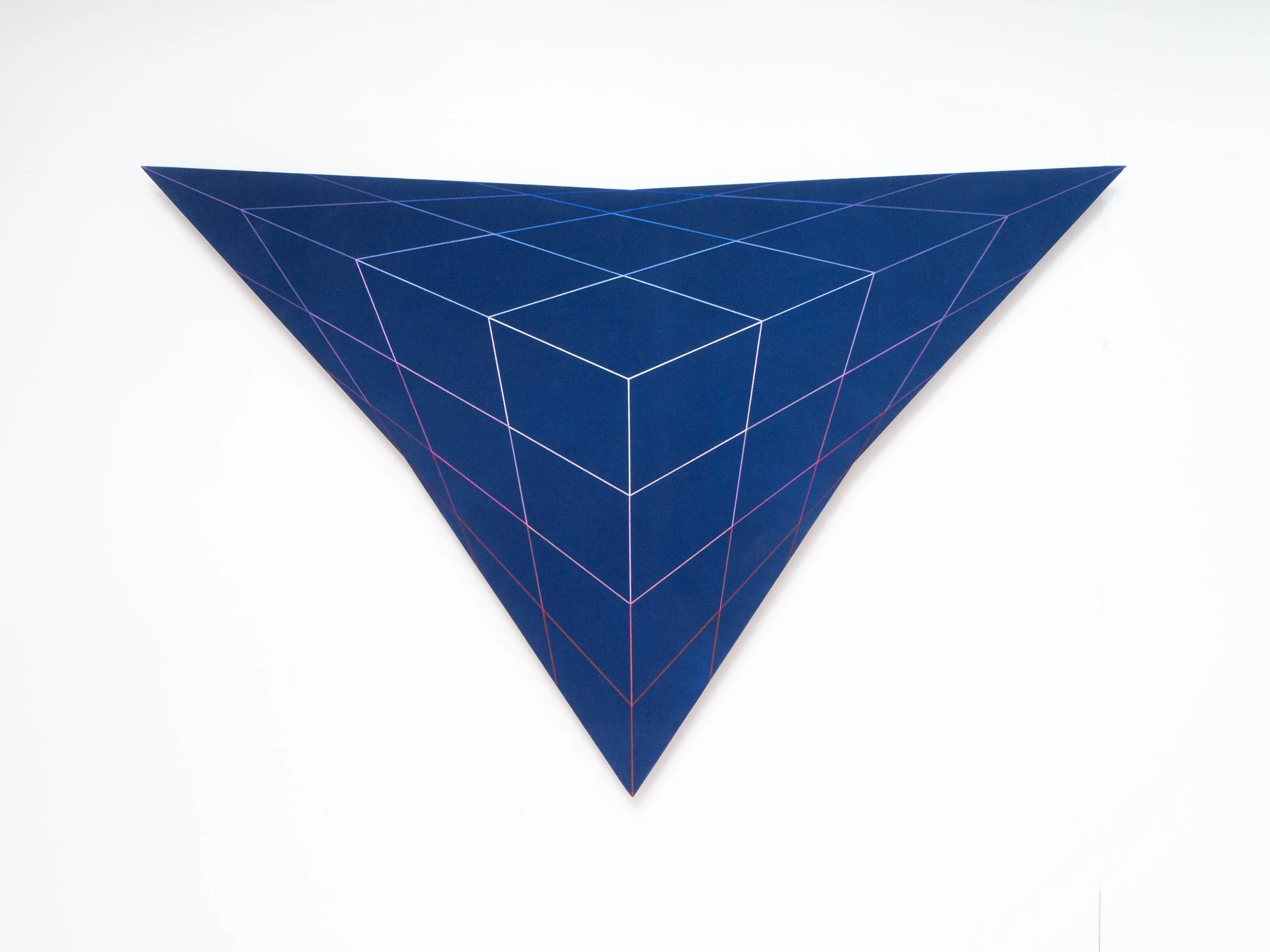
Hans Jörg Glattfelder, Blaudfläche mit drei depressionen, 2007,
acrylic on canvas, 85 x 100 cm -
![gallery lahumière glattfelder honegger]()
-
![gallery lahumière glattfelder honegger]()
-
![gallery lahumière glattfelder honegger]()
-
![gallery lahumière glattfelder honegger]()
-
![gallery lahumière glattfelder honegger]()
-
![Gottfried Honegger Galerie Lahumière]()
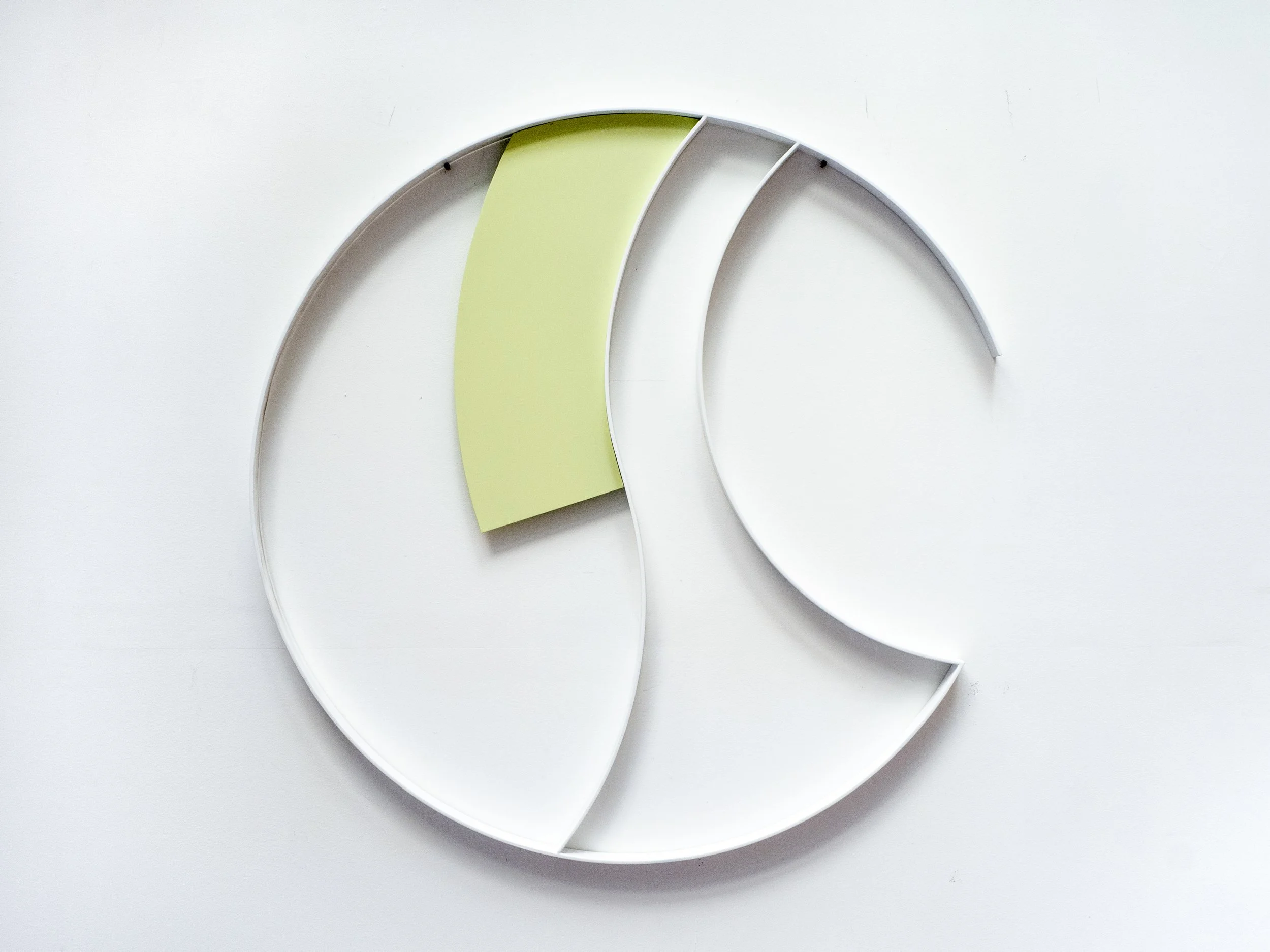
Gottfried Honegger, Relief Z 1499, 2008,
lacquered iron, painted aluminum, 80 x 80 cm



Vanishing lines
Hans Jörg Glattfelder and Gottfried Honegger
From September 13 to October 18, 2025
Opening on September 13th at 6pm
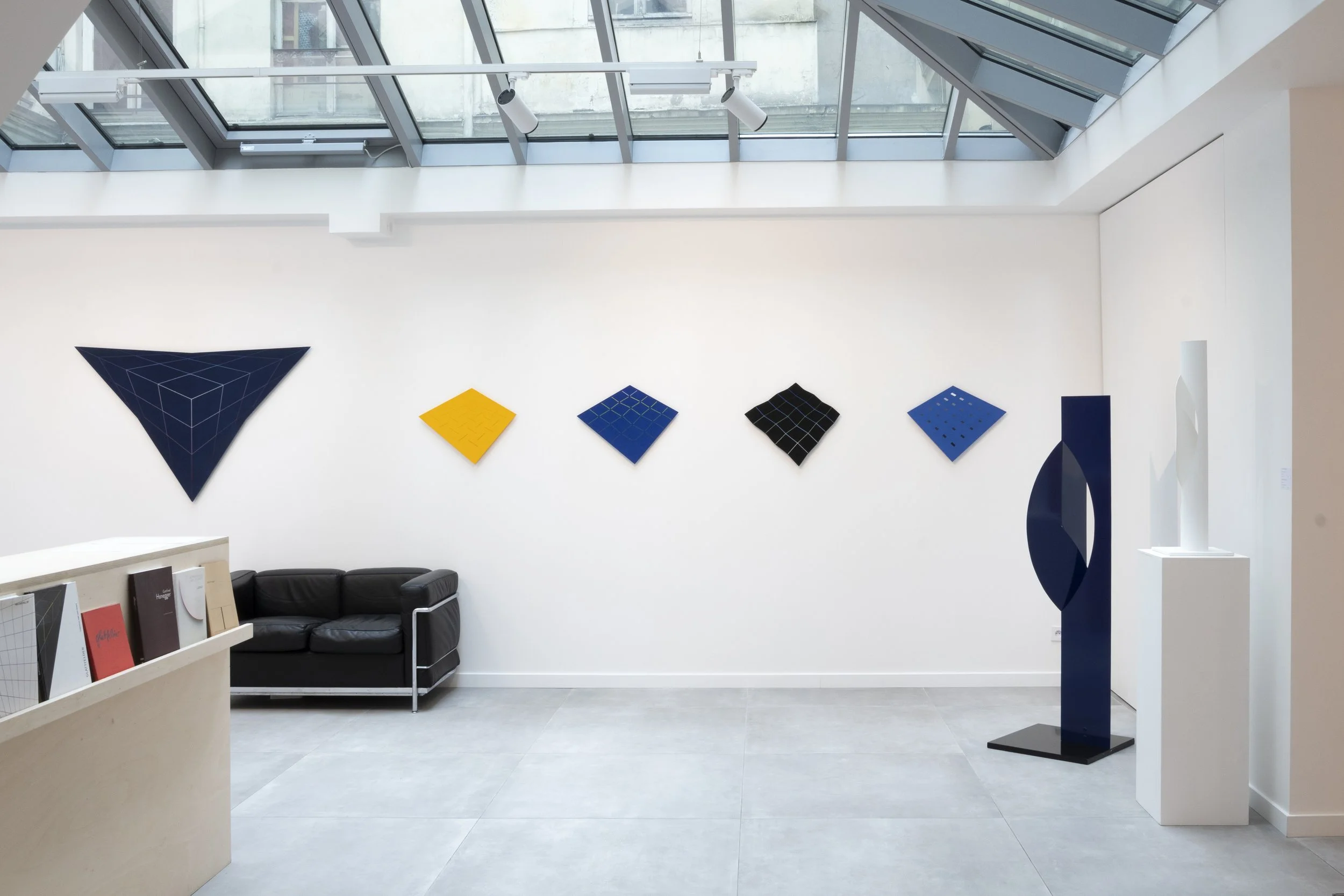
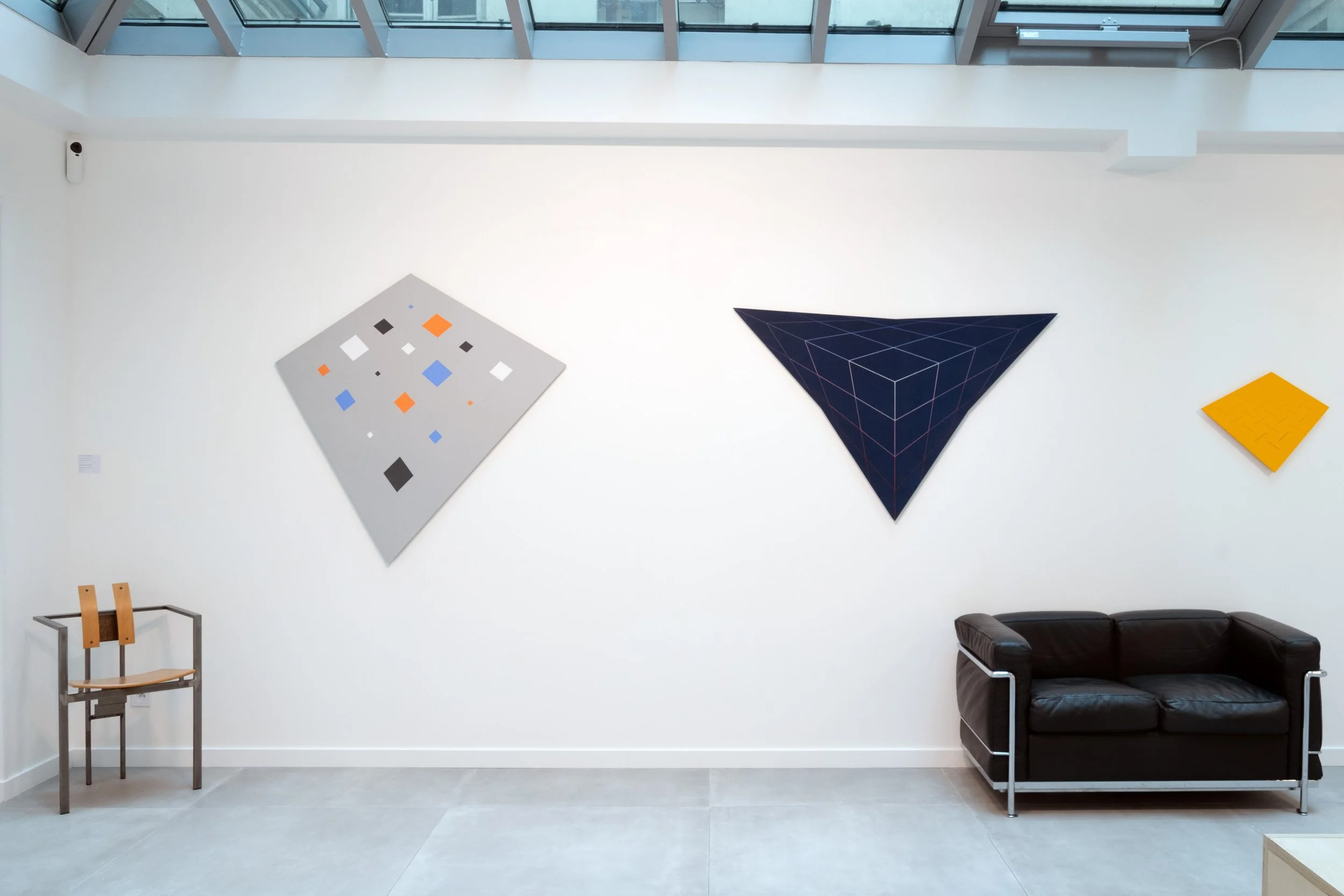
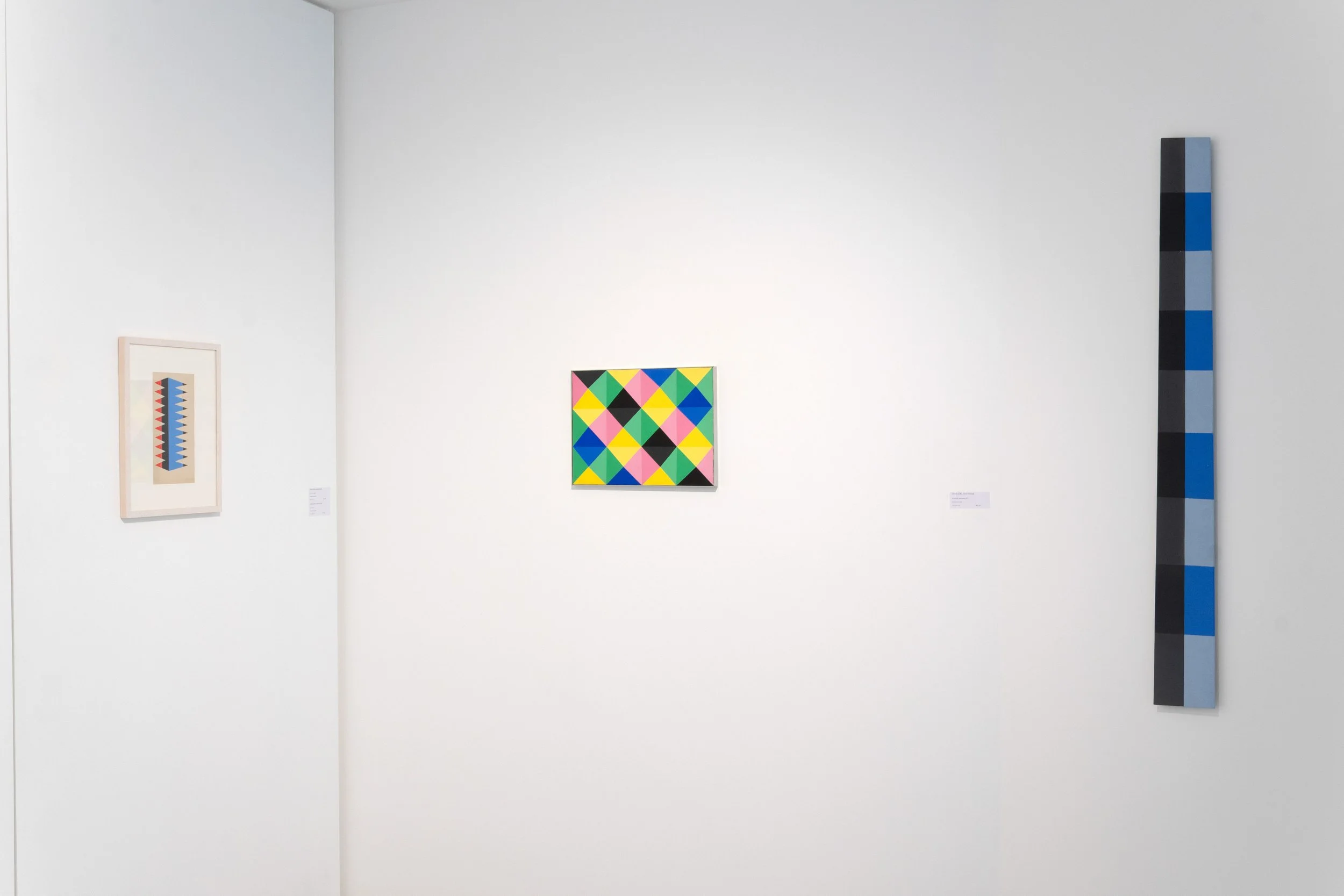
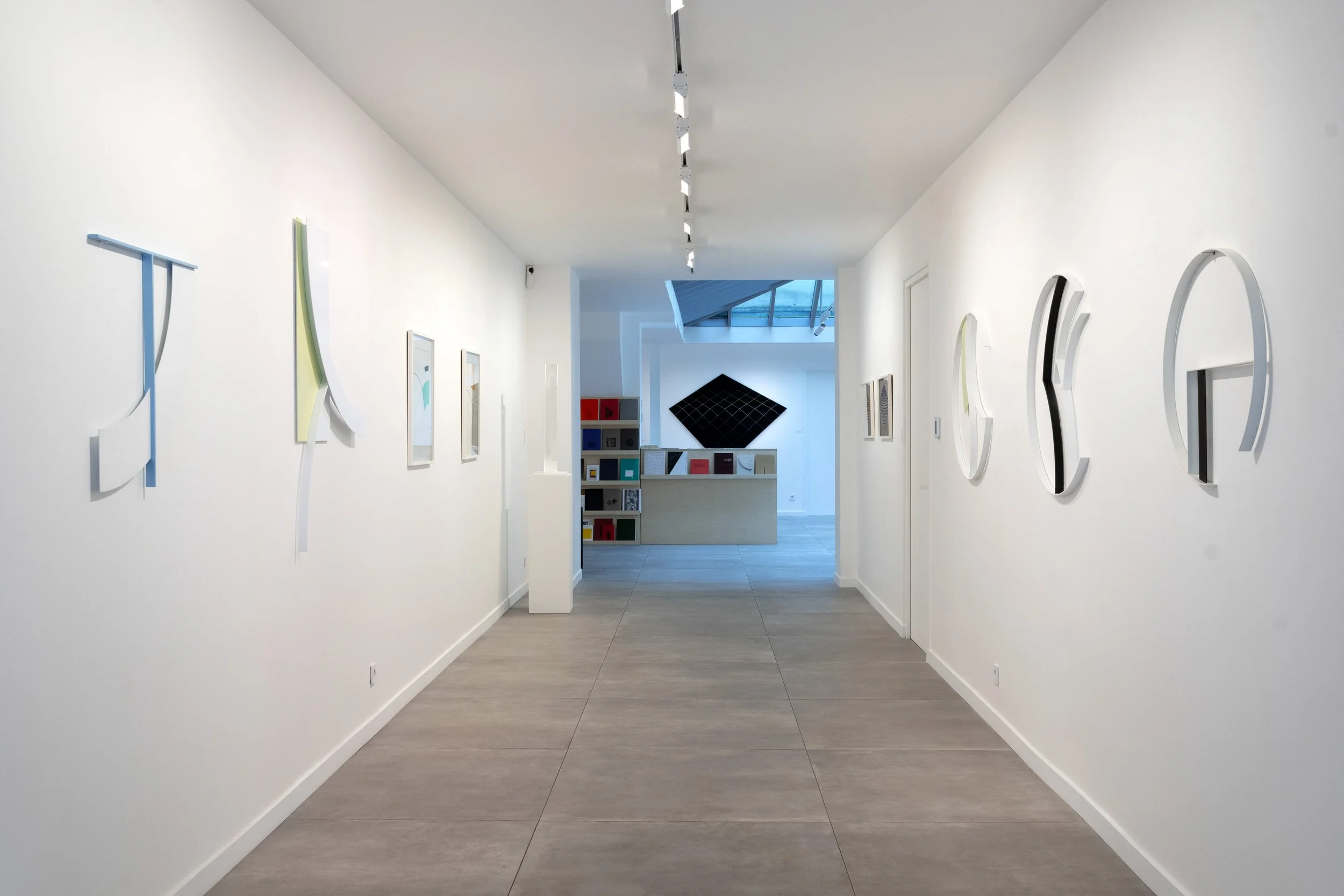
For the September reopening, we have chosen to exhibit the works of two Swiss artists: Gottfried Honegger and Hans Jörg Glattfelder. The Espace de l'Art Concret at the Château de Mouans-Sartoux is currently honoring its founder, Honegger, until March 2026, and Glattfelder will soon be exhibiting at the Arithmeum Museum in Bonn (starting in October 2025). We wanted to echo these two events. We offer a comparative look at these two major figures of Swiss concrete art, highlighting the questions raised by their work.
Honegger and Glattfelder developed their practices in resonance with certain concerns of the Zurich School, those of concrete art as defined by Theo Van Doesburg in 1930, while gradually distancing themselves from it.
Gottfried Honegger and Hans Jörg Glattfelder share an approach where art engages in close dialogue with science and philosophy, not to produce demonstrations, but to question our systems of knowledge and our perception of the world. They call for a personal construction of knowledge, where the viewer becomes an active participant in a reflection on reality, its representations, and its limits.
For Honegger, it was essential to work with primary, simple, fundamental geometric forms. In his eyes, they represented "the raw material of the visual world," the instruments through which the universal desire to build is expressed. What interested him was the play we can all experience with what we have before our eyes and in our hands. In his drawings, sculptures, and reliefs, there are closed geometric forms that are constantly in relation to other strict forms: curved lines, right angles, and delimited colored spaces. The juxtaposition of these elements creates openings, coincidences that modify the space of perception. In his sculptures, for example, the starting point might be a simple rectangular sheet of aluminum that he cut out, then folded the cuts themselves. The sheet remained mentally reconstructible: one always perceives the common origin of the elements and the way in which the forms emerge from the whole. The act of cutting and folding reveals the internal dynamics of the form and the potential for relationships that an open space can bring forth. In its reliefs and designs, the voids that allow the wall or the white of the paper to show through reinforce this structured construction where the forms seem to balance and converse. A feeling of fluidity and interconnectedness emanates from it.
Gottfried Honegger was keenly interested in the creative dynamics of chance, which he explored extensively in his work. Influenced by the reflections of Jean Arp and the Dada movement on this subject, he often used dice or computer-generated random sequences to guide the creative process of his works. By introducing chance, Honegger sought to erase the artist's overly visible hand, leaving more room for the viewer and their own experience. What chance allows is a reaction: the dice are thrown, we see where it leads, and we decide. One might think that our action is diminished, but on the contrary: it is revived, stimulated. Honegger welcomes these random events, but selects them, frames them, organizes them. He invites disorder to better reveal how forms can be positioned in relation to one another. Integrating chance thus becomes a way of emphasizing our active role in creation. Here, the viewer is not invited to recognize familiar forms, but to create relationships and connections for themselves. As Honegger said, "geometry is not what should come to the forefront"; what matters is the creative process, a mechanism to be activated.
Honegger was a committed humanist who championed the close connection between art and life, advocating for greater cohesion and accessibility. Art, in his view, should occupy a central place in society and reach the widest possible audience. He thus created numerous works in public spaces, including monumental sculptures. With his wife, Sybil Albers, he founded the Espace de l'Art Concret (Space for Concrete Art) at the Château de Mouans-Sartoux in 1990 and donated their collection to the French state in 2002. The Espace de l'Art Concret continues this vision today, notably by developing educational workshops for children, as access to artistic creation and reflection from a very young age was a priority for Honegger.
Hans Jörg Glattfelder, for his part, draws our attention to a fundamental point: the forms and structures with which we represent or construct the world rely on inherited spatial conventions, notably from Euclidean geometry, which do not always coincide with reality. His work is situated precisely in this interval, where our certainties waver. Indeed, since Elements (c. 300 BC), our representational habits have been based on an ideal geometry where lines are straight and surfaces perfectly flat. Yet, our real world escapes this rigor: the Earth is not a perfect sphere, spacetime curves under the effect of gravity, and at the microscopic or cosmological scale, classical geometry is no longer sufficient to describe reality.
From 1977 onward, Glattfelder developed works that challenged our perceptions. He called them "non-Euclidean metaphors." He created paintings that transcended simple flatness to offer ambiguous spaces, difficult to grasp, yet undeniably present before us. We are confronted with quadrilaterals composed of networks of lines or geometric shapes, with varying colors, spacing, transparencies, reliefs, and curvatures that, in their unexpected arrangement, induce a sense of vertigo. Our gaze can no longer perceive the elements and their boundaries as usual. These objects, lacking an identifiable model, nevertheless evoke a powerful impression of presence, between infinite openings, swirling in space, and constant oscillations between flatness and depth.
Metaphor is first and foremost a mechanism of language: it brings two elements together to produce a new meaning. But can we create metaphors with forms that represent nothing recognizable and that defy all figuration? Glattfelder invites us precisely to embrace these formal contradictions—such as a line that appears both straight and curved—capable of generating a metaphorical effect. They lead us to imagine a space that no longer follows the familiar rules of geometry. The aim is not that of illusionism, which seeks to deceive the eye by representing something familiar and identifiable. Illusion plays on visual perception, whereas metaphor calls for interpretation. Glattfelder's works offer neither a trompe-l'œil space where one could guess what should be recognized, nor a space that can be scientifically demonstrated. Rather, they invite us to change our perspective: to look differently, beyond the usual geometric reference points. It is about making visible what transcends pure logic and is experienced through the senses.
Gottfried Honegger and Hans Jörg Glattfelder create works that constantly navigate between what we mentally project and what we perceive through our senses. Their works lack a stable point of reference; they seem to float between the surface of the wall and the depth of space. Both distance themselves from the Zurich school by abandoning the strict rule of the right angle. By also introducing movement and contingency into their works, they open up a temporal dimension to the visual experience. To create in space is to be aware that it extends beyond what we see.