



Meeting with Victor
Pierre Mabille and Victor Vasarely
From October 23 to December 20, 2025
Opening on October 23rd at 6:30 pm
During the summer of 1997, we were returning from the beach with the children when we saw a poster advertising the Vasarely exhibition at Noirmoutier Castle. I said, "You'll see, these paintings are hypnotic, they're really intense, you'll see, they're amazing!" But in the exhibition, to our surprise, the paintings looked like abstract art, kind of like the ones we had at home. The children were slightly disappointed. Meanwhile, the parents, pleasantly surprised, were discovering Vasarely's work before Op Art. This was my first encounter with Victor.
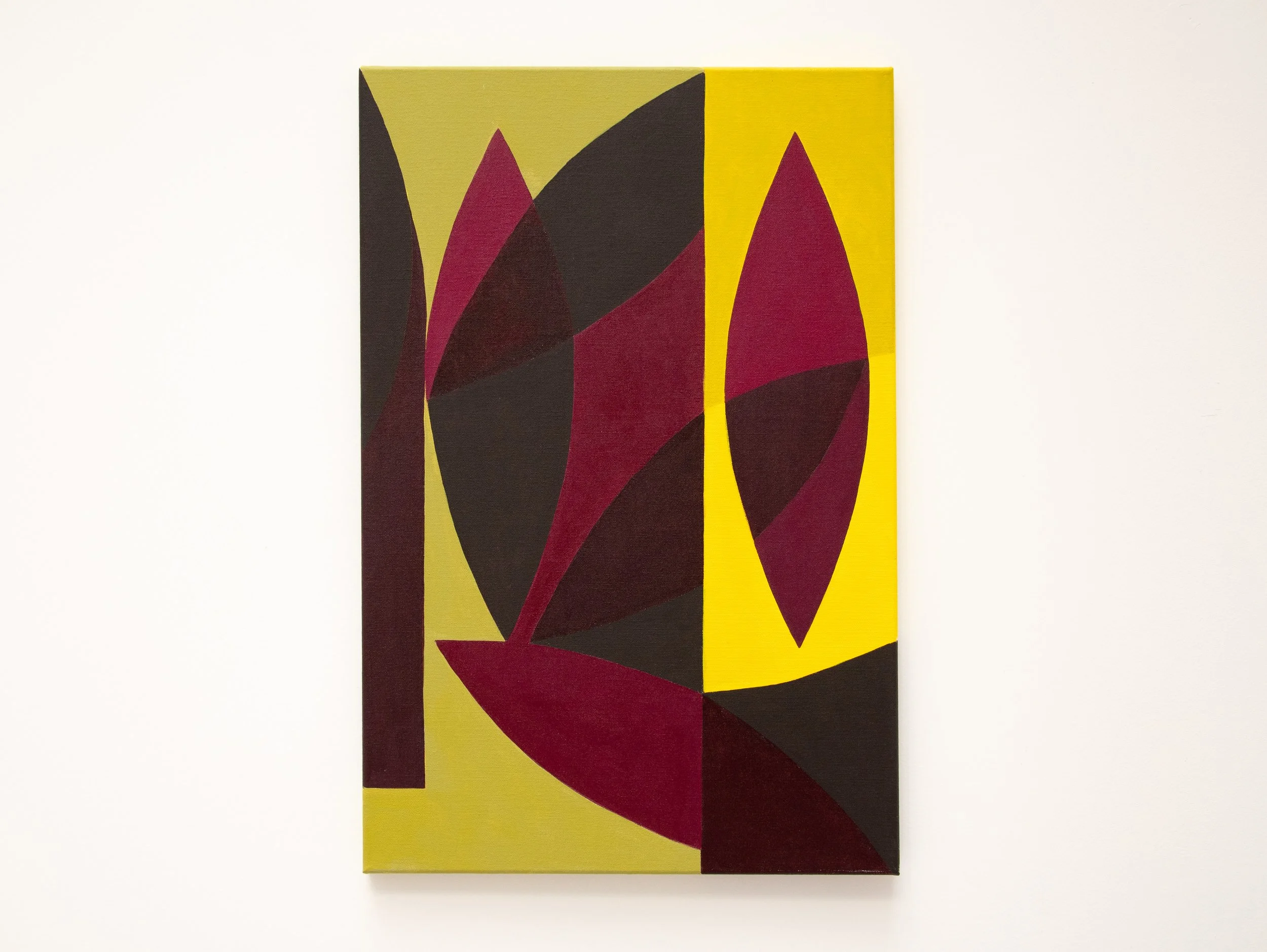
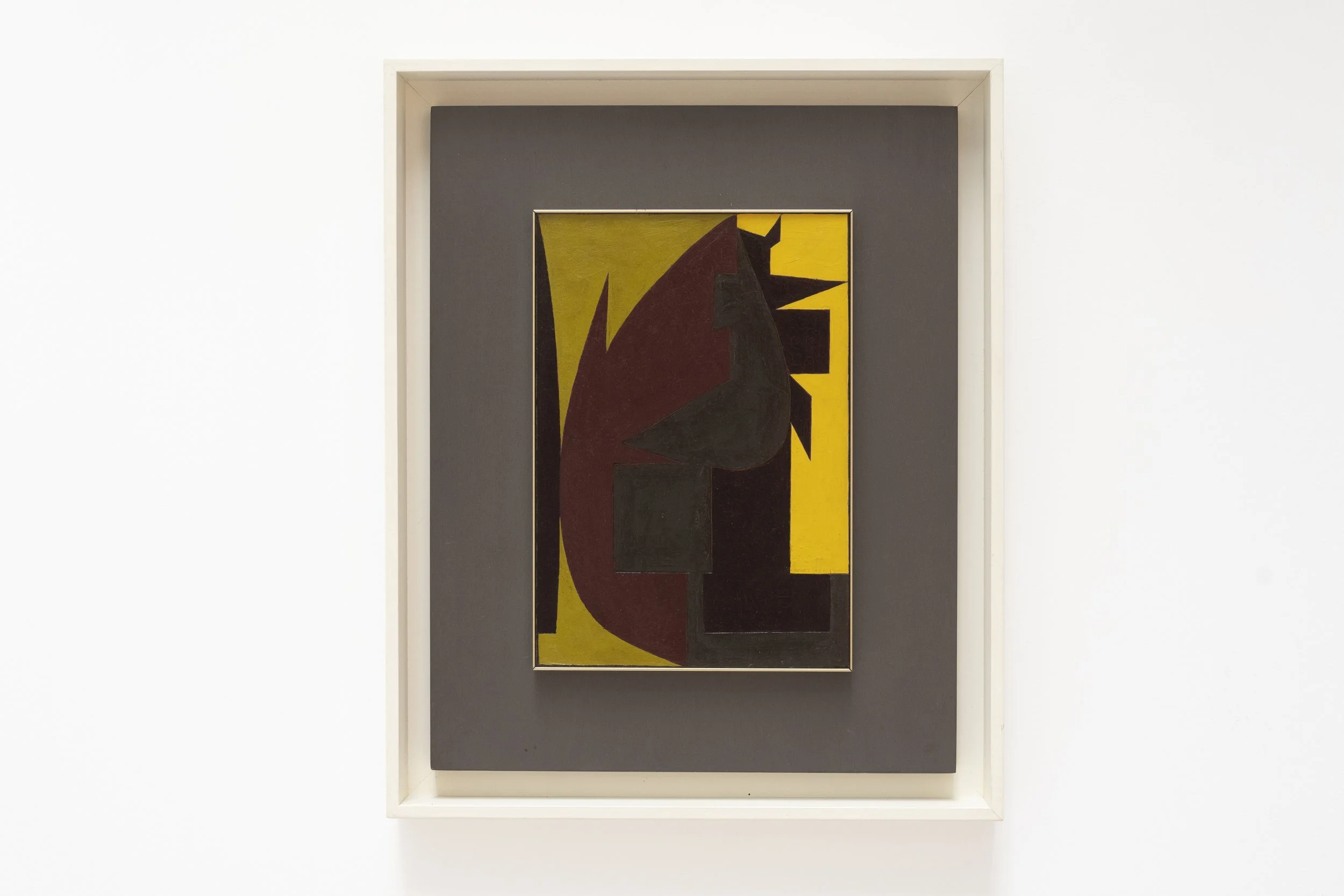
Indeed, in the 1950s, Vasarely was an abstract painter who admired Magnelli and Herbin. He observed the pebbles at Belle-Île, the cracks in the subway tiles at Denfert-Rochereau, the light slicing through the cubic volumes of a southern village. From these observations, he created three pictorial cycles: Belle-Île, Gordes-Cristal, and Denfert-Rochereau. Three series that sometimes intersect, brush against each other, or blend together. In the paintings of this period, flat areas of color construct a geometry of angular or curved forms: compartmentalized, stacked, interlocking, sometimes labyrinthine. His conception of color is the antithesis of the theoretical colors of the heroes of abstraction; it is far removed from atmospheric color or decorative palettes. It is a color entirely his own, imposing in its presence. Beautiful, strange, it speaks in a deep, somewhat muffled voice. It improvises improbable harmonies, provokes unusual juxtapositions. Without fragility, as if trained in martial arts, it is a color that has assimilated the power of black and white contrast: Black against luminous yellow, mustard yellow, golden yellows. Blacks against tawdry violets, dubious pinks, excessive greens. Black against earth tones, lipstick, luminous oranges.
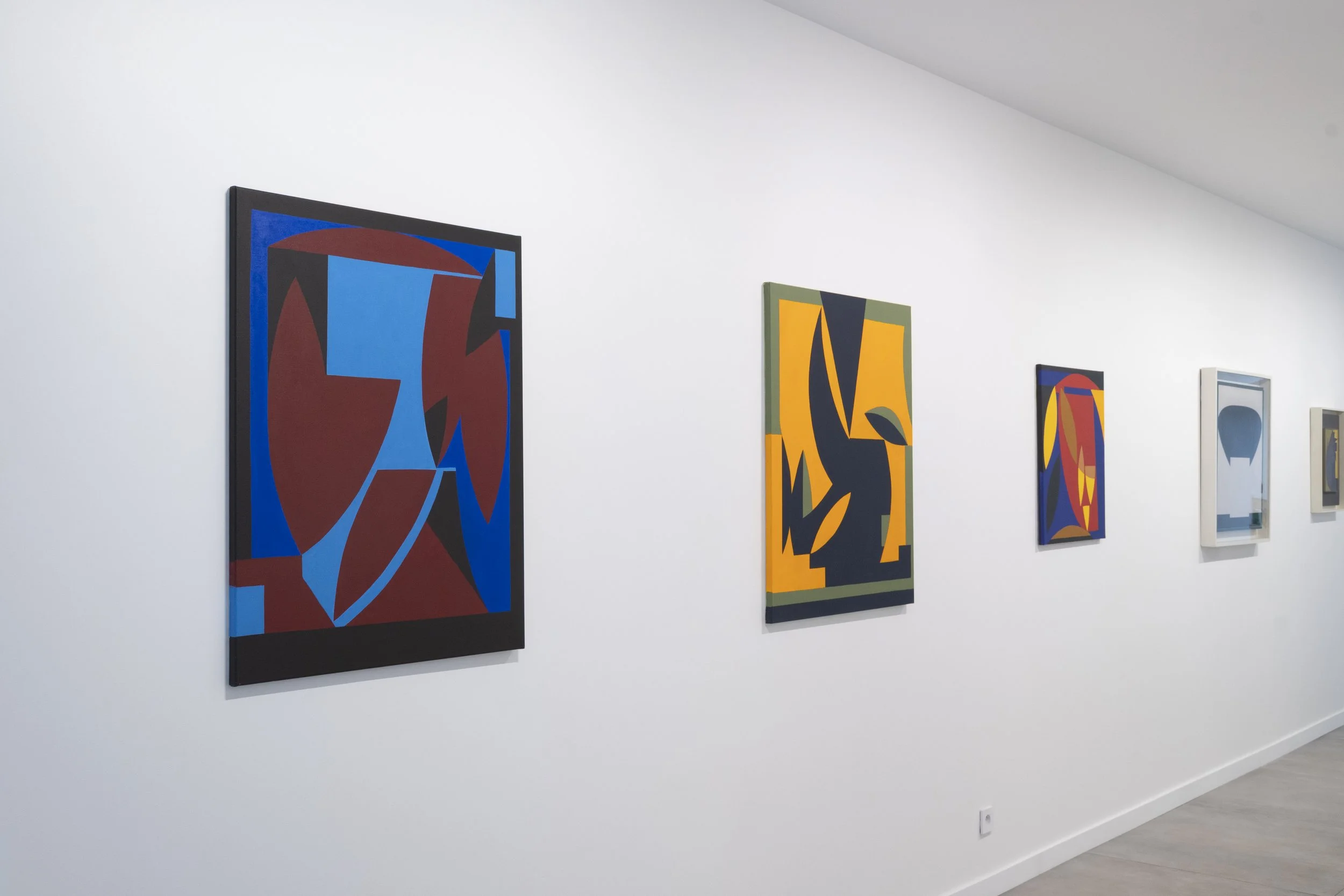
The exhibition at the Galerie Lahumière is therefore the second Rendez-vous with Victor. It presents several paintings from this period, including Tabriz (1950), Siris II (1952-1958), and the enigmatic Garam2 (1950), in dialogue with my reinterpretations from 2025. The idea of reinterpretation, very common in music, is less frequent in painting. These are not exercises in the style of… nor copies, nor tributes. Rather, it is a partnership that I am proposing to Vasarely. I work from the originals, or from reproductions and memories, adapting my own formal rules to his. Above all, I try to enter his chromatic space without intruding, to explore it, with echoes and deviations. And to offer, within the gallery space, a kind of mini-journey through time, devoid of nostalgia, with a circulation of perspectives that shift and changes.
Pierre Mabille