
Approaches to color
Nicholas Bodde, Hans-Jörg Glattfelder, Gottfried Honegger, Sigurd Rompza
From March 17 to May 5, 2018
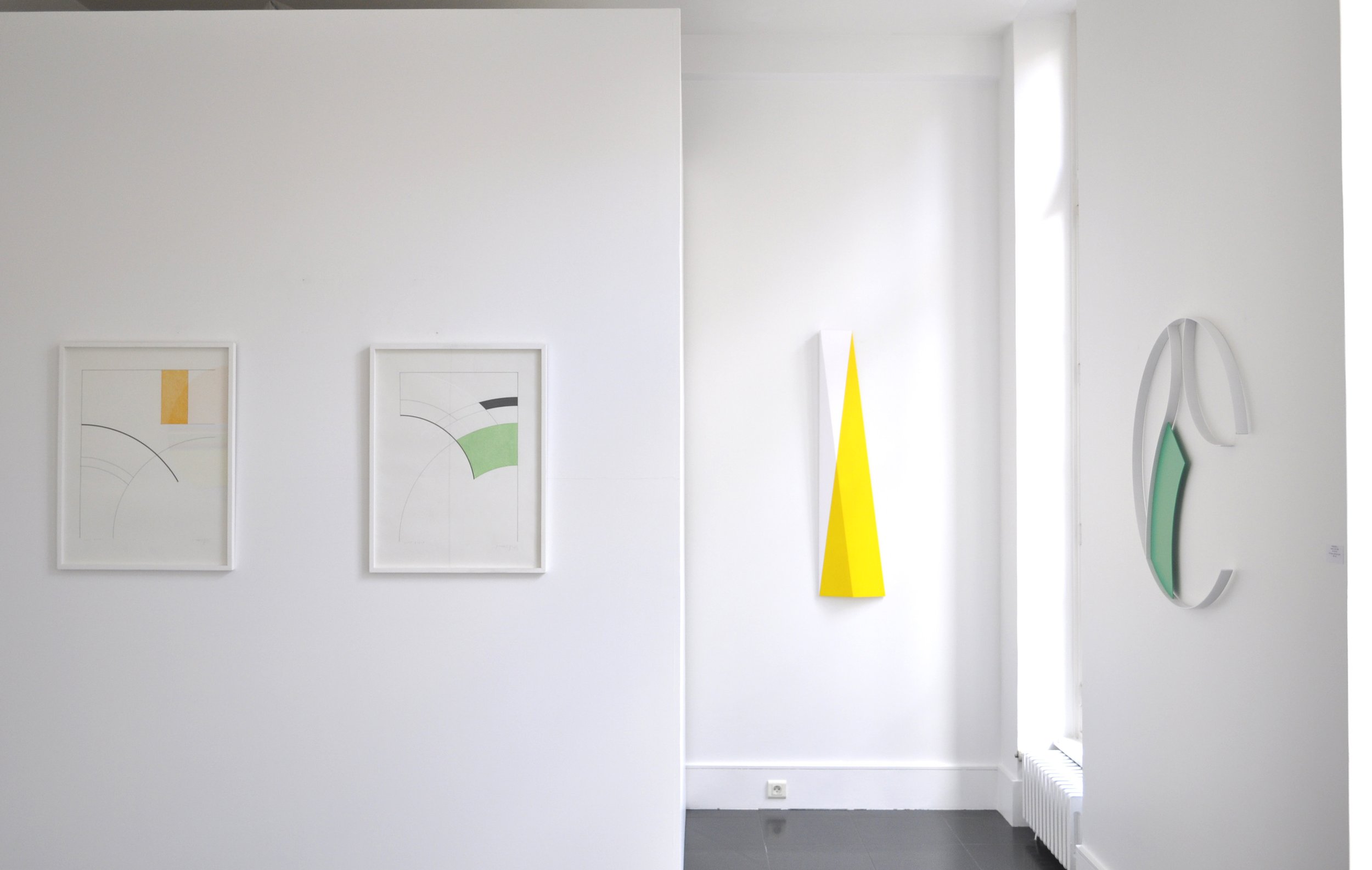
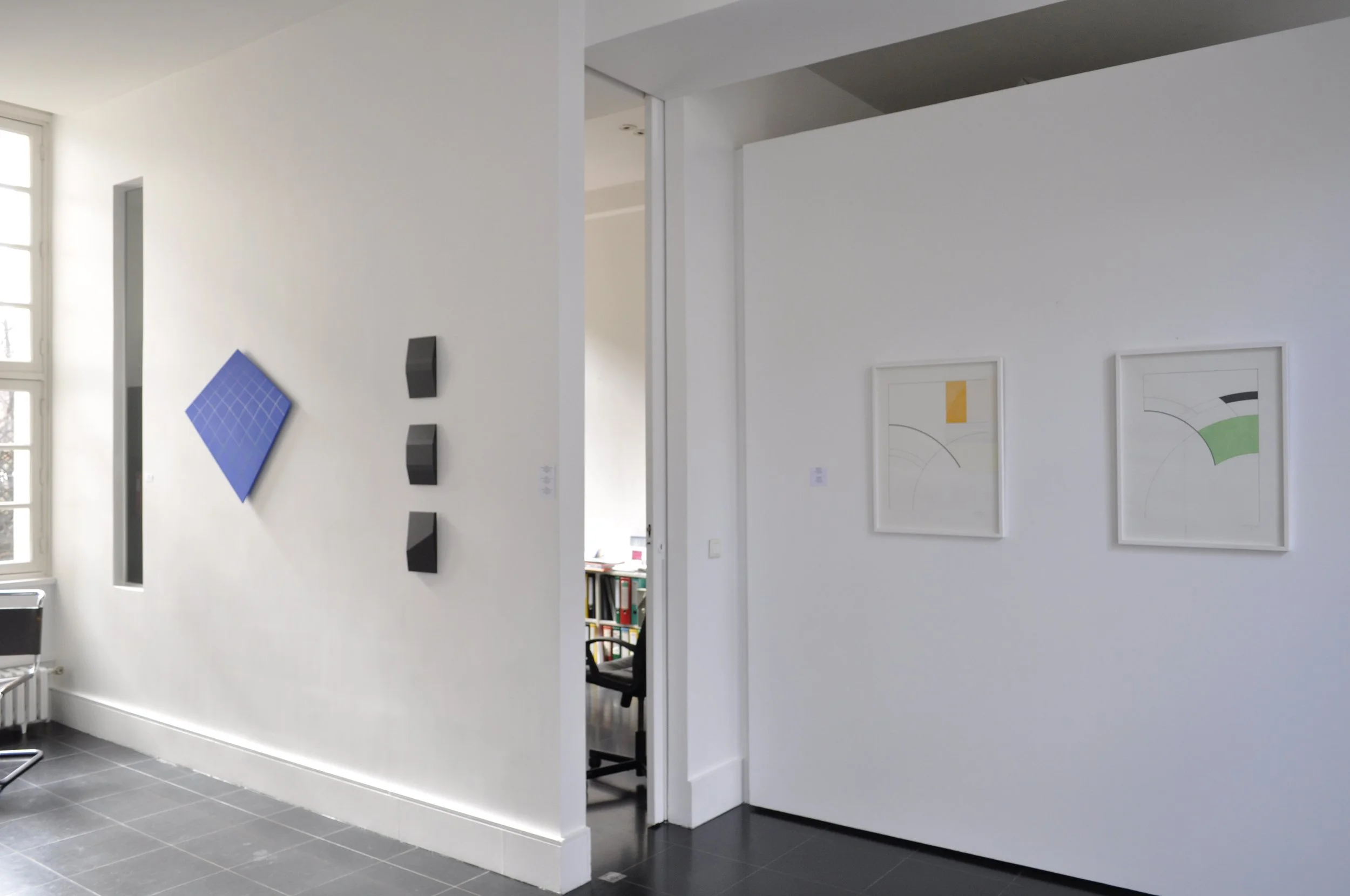
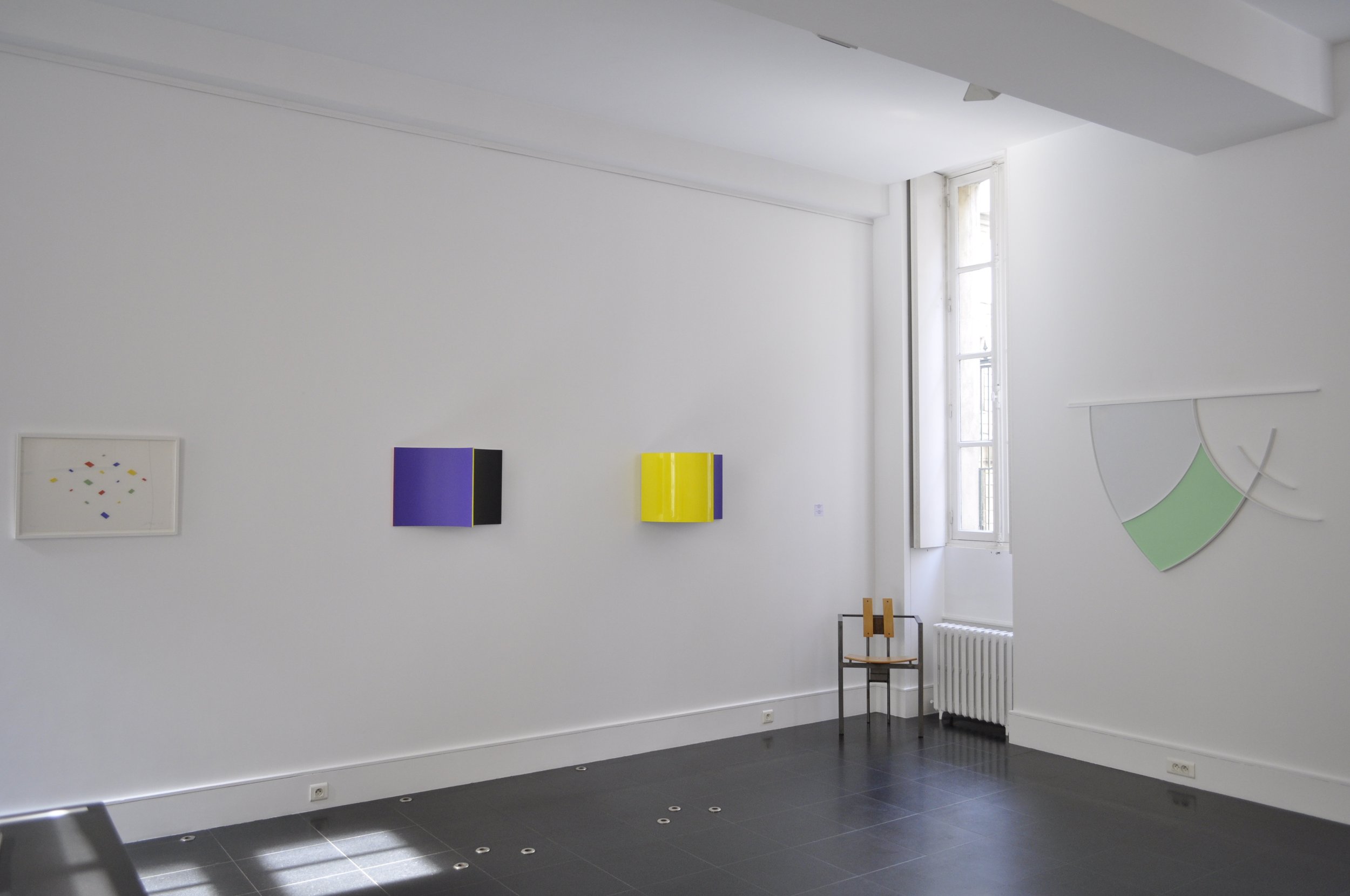
The exhibition "Approaches to Color," organized by the Galerie Lahumière, brings together four artists from different generations: Gottfried Honegger (1917-2016), Hans-Jörg Glattfelder (1939), Sigurd Rompza (1945), and Nicholas Bodde (1962). Living between Switzerland and Germany, they practice a geometric, rationalist, or concrete, abstraction. Their artistic approaches, often drawing on formal theory but also grounded in science and mathematics, focus particularly on the phenomenon of color in its relationship to space and light. This research is in line with the Zurich concrete art movement and, in particular, Max Bill, who declared as early as 1949: "We call concrete art those works of art which are created according to a technique and laws which are entirely their own – without taking external support from sensible nature or its transformation, that is to say without the intervention of a process of abstraction. The instruments of this realization are colours, space, light and movement. By giving form to these elements, new realities are created, and abstract ideas, which previously existed only in the mind, are made visible in concrete form.".
For Gottfried Honegger, these fundamental questions are inseparable from a social conception of art that always underpinned his artistic commitment. In the tradition of the Werkbund, he believed that art is not an end in itself but has a role to play in the evolution of society: "Art must leave its gilded frame and integrate itself into space (...) Art must abandon its pedestal and become part of everyday life," he declared. Following this perspective, the practice of relief corresponds to a desire to leave the virtual and fictional space of the easel painting and enter real space. Thus, Gottfried Honegger's metal reliefs eliminate the materiality of the painting, replacing it with the smooth and anonymous finish of lacquered paint. With their fine circular or rectangular cutouts, these reliefs engage with the viewer's space, creating subtle plays of light and shadow that affirm the materiality of the artwork.
These reflections on the status of the artwork, the context of its presentation, and the role of the viewer are also central to Hans-Jörg Glattfelder's concerns. The result of the artist's extensive theoretical research on the relationship between art and science, his system-based works are designed to offer, as he explains, "a privileged space for reflecting on one's own perception, for 'perceiving perception,' particularly the perception of space." With the series of Non-Euclidean Metaphors (NEMs) as Mutations, begun in 1984, while exploring the phenomenon of color interaction within programmed structures, Glattfelder reintroduced the use of perspective and the illusionistic representation of depth into the field of abstraction. Through this association between abstraction and illusion, flatness and depth, Glattfelder's works create visual tensions between space and surface.
Sigurd Rompza expresses a desire to remain focused on the visible in an equally radical and singular way, having explored questions of color perception in its relationship to light since 1985. His reliefs, which he calls "Wall Objects," explore the mechanisms of vision by actively engaging the viewer's gaze. The artist, who has always pursued a dual career as a painter and theorist, questions, as he puts it, "the act of seeing," developing complex forms that are highly specific to him: reliefs with chamfered edges, reliefs with concave shapes, reliefs playing with the effects of perspective, oblique angles, and symmetry. Their surfaces explore, in turn, the alternation of matte and glossy areas, the contrasting use of bright and black colors, and positive and negative forms. With these "Wall Objects" which require the viewer to make a constant effort of visual acuity, Rompza reminds us that "the mystery which we like to evoke so much and which we demand to be a constitutive element of concrete art is, in my opinion, nothing other than the pictorial play which is realized in the act of seeing.".
Nicholas Bodde's approach to color is more intuitive and grounded in direct experience. The artist explores the chromatic phenomenon by applying color in successive layers on aluminum surfaces. The colored bands coexist in particularly vivid, contrasting, and original combinations, sometimes even strident. Depending on the format he uses—rectangular, circular, or elliptical—and whether he exploits the energy of the oblique or, conversely, the static nature of the horizontal, the resulting effect varies greatly: one senses a feeling of tension and dynamism, or conversely, of calm and serenity. Bodde also introduces variations in luminosity across the surface of the work by playing with differences in width and thickness, and by studying the effects of textures that are sometimes smooth, sometimes granular. Through his large formats, the artist immerses the viewer in “the phenomenon of colour in itself” and the strength of his works lies as much in their internal dynamics as in the links they maintain with the outside.
Domitille d'Orgeval