
Jean Gorin today
From October 13 to December 21, 2018
Lost in our memory.
Revisiting Jean Gorin. Twenty years later, and after the exhibition in this same Lahumière gallery. I myself dedicated a master's thesis in art history to his work, under the supervision of Jacques Thuillier, followed by a book published by Waser Verlag in Zurich in 1985. Gorin was unknown, and Neo-Plasticism was largely forgotten in France at that time. It has more or less remained so.
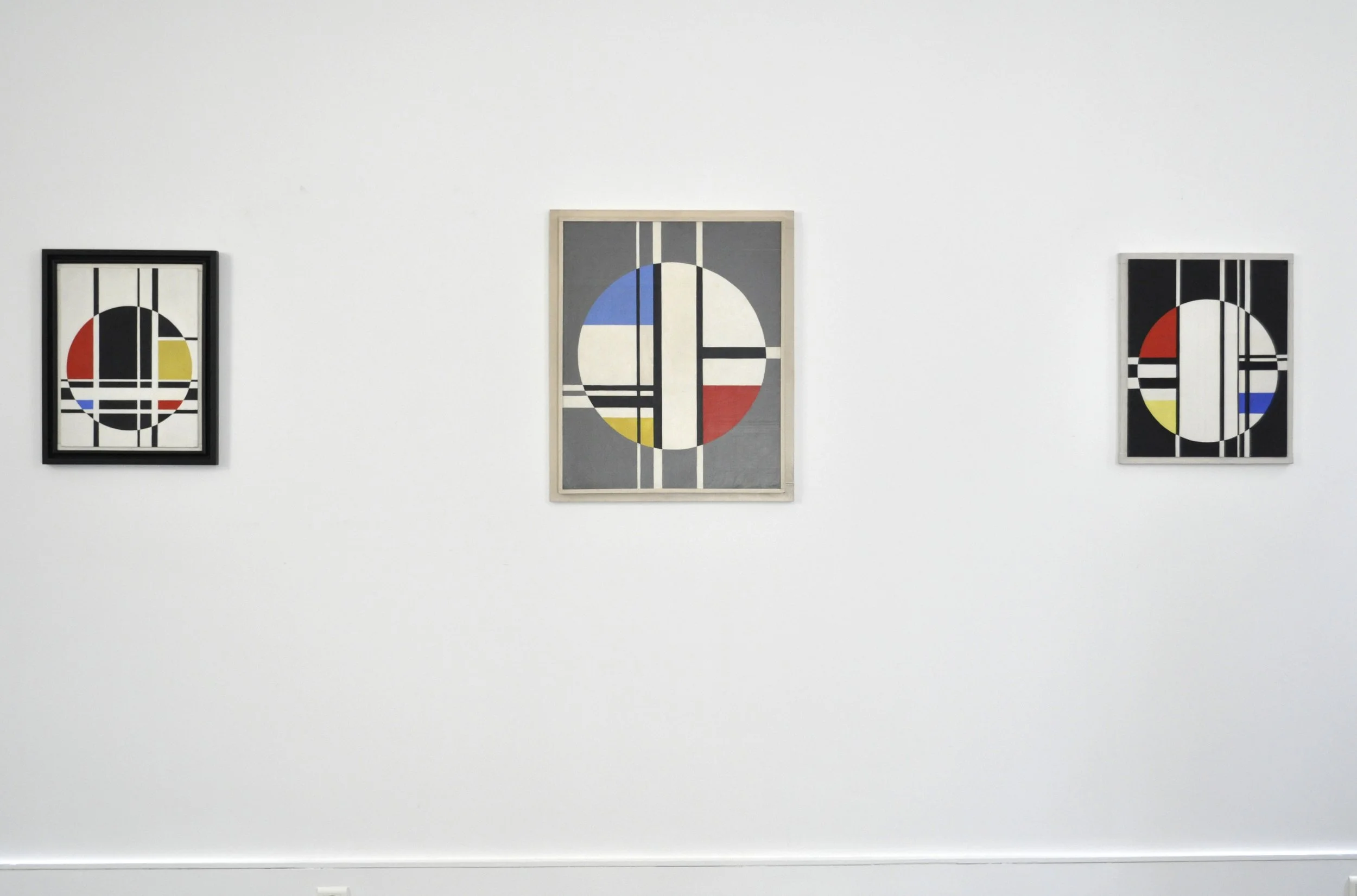
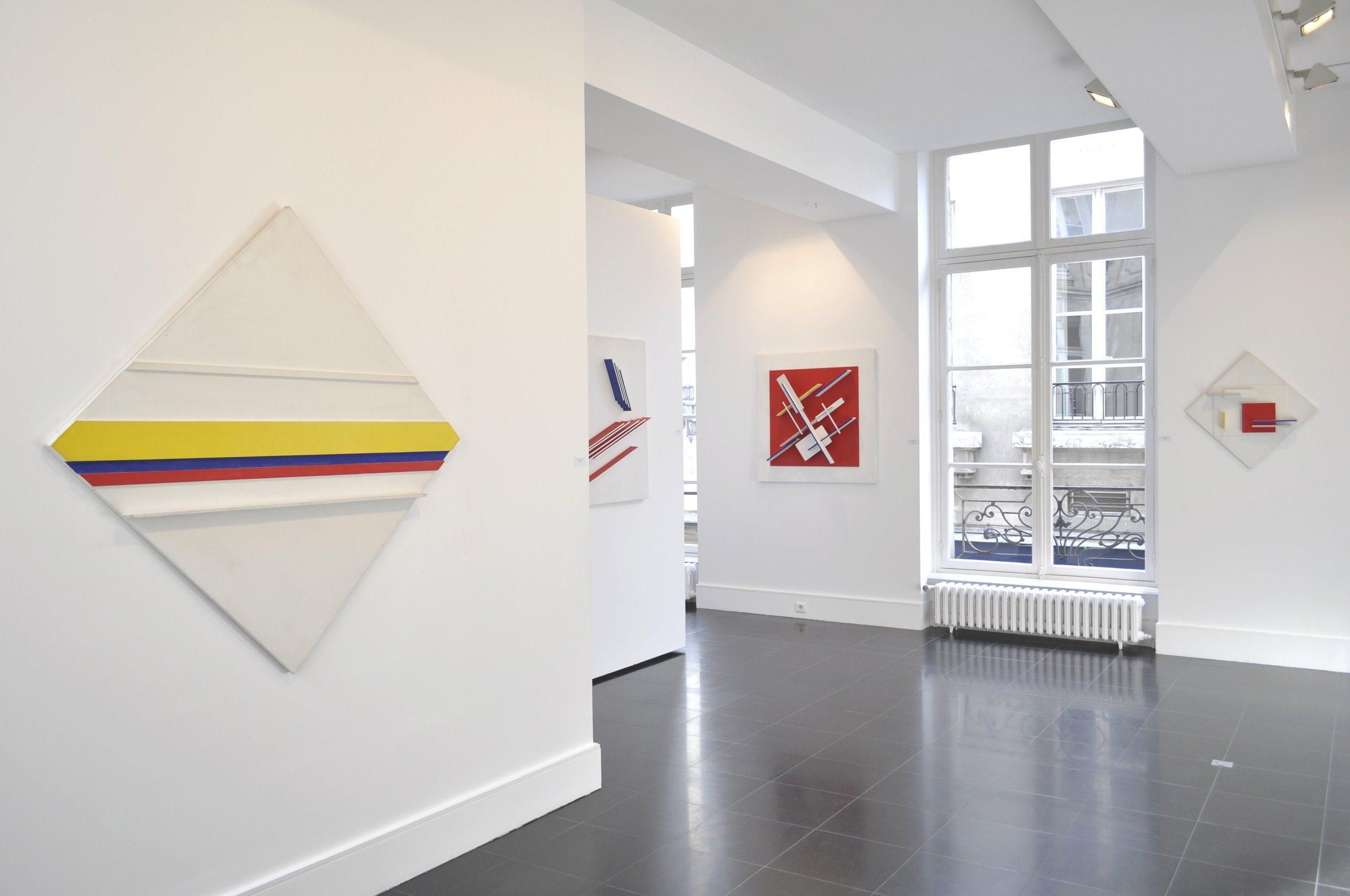
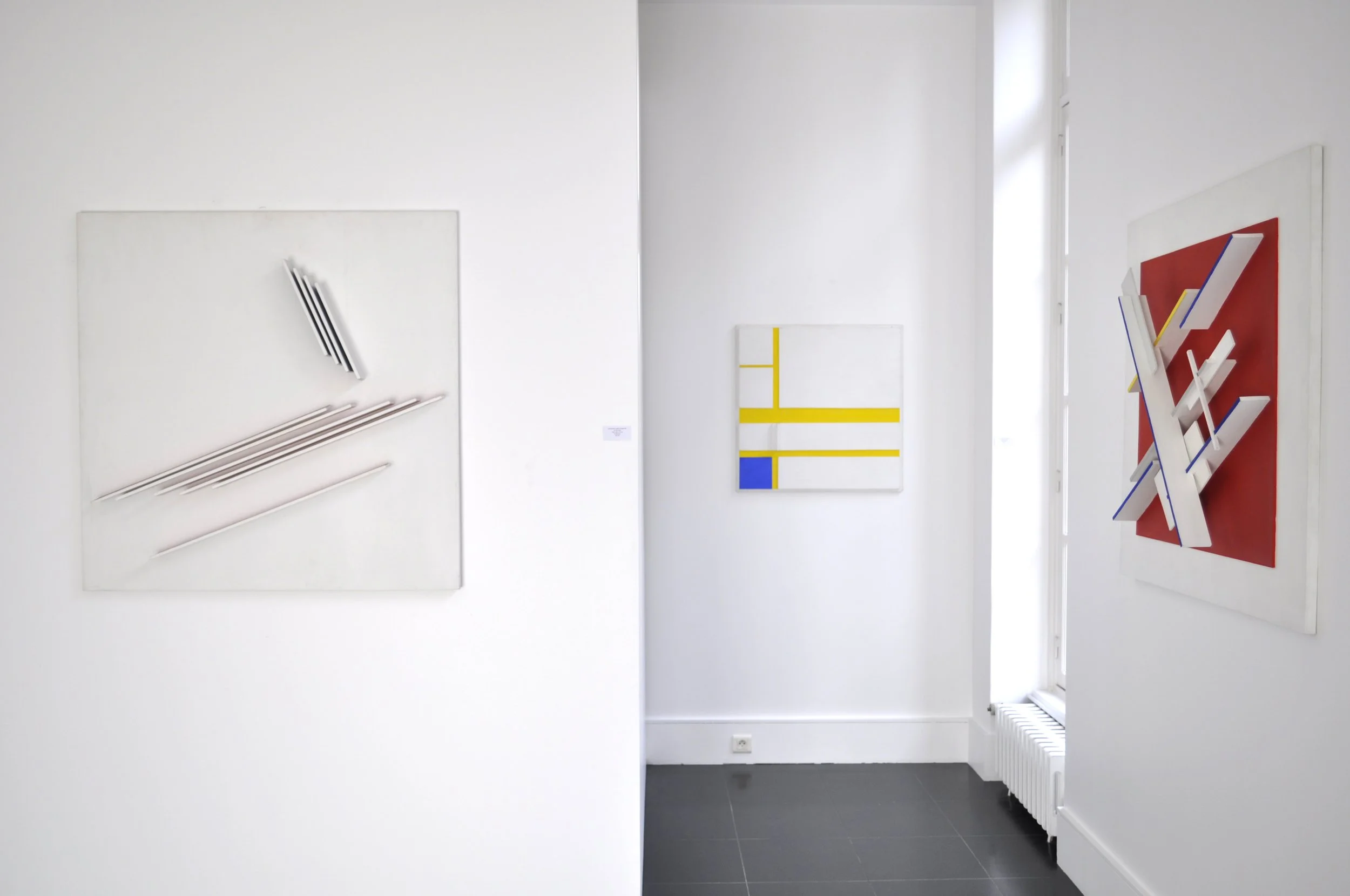
Creator in 1930 of the first Neo-Plastic relief, praised by Mondrian, who saw it as an architectural achievement, Gorin devoted his art to demonstrating the link between painting and architecture: he was a "painter-architect."
His multi-visual spatio-temporal compositions—a somewhat cumbersome term—are constructions in which all the elements—lines, planes, colors—are juxtaposed in asymmetrical relationships to create rhythm: opposition between vertical and horizontal in the plane and in depth, and between the colors, the only primaries, which remain distinct from one another through neutral tones. This new visual art is abstract and rational, even seeking to ground its constructive principles in mathematical laws and its execution in the neutrality or anonymity of the craft. Gorin achieved this through a deliberate path: born in 1899 into a modest family of artisans, he enrolled at the Nantes School of Fine Arts where he drew from live models and studied the 19th-century masters, and he painted a few Impressionist sketches. After the war, in which he was mobilized and then taken prisoner, he worked as a hairdresser, something he always hid even from his friends, while "working" from his readings in a cubist and then purist spirit.
Excerpt from the preface written by Marianne Le Pommeré, published in the catalogue accompanying the exhibition