
Unique, four women in geometric abstraction
Ode Bertrand, Marcelle Cahn, Isabelle de Gouyon Matignon, Aurelie Nemour
From January 12 to February 23, 2019
“No painting influenced my studies, my work, or my life. I was too far removed from the research of that time. I only deepened my solitude,”
Aurélie Nemours wrote to me in November 2005. A few weeks later, she passed away. Should we understand these words as those written at the threshold of life, or should we receive them as the path of every artist, and perhaps even of every human being? This expression, “deepening one’s solitude,” reminds us that Aurélie Nemours was also a poet and takes on a particular dimension in this exhibition.
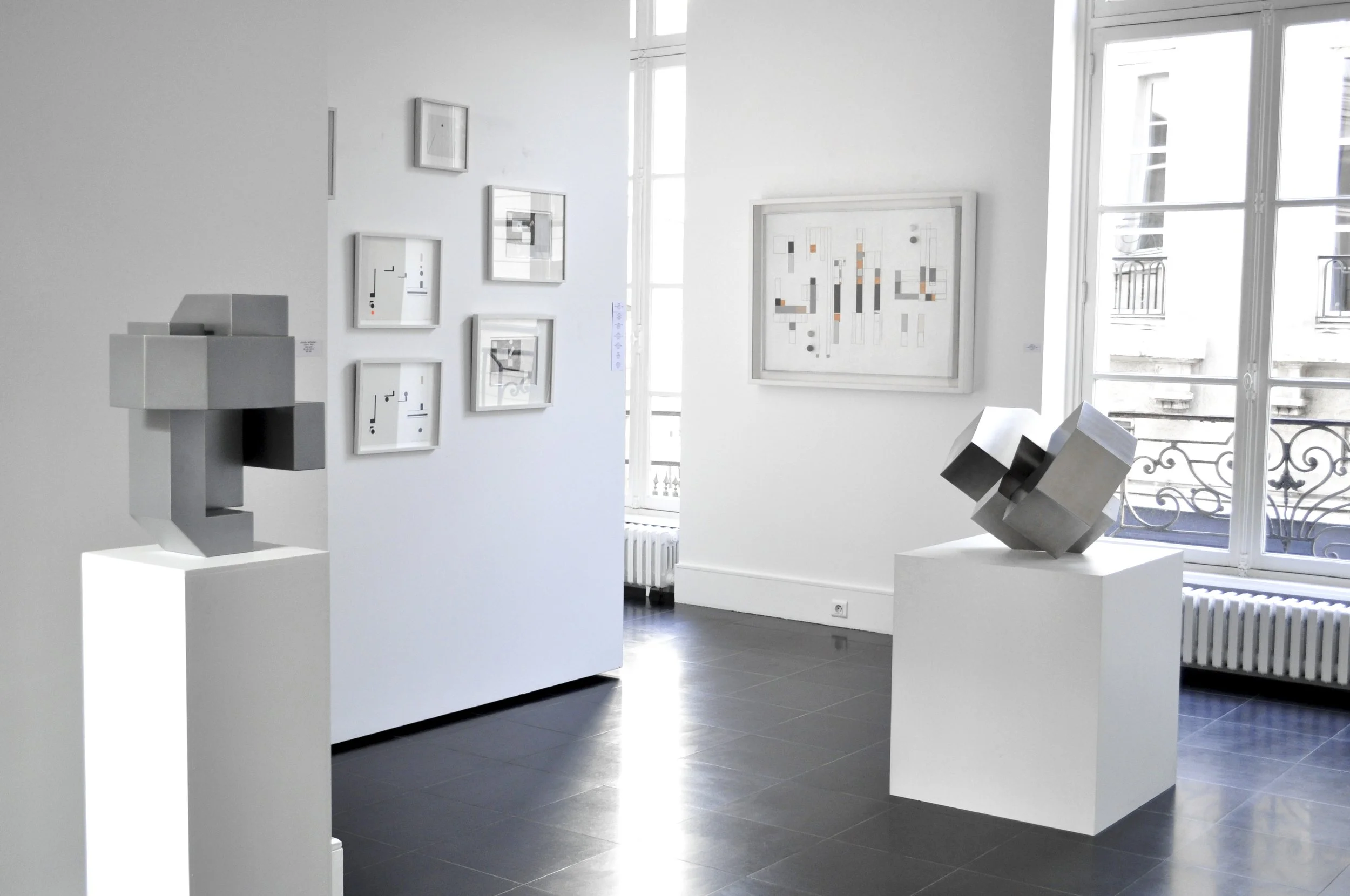
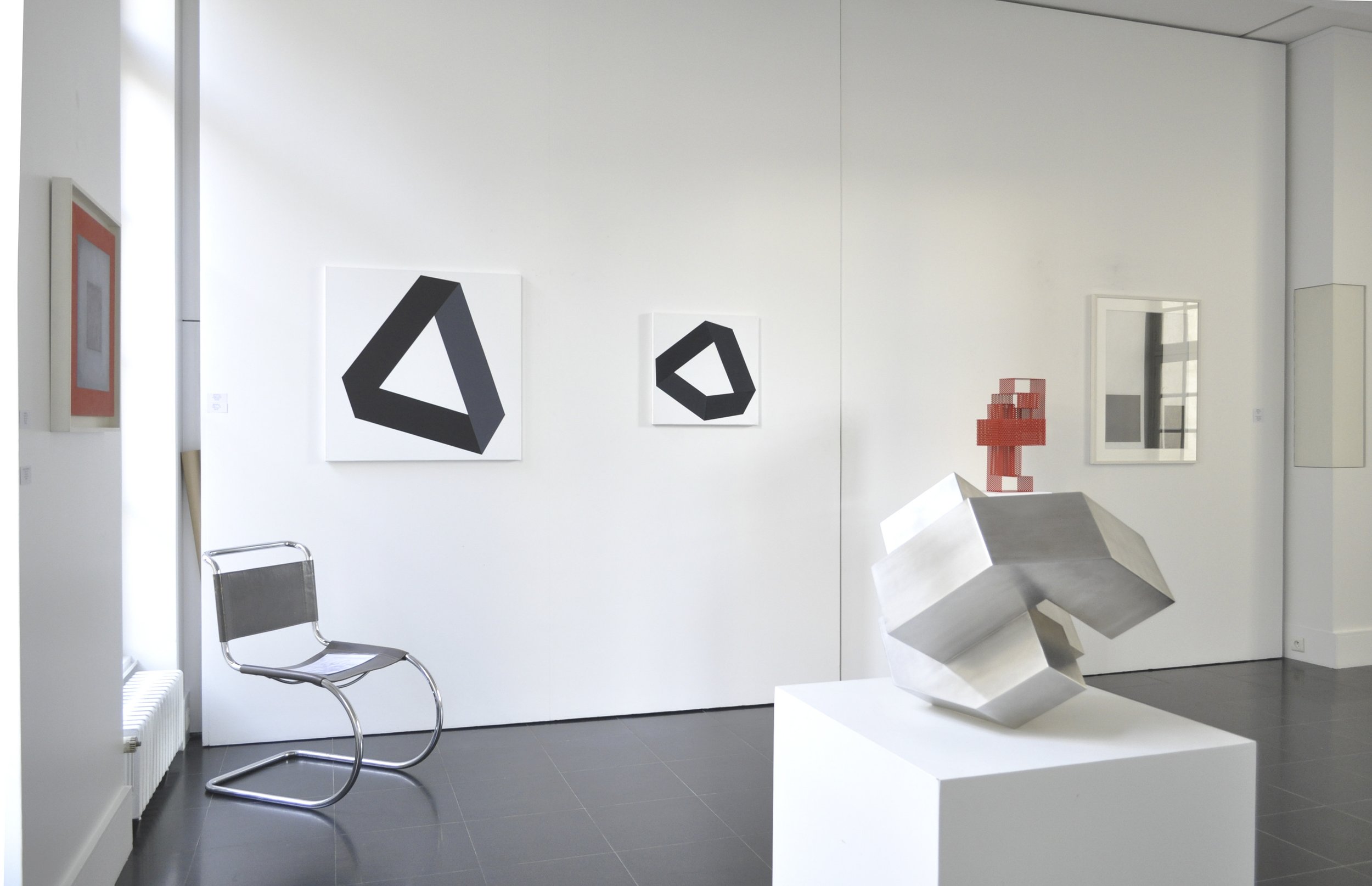
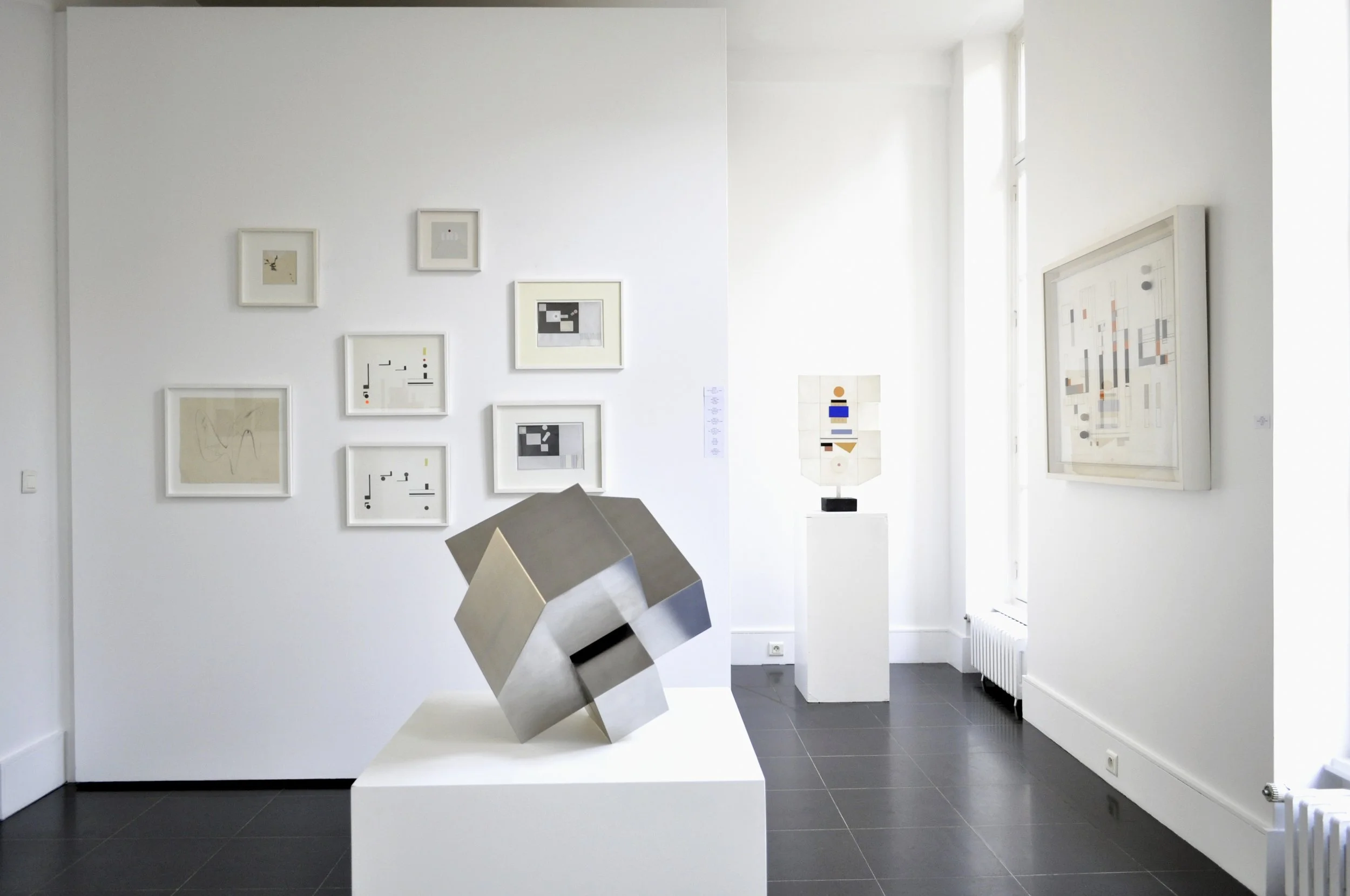
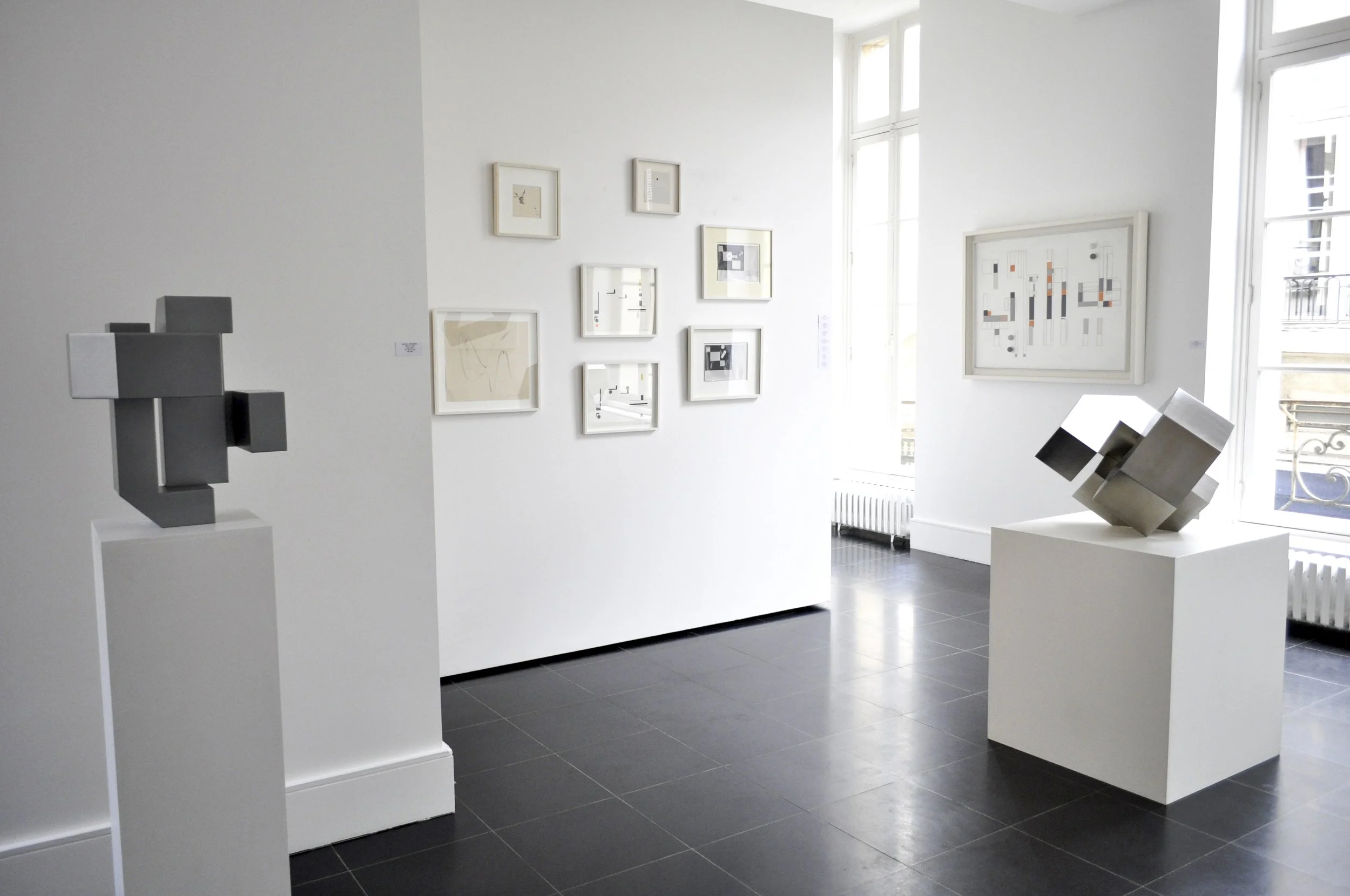
The four artists—or should we say four women artists?—presented by the Galerie Lahumière share a common choice: the clear and ordered language of concrete and minimal art, but each pursues a different path. Almost a century separates the early works of Marcelle Cahn, including the 1925 Tram exhibited here, and the later series of works by Ode Bertrand and Isabelle de Gouyon Matignon. One might then be tempted to recognize Marcelle Cahn and Aurélie Nemours—born in 1895 and 1910, respectively—as pioneers compared to their younger counterparts born in 1930 and 1964, but this is not the case. Indeed, all four are pioneers in the sense that they clear uncharted territory and establish their own worlds there, each work being a terra incognita.
Aurélie Nemours's paintings, where the perfect unity between background and form allows powerful optical effects to unfold, born from the chosen colors (Iphigenia, 1971, Astyanax, 1973), echo those of Marcelle Cahn, in which the background is no longer linked to the form but, on the contrary, its pure whiteness serves as a stage for harmonies of free and dynamic geometric elements, like a constructivist ballet. Thus, Marcelle Cahn's relief paintings and reliefs appear to us as constellations through which the eye wanders, while in Aurélie Nemours's work, it is held captive on the surface of the canvas, captivated, almost hypnotized by the colors.
Similarly, Isabelle de Gouyon Matignon's sculptures—between balance and imbalance, between strength and delicacy, particularly in their latest developments in perforated steel—offer fertile ground for Ode Bertrand's latest series devoted to folding. The space inhabited by Isabelle de Gouyon Matignon's sculptures extends into our physical space and accompanies us, through mental construction, into that of Ode Bertrand.
Between these four artists, the combinations seem infinite and free from any notion of time or gender, for it must be emphasized that geometric abstraction, from its very origins, has counted many women among its ranks—one of the signs of its universality.
Thus, the exhibition "Particulières," by bringing together these four artists, demonstrates that concrete art is a movement rich in singular expressions, but also a perpetually evolving movement that seems to know no temporal limits.
Indeed, these four artists have been, and are not, limited by anything. Doesn't Ode Bertrand say that the only limit is that to which her hand can draw? And Isabelle de Gouyon Matignon conceives her sculptures in a completely empirical way; they are born solely from her imagination, so here too, there are no limits. Each one has known, knows, how to deepen her solitude in order to conquer the world, our world, we who are not artists.
Unafraid of words, even puns; in "Lahumière" one could almost hear "light," the artist must continue to be a beacon, bringing order to the chaos of the world.
"One must carry chaos within oneself to give birth to a dancing star," wrote Nietzsche in the prologue to Thus Spoke Zarathustra, so yes, for artists the path is a solitary one, and for us, in the "Particulières" exhibition, forms and colors dance.
Céline Berchiche
November 21, 2018