
Jean-François Dubreuil
The illusions and joys of a conceptual artist
From September 6 to October 8, 2022
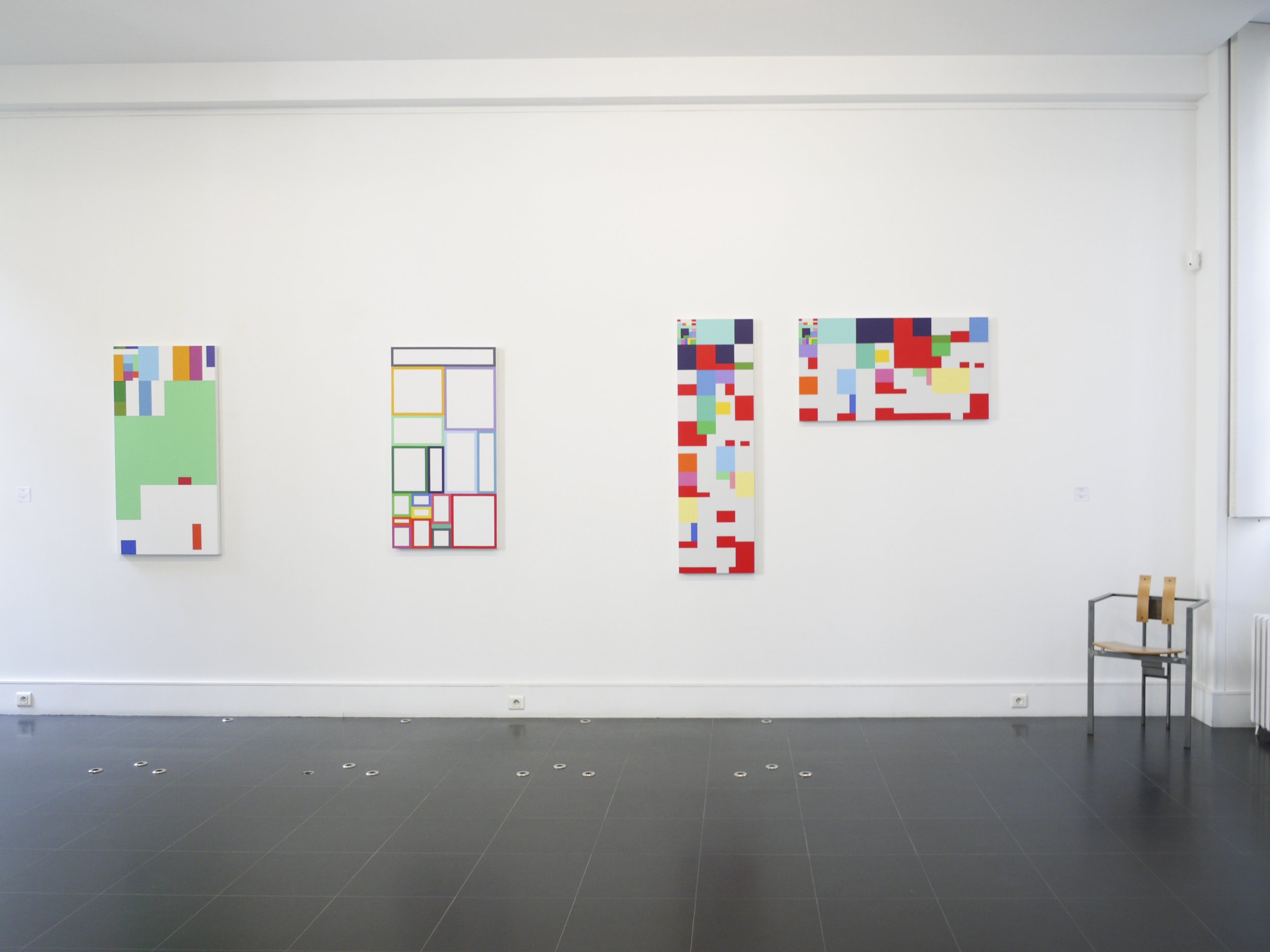
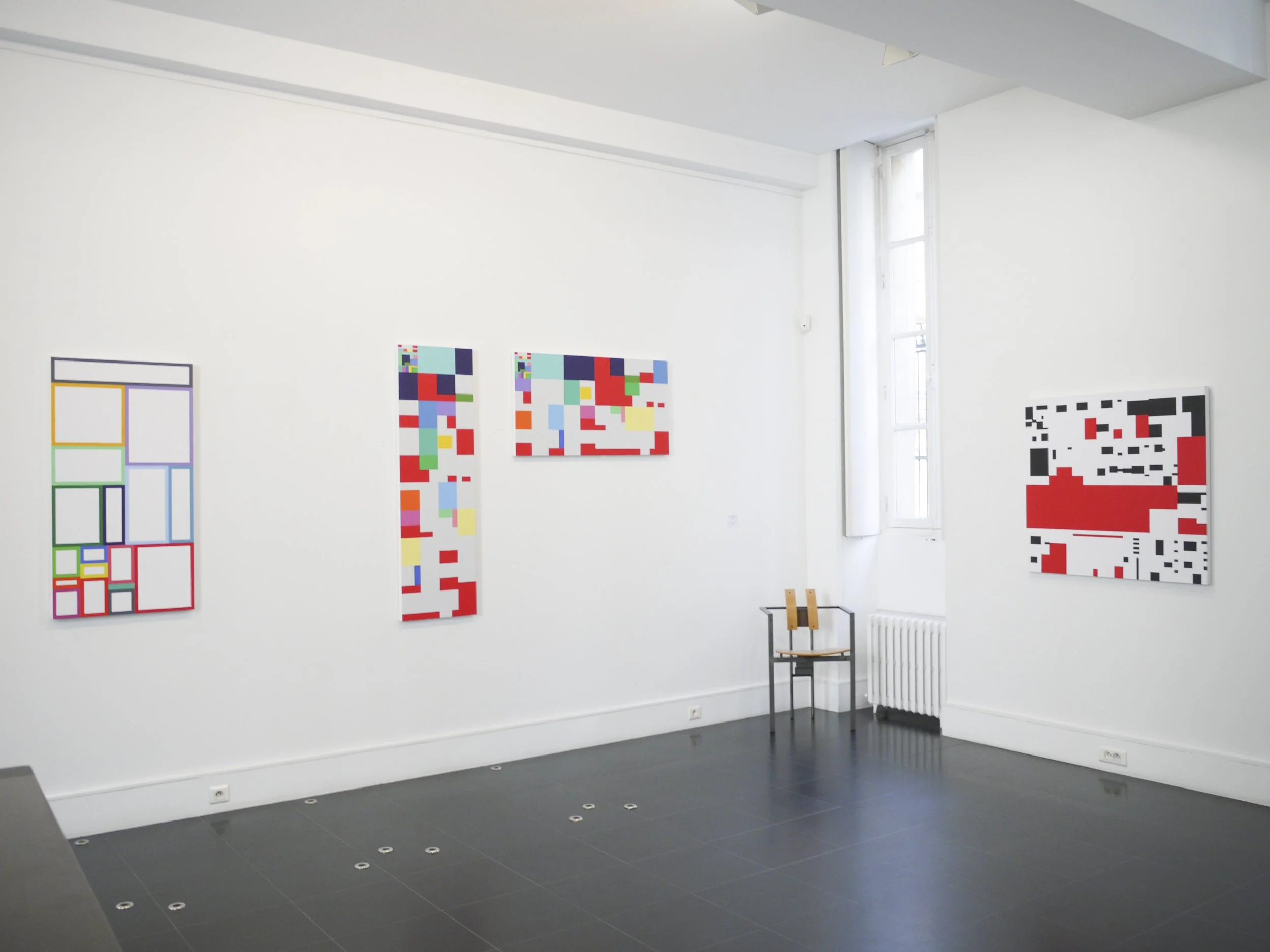
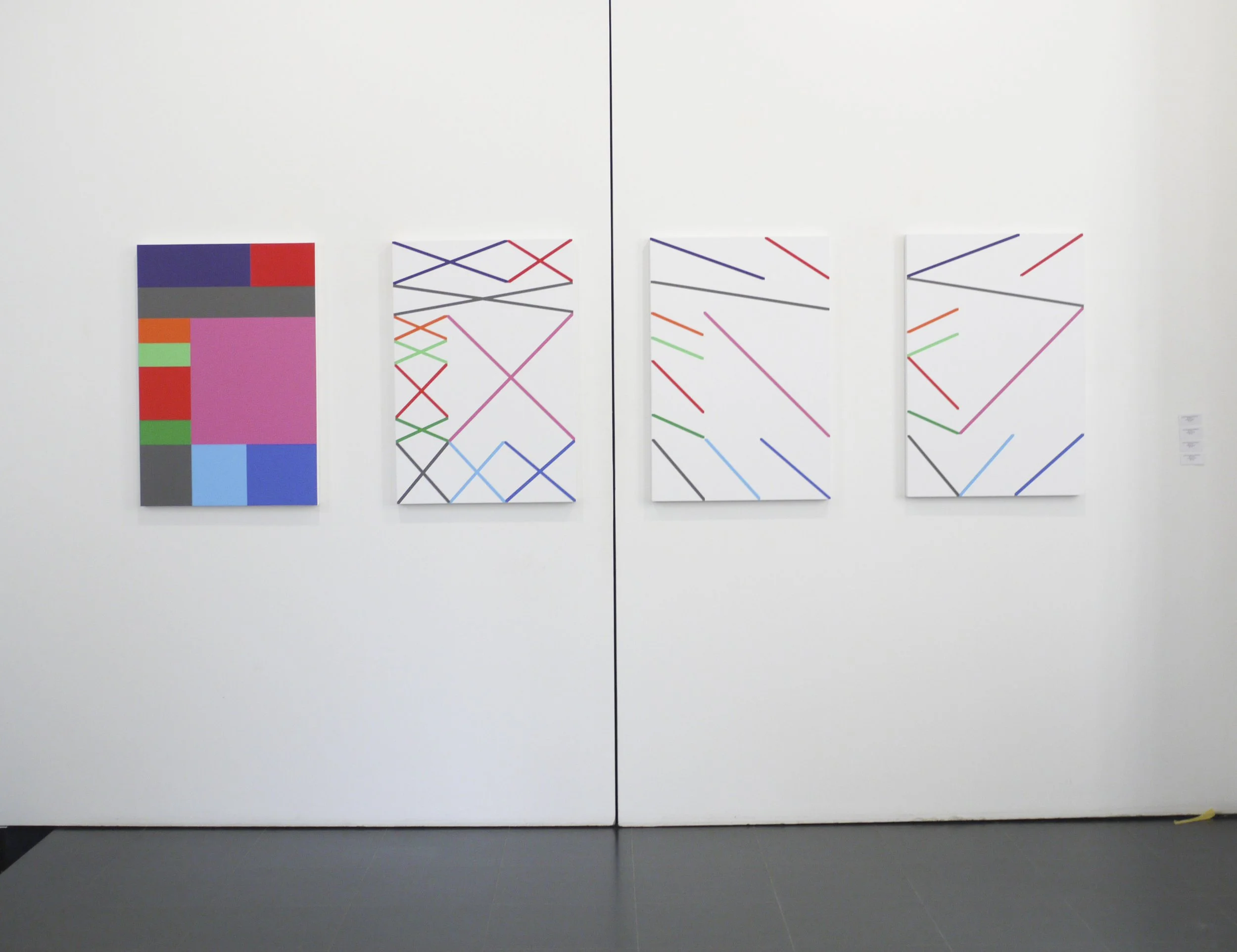
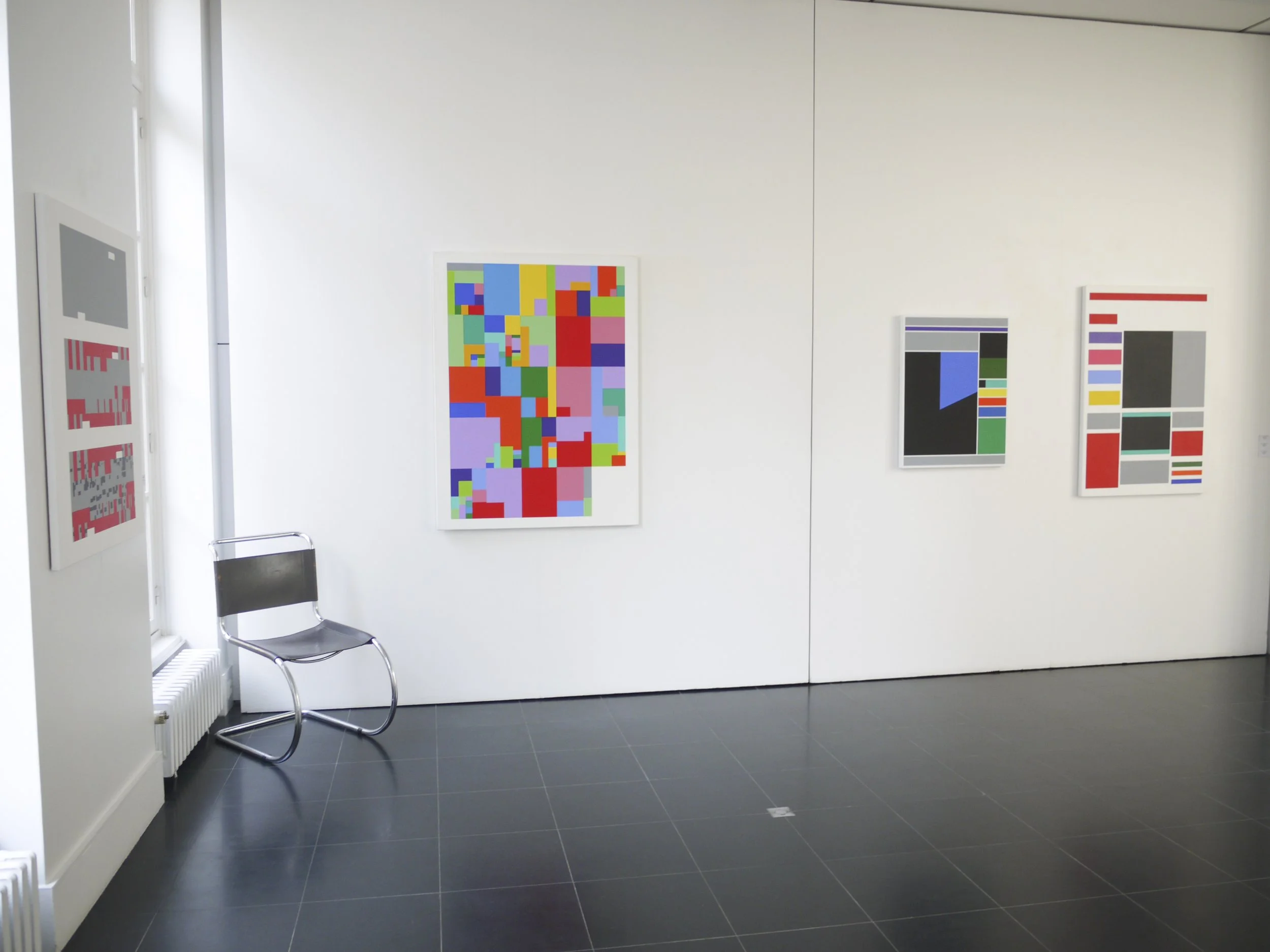
Jean-François Dubreuil's paintings immediately catch the eye. Bold colors, juxtaposed rectangles, backgrounds saturated with flat tints or with whites more or less tinged with gray or yellow, where the parallelepipeds take their place, surrounded by the same colors that, elsewhere, occupied the entire background, sometimes intersected by diagonals. The resulting effect immediately places this painting within the realm of geometric abstraction, a style thought to be obsolete, were it not for a few resisters engaged in the beyond, or perhaps the before, of history. However, upon closer, or longer, observation, something seems amiss in this apparent simplicity, but what? While illusions abound at the heart of this work, a first observation, which justifies all others, is essential. Jean-François Dubreuil belongs to a breed of artists who haunt painting, and particularly French painting, from the late 20th century, often without being identified or recognized. This breed is that of conceptual painters, or more precisely, crypto-conceptual painters. It is from this premise that we can consider the study of a body of work that, tinged with Dadaism, plays with academic abstraction.
The newspaper, in fact, interests him not only as a sociological phenomenon but even more so as a formal entity, a ready-made form containing a good dose of randomness. Nevertheless, it is indeed the press—its news publications and magazines, its dailies and weeklies (rarely its monthlies)—that serves as his exclusive point of reference, his formal source. This taste for the newspaper, for reading it, for handling it, for the social interaction it implies, is fundamental to Dubreuil, deeply ingrained in his way of being and in his life. It is important to emphasize this from the outset to avoid an overly simplistic interpretation of his work. In a way, Dubreuil loves the newspaper the way Villeglé loves the poster.
Red, gray. And then black when Dubreuil decided, quite quickly, to also process photographs. This threefold chromatic attribution would remain unchanged. Color would come into play a little later. It is important to clarify that for the artist, at this beginning, during this period of establishing the system and his method, neither red nor gray nor black were colors, but simply tools for distinguishing surfaces.
In literature, and to stick with the French example, the role that Oulipo has played, and continues to play, in developing a body of texts based on a contemporary use of rhetoric is fundamental. It is in that it applies to its work a series of constraints, some of which do not conform to the usual rules of pictorial art, and in that alone, that Jean-François Dubreuil can be considered an Oulipian painter. However, he is far from being the only one in the 20th century to have drawn from the infinite reservoir of systems and constraints where random mechanics, pure chance, but also humor and facetiousness for some, occupied a central place.
Jean-Marc Huitorel,
excerpts from the monograph,
Éditions du regard