
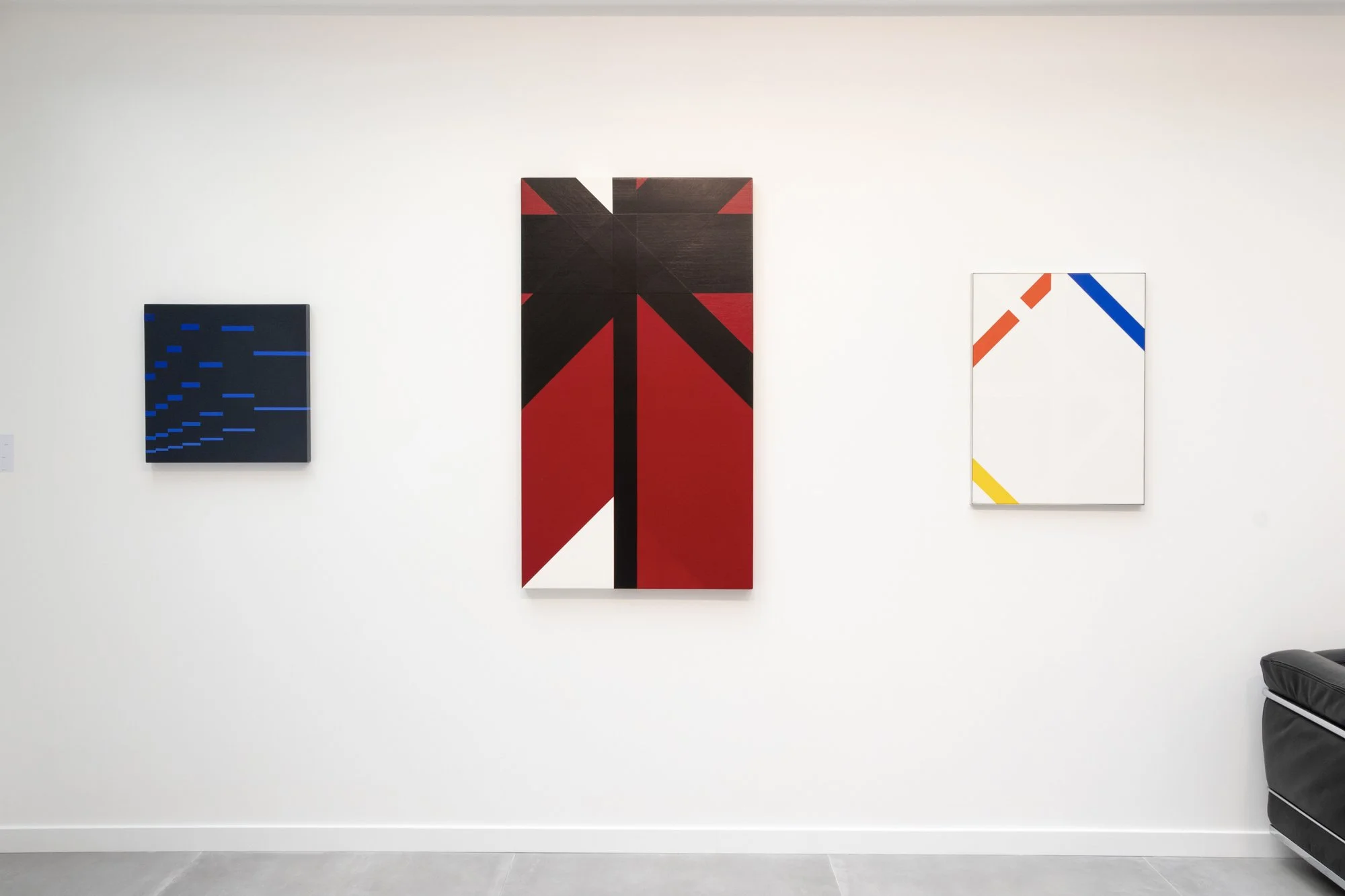
Structures and Ruptures
Charles Bézie and André Stempfel
From May 15 to July 11, 2025
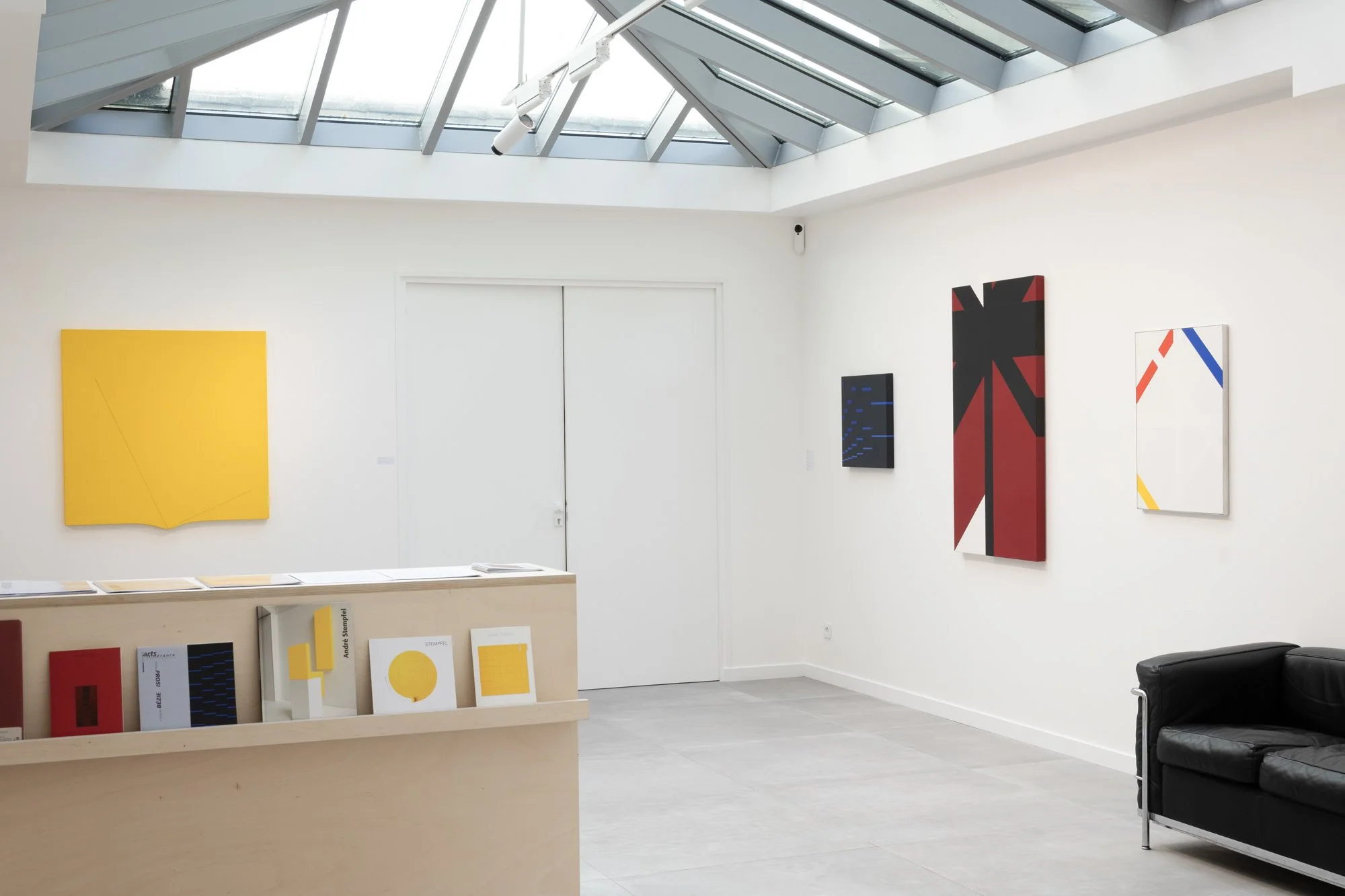
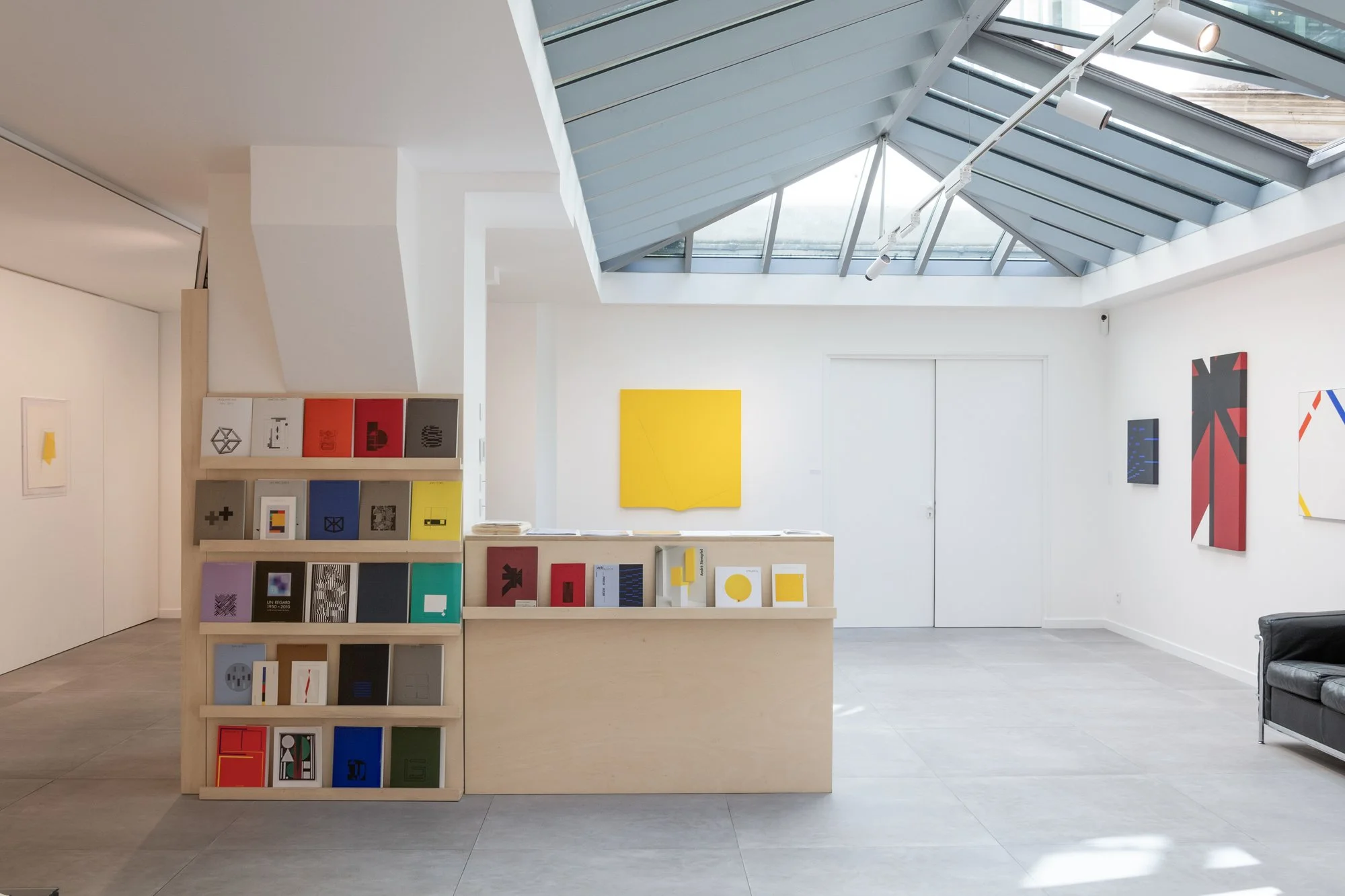
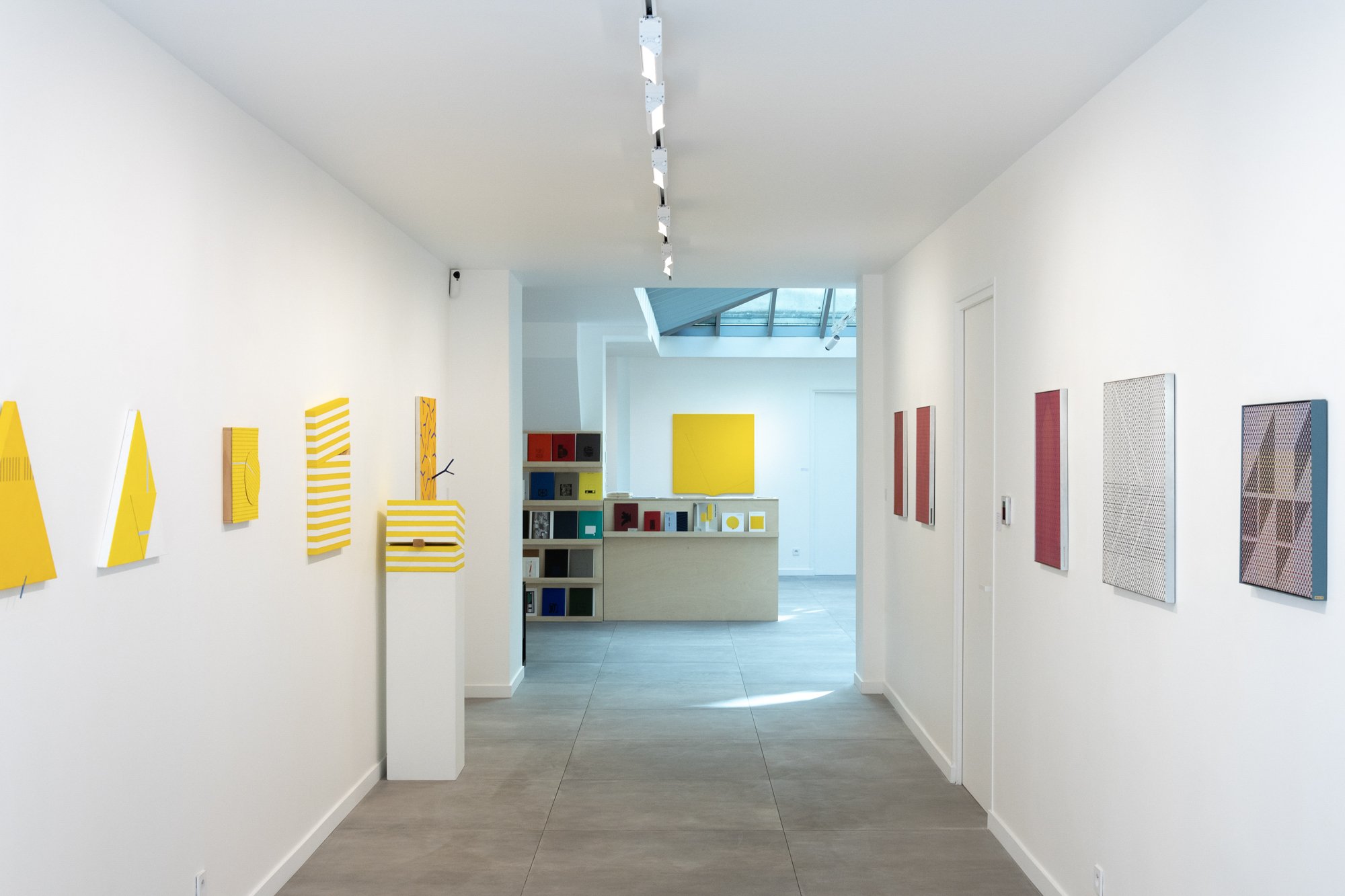
For this new exhibition, we have chosen to juxtapose works by Charles Bézie and André Stempfel, two artists whose approaches, although distinct, are based on a profound questioning of painting which they subject to rigorous and radical investigation.
For Bézie and Stempfel, the canvas becomes both a testing ground and a space for reflection. Their visual language unfolds through a deliberate reduction of means: a limited color palette and refined geometric forms, elements that transcend apparent simplicity to open up infinite perspectives. By exploring the tensions between structure and spontaneity, between limit and freedom, they push the boundaries of the medium and reinvent its very essence. Their work raises fundamental questions: how should we understand painting? Is it simply a two-dimensional rectangle? At first glance, it seems so. Yet, the artist's work lies in this capacity to transcend the visible, to evoke a sensation that surpasses our immediate perceptions.
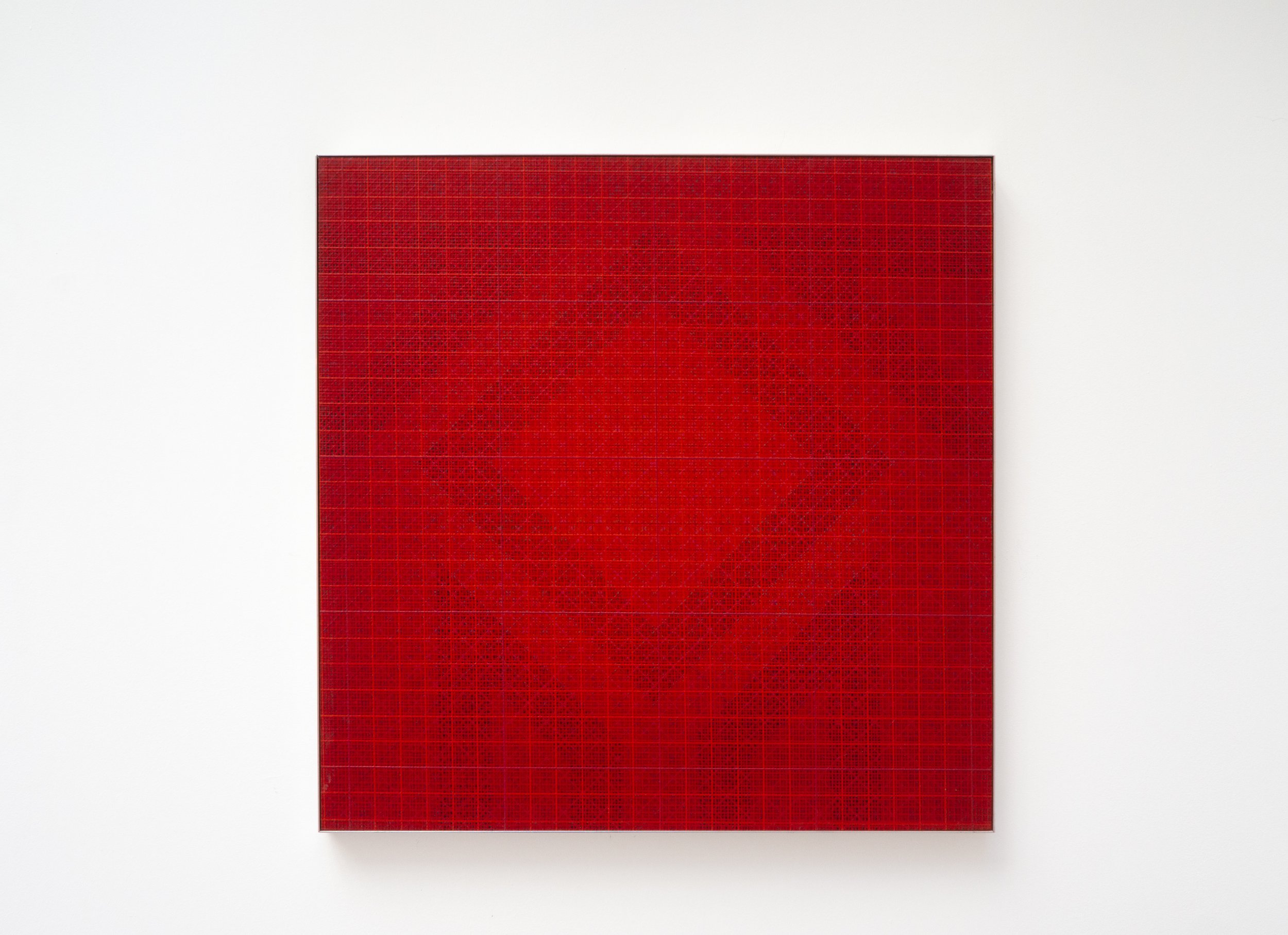
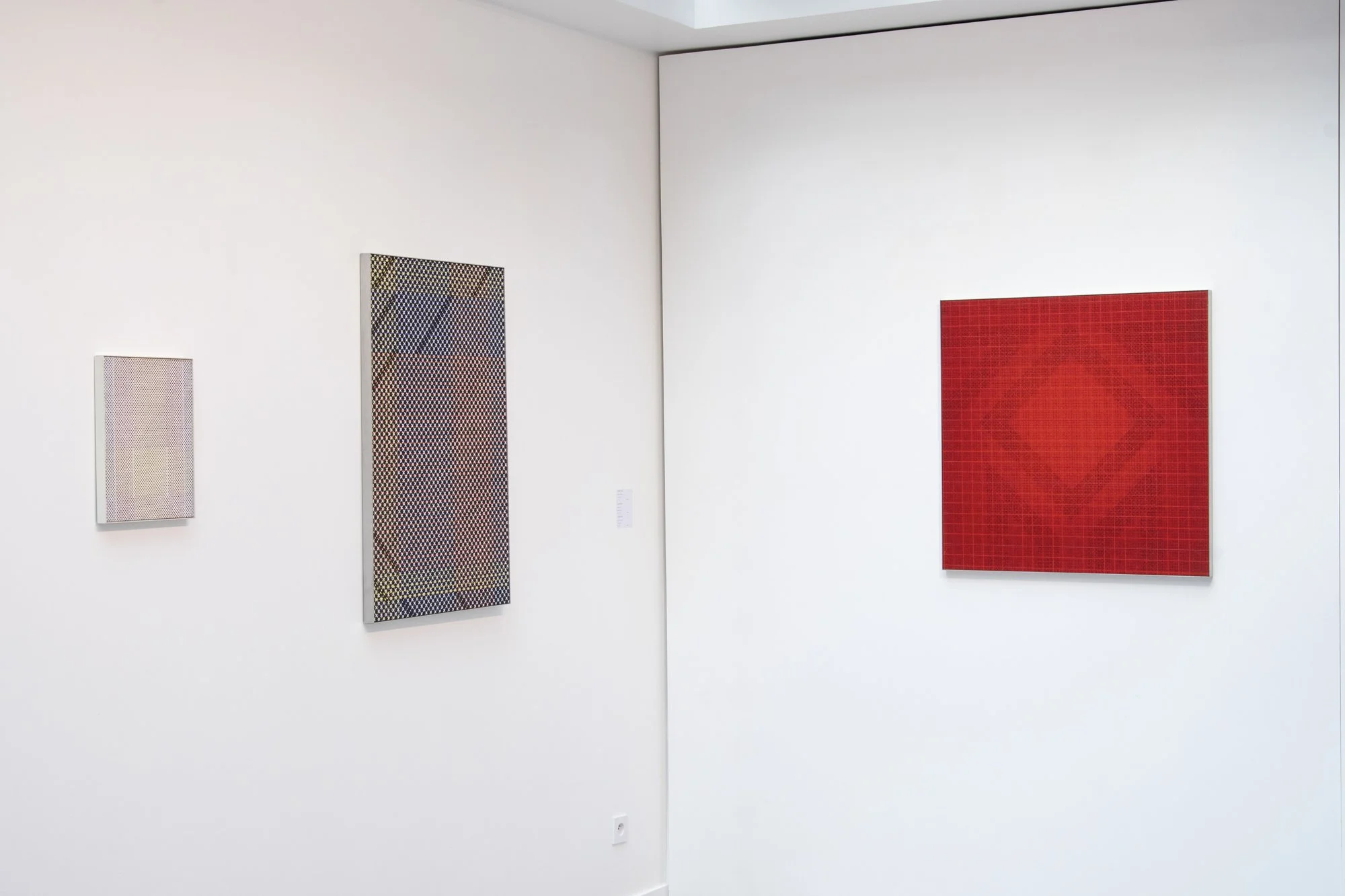
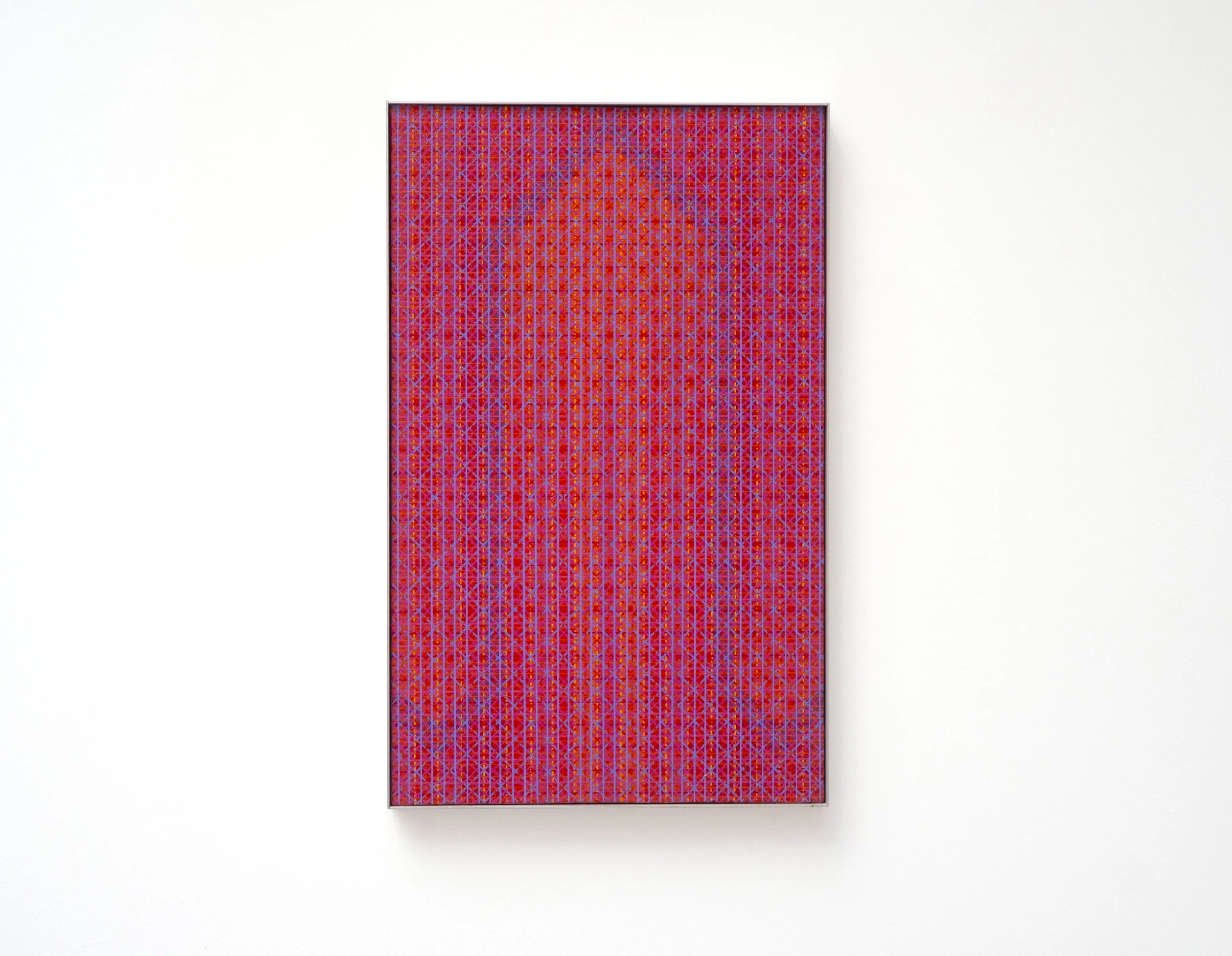
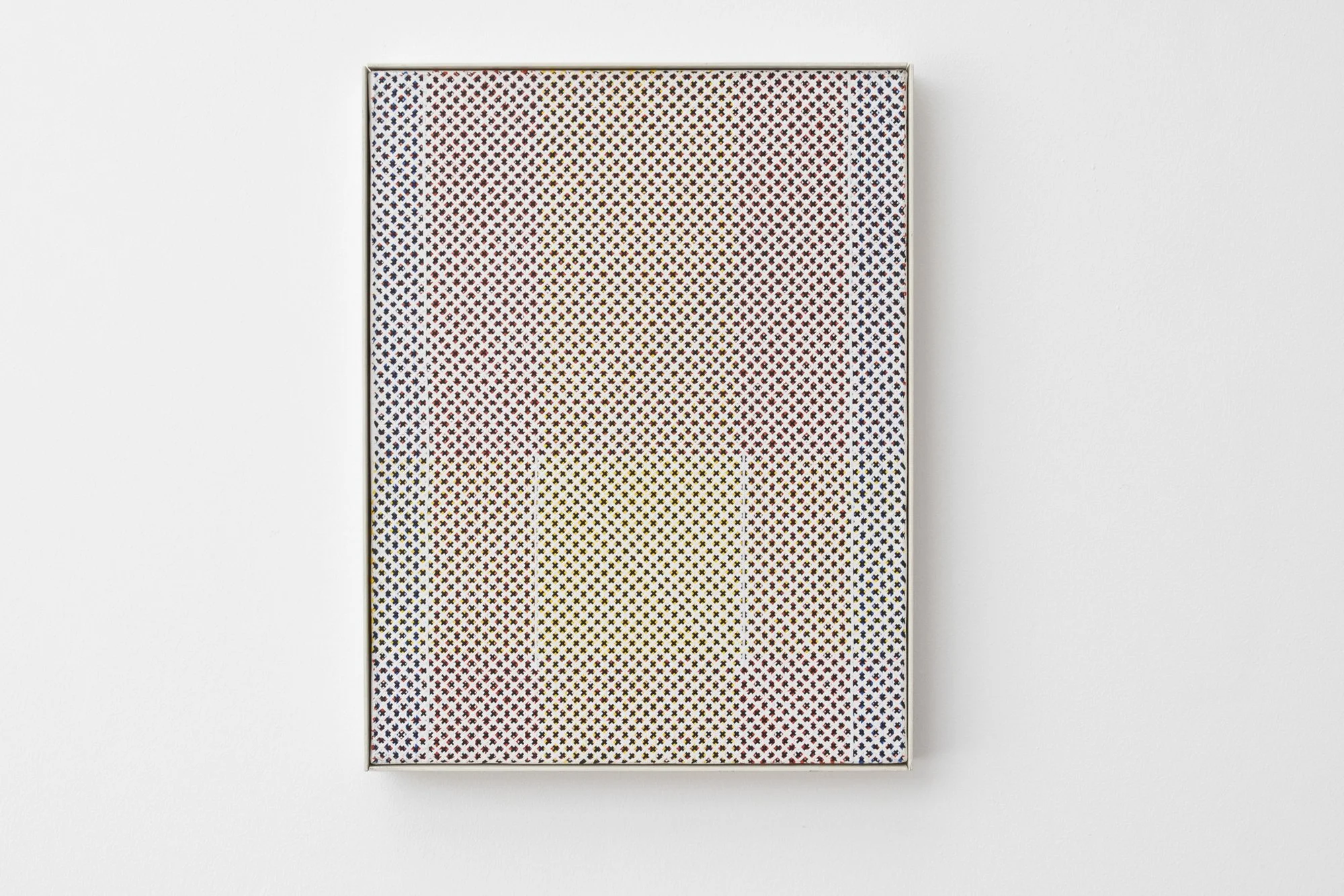
Charles Bézie approaches the canvas as a dynamic field, structured by a network of lines and varying thicknesses. By layering and transparencies, he articulates a dialogue between opacity and light, between tension and balance. His compositions, through a play of interlacing and crossing, are organized around a center and extend towards the margins. This centrifugal movement transforms the canvas: the bands and hollows generated by these intersections break the rigid authority of the rectangle, suggesting a space that overflows, opens up, and reconfigures the traditional frame. Bézie orchestrates a vision that, from the microcosm of the center, blossoms into an infinite macrocosm, redefining the physical boundaries of painting.
What emanates from Bézie's works is a vibration, a rhythm born from the layering of her strokes. The eye is invited to wander, to decipher up close the structure as it takes shape and, from afar, to perceive a teeming confusion that creates depth, space, and form. What her canvases suggest above all is a visual score: a multitude of tiny signs teeming, unfolding a network that is both structured and finely coded.
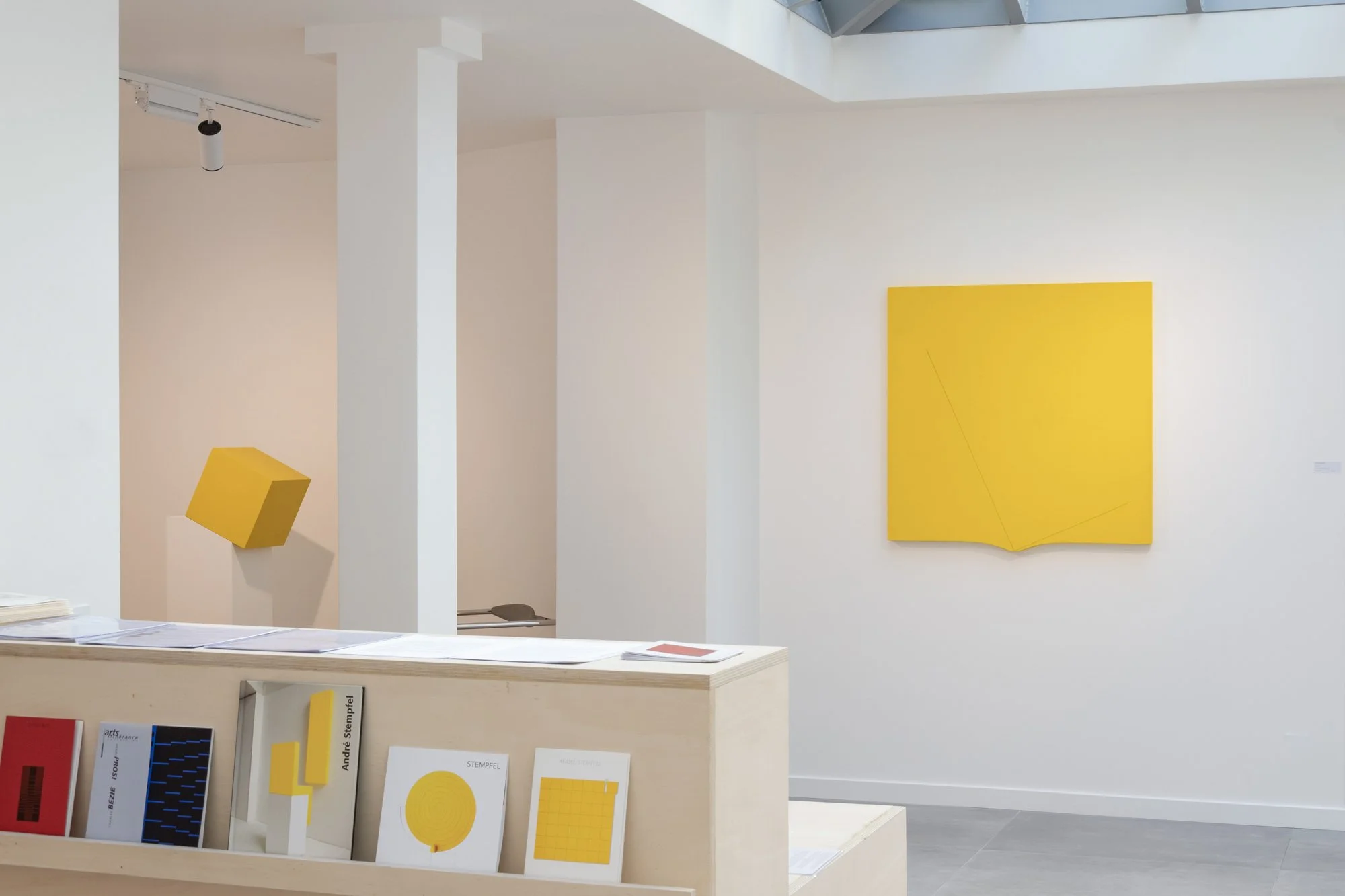
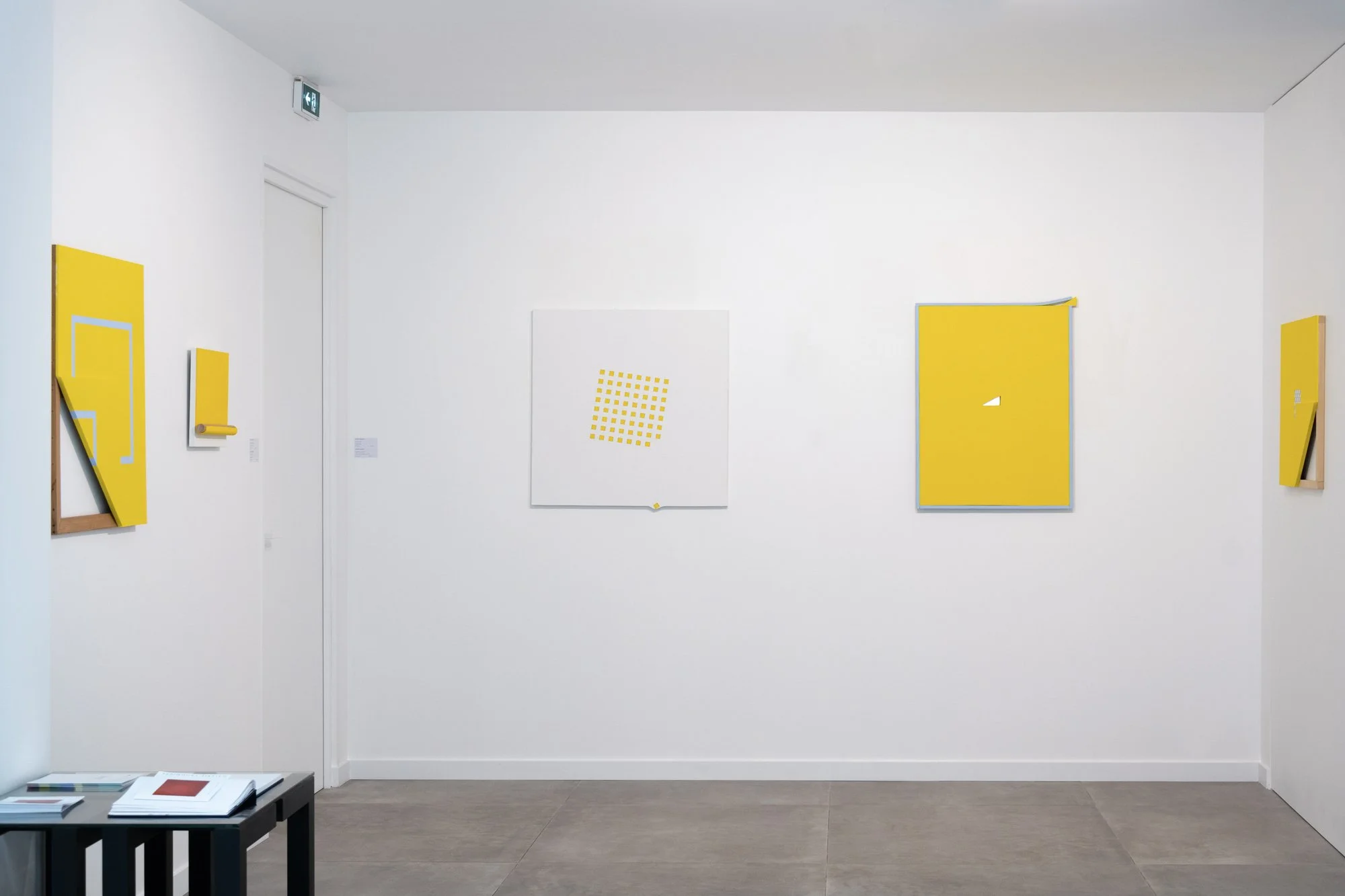
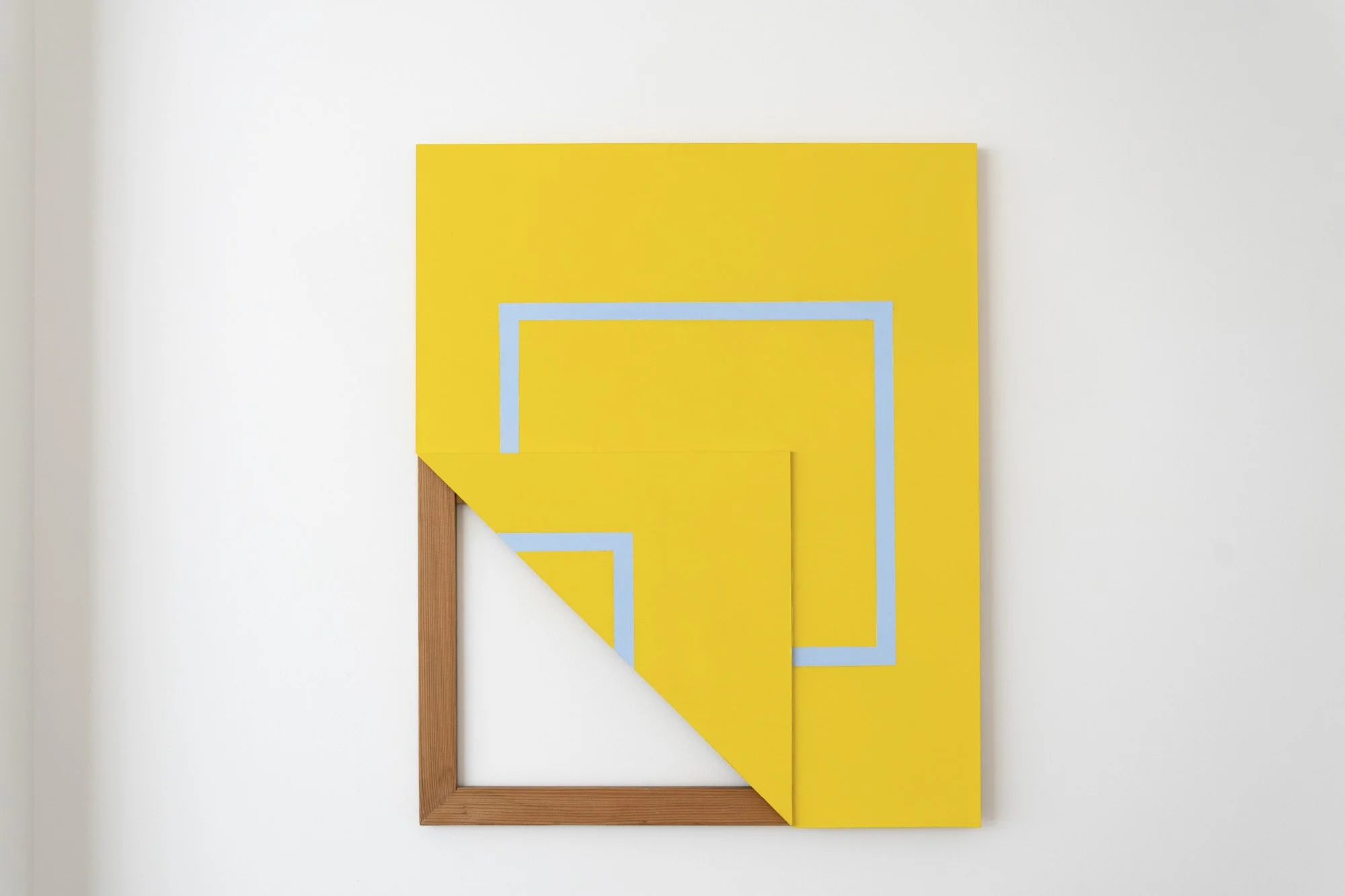
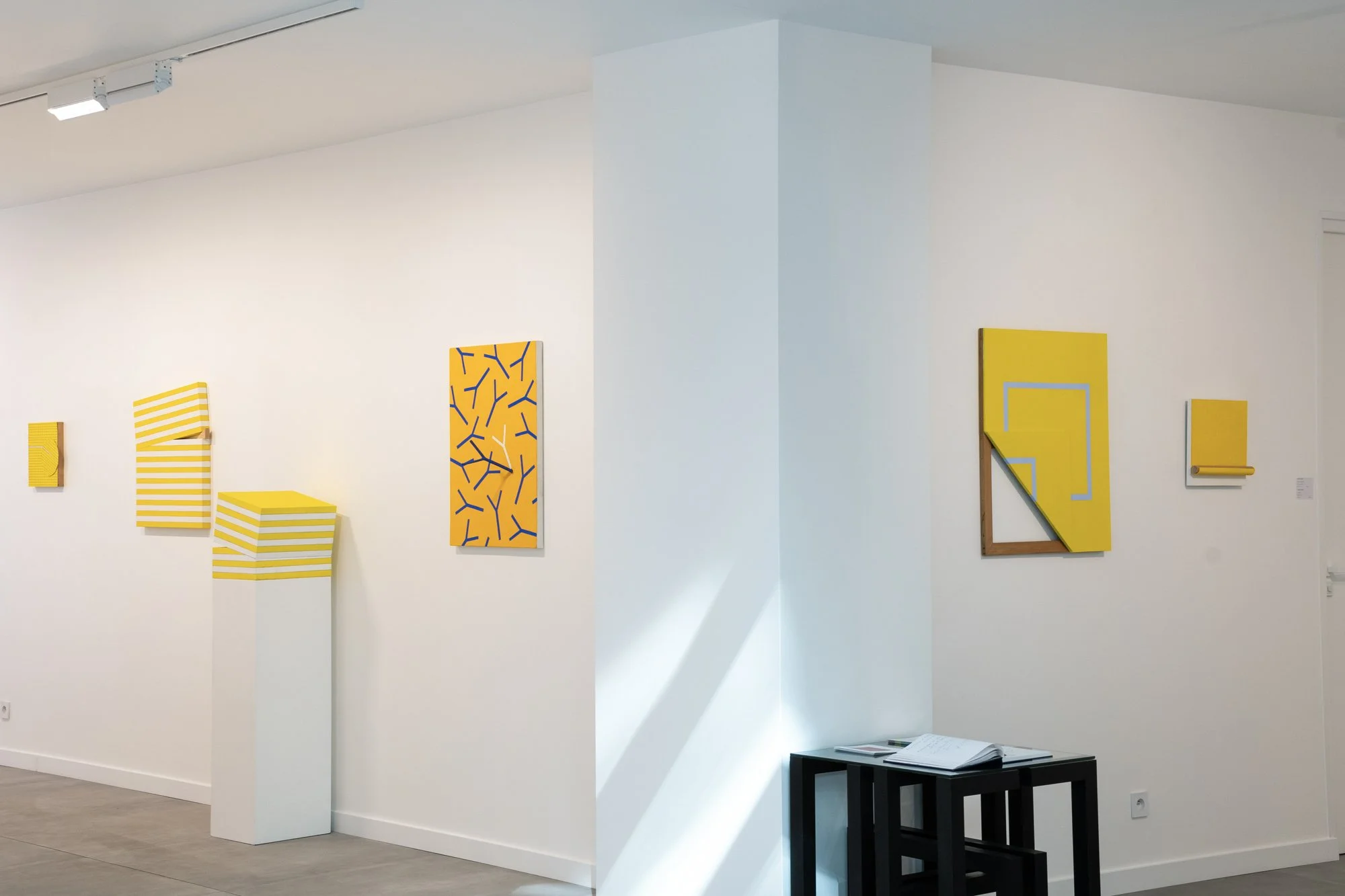
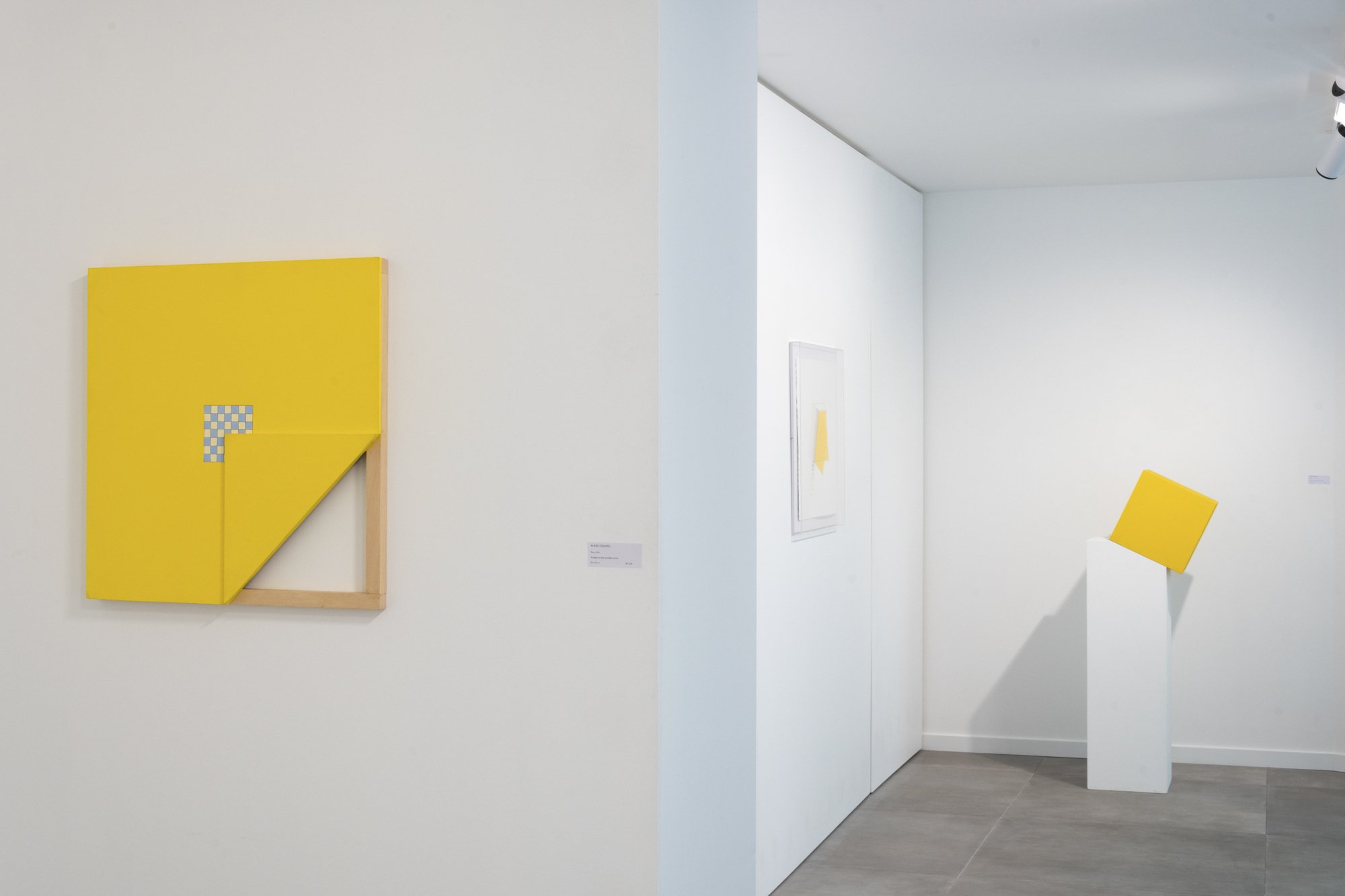
For his part, André Stempfel explores the medium through a more tactile, sculptural approach. He destabilizes the contours of the painting, inserting breaks, wedges, or folds that transform the canvas into a fluid and moving object. Where Bézie constructs an internal network, Stempfel deconstructs external boundaries: he introduces twists and spirals, playing with the plasticity of the support to reveal an almost organic materiality. Through mobile frames, his works unfold in space, animating the canvas surface with an unexpected vitality.
Stempfel's works provoke, challenge our perceptual habits, and present us with images that are paradoxical at first glance. A canvas from which an ordered line escapes a line, a painting on wood with one corner folded back, revealing the stretcher; forms become matter, whose properties Stempfel invents. Like a scientific experiment requiring a constant factor to measure variables, Stempfel chooses canvas and the color yellow as fixed points of reference, in order to better challenge and push back, with humor, both material and conceptual boundaries. His work focuses on subverting the obvious attractions that influence our expectations, creating gestures and forms suspended in their emancipatory momentum.
What unites these two approaches is a relentless exploration of the very foundations of painting. Both confront the surface, this territory initially constrained by four straight lines, in order to push back its limits and broaden its horizons.