
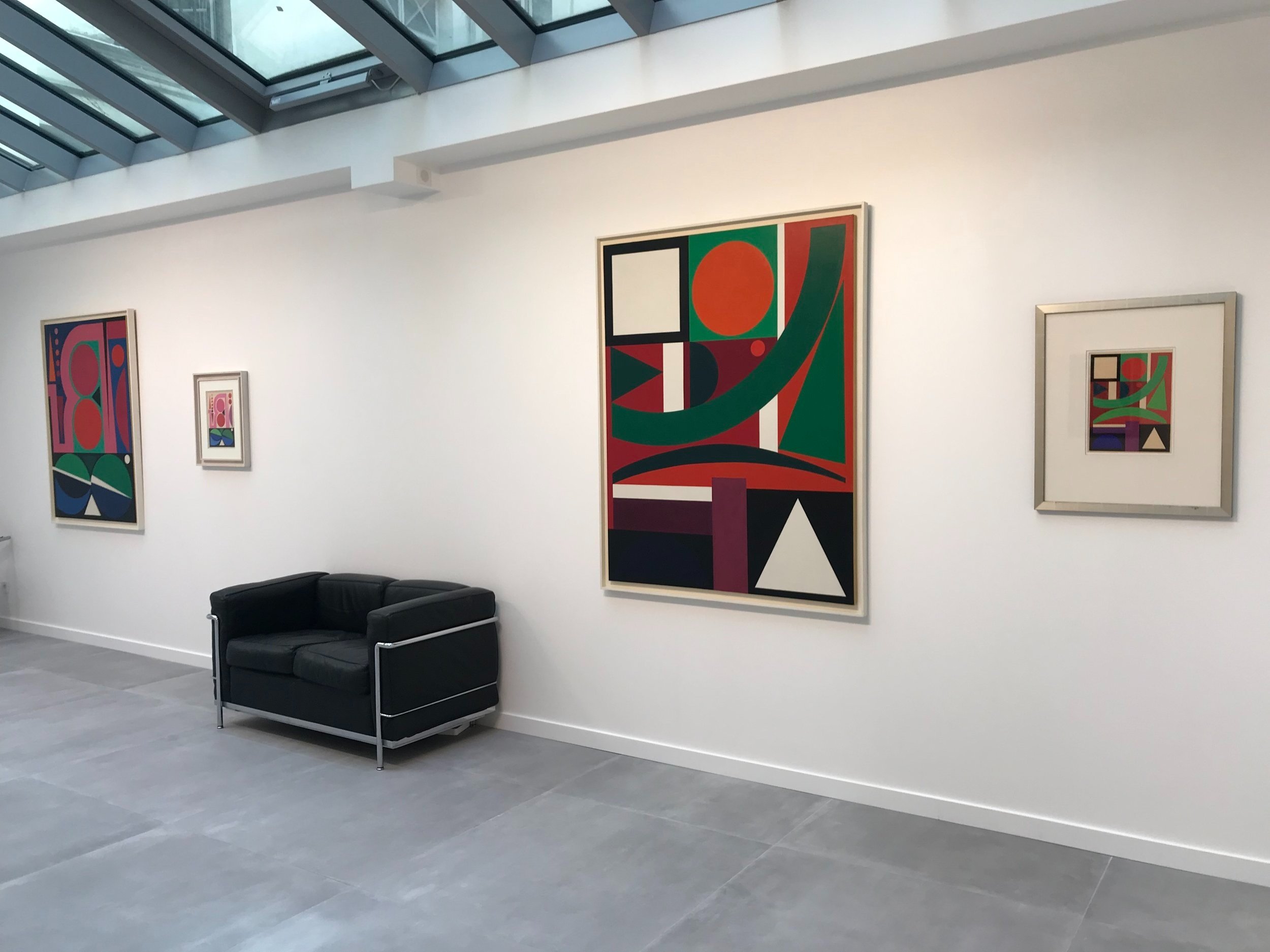
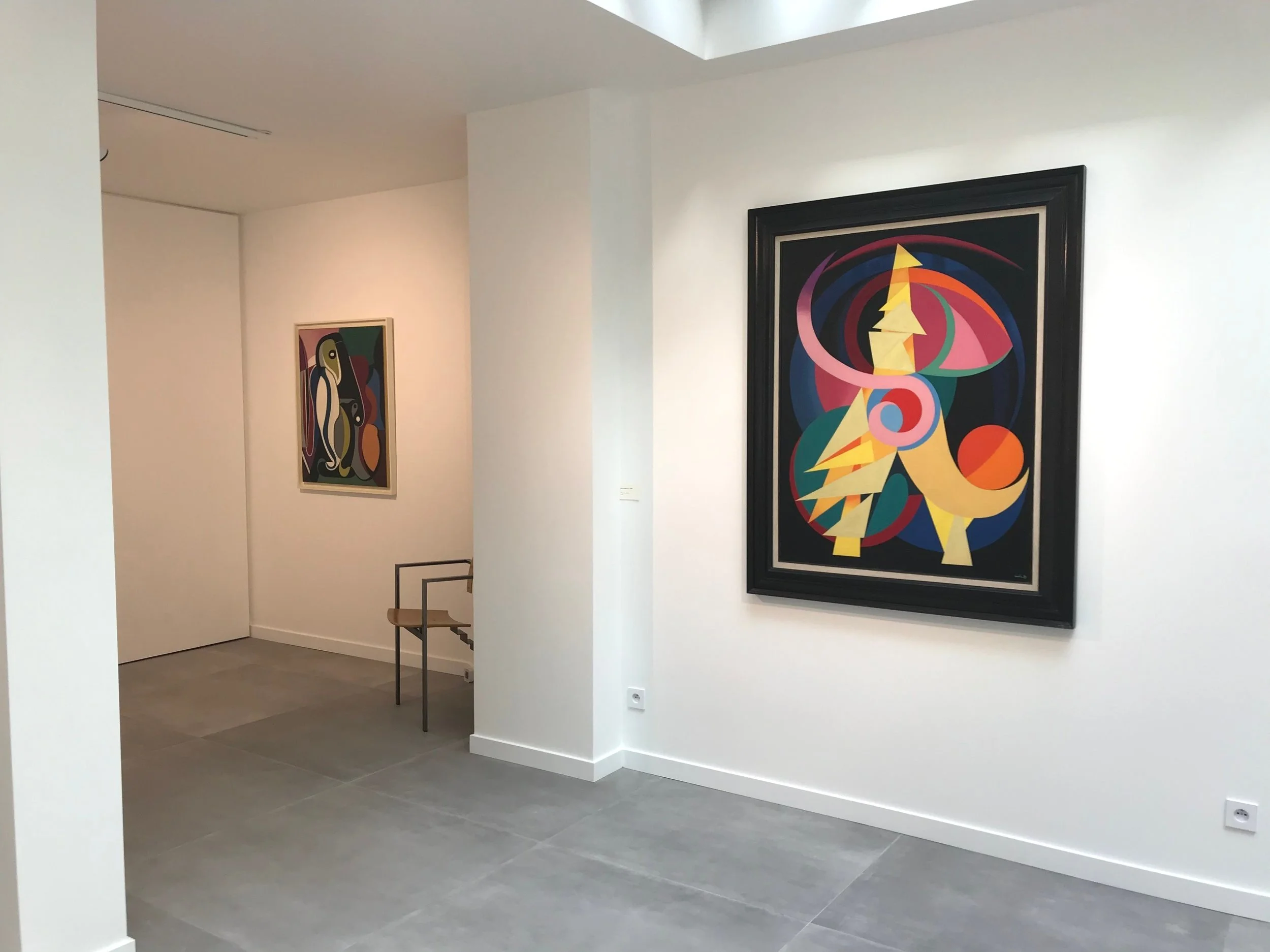
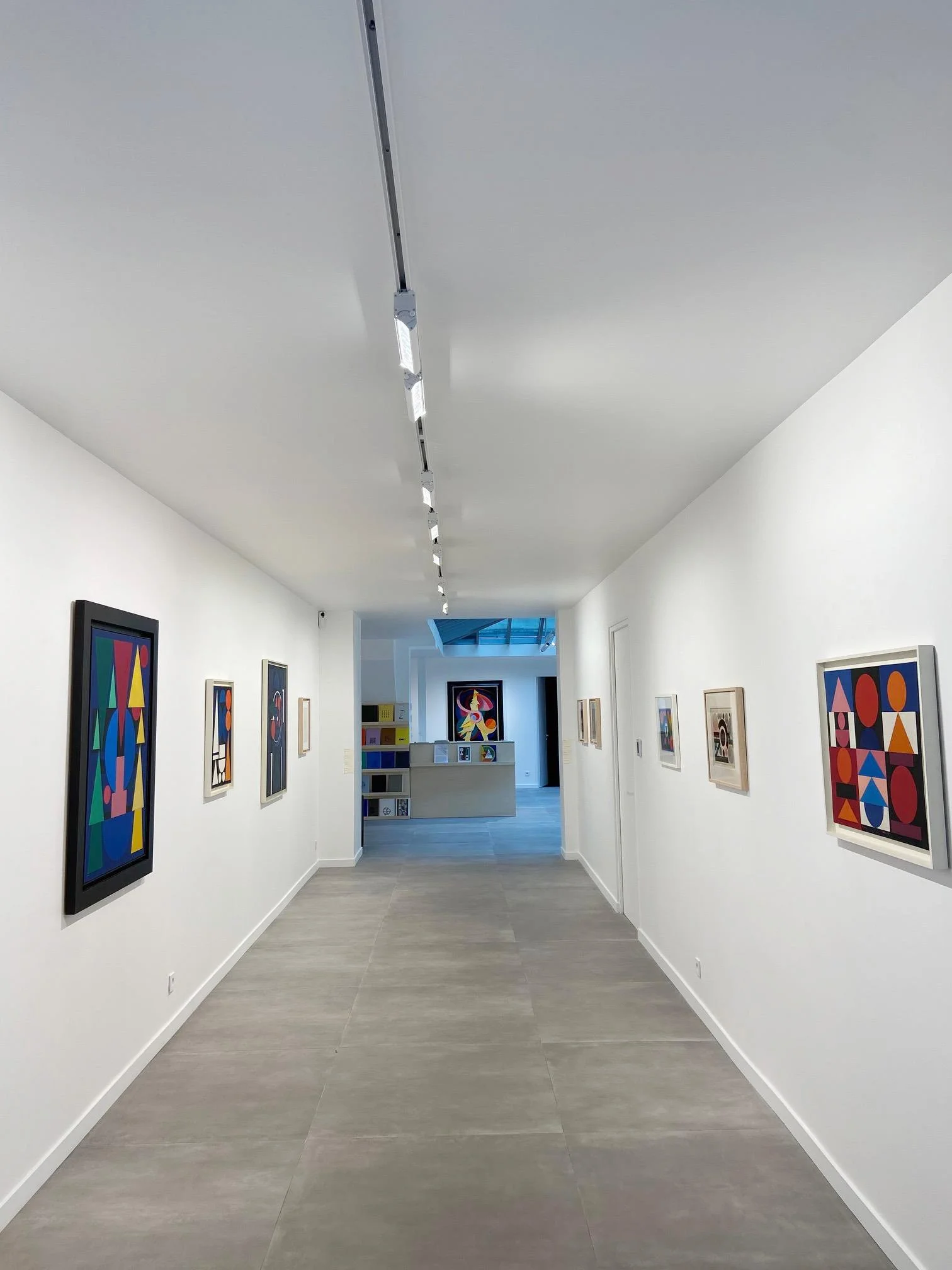
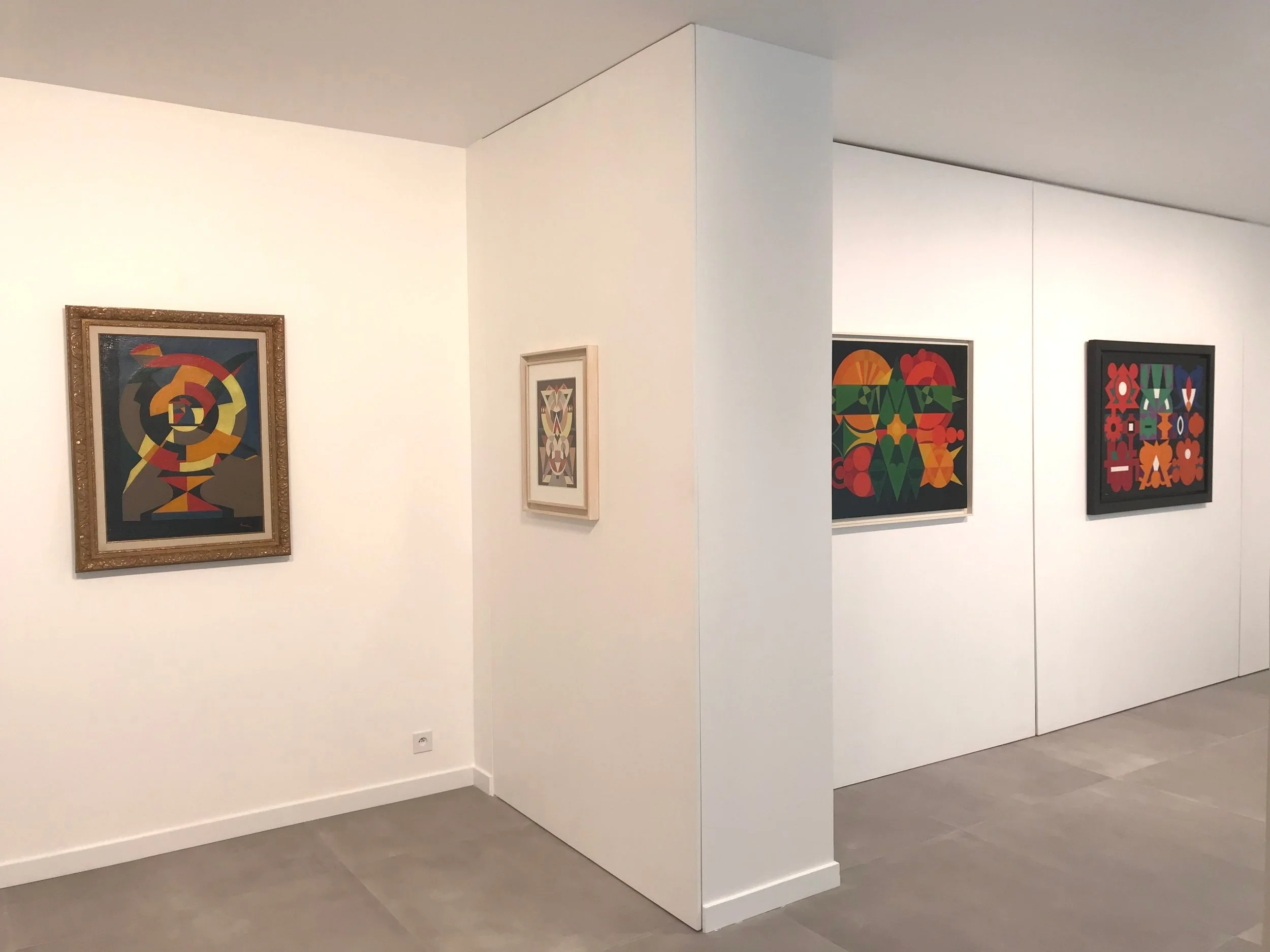
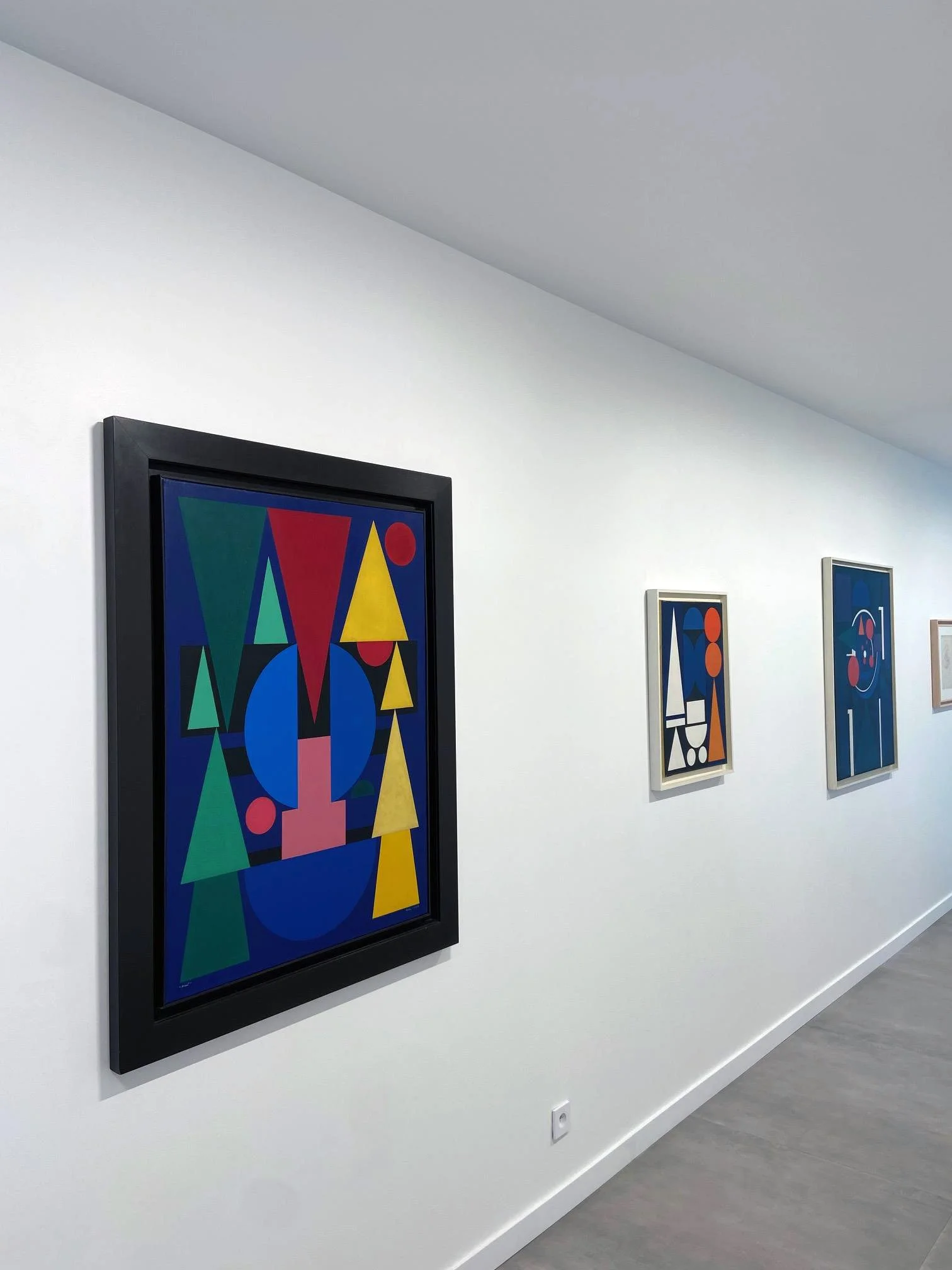
Auguste Herbin. His Journey
From May 16 to July 12, 2024
Text by Céline Berchiche
« Like long echoes that mingle from afar, in a dark and profound unity, vast as the night and as the light, perfumes, colors and sounds respond to one another. »
By 1913, the year of the Cubist painting *The Cork Oak*, presented in this exhibition, Herbin's journey through the history of the European avant-garde was already substantial. Taking as his starting point, at the very beginning of the twentieth century, Van Gogh and Cézanne, who would be his only masters, on the eve of the First World War, Herbin already had an international career supported by his first dealers. A Fauvist and then Cubist painter, he exhibited several times in Germany, Switzerland, and the Netherlands through Wilhelm Uhde, as well as in England through Clovis Sagot. By 1913, Herbin was a recognized Cubist painter; his painting embodied modernity, his bold colors, his audacity in deconstructing objects and representing reality even led to one of his 1910 landscapes being ridiculed by the English magazine * The Tatler*. He cut one of his canvases into three parts, giving each a title that changed its subject to mock Herbin's way of reproducing nature. As early as 1908, he told the American art critic Gelett Burgess: "I do not distort nature. I sacrifice it to a higher form of beauty and decorative unity."
In addition to the primacy given to color, his Cubist paintings and drawings reveal a pronounced taste for geometry that would intensify over the years. The work, Composition with a Pitcher , which depicts a half-pitcher at its center, shows a surface occupied by colored geometric planes composed of triangles, rectangles, and parallelepipeds, each distinguished from the others by its color. Apart from a slight gradation around the edge of the pitcher, there are few, if any, effects of volume, no illusionistic perspective, and no decomposition of the object into facets, as seen in many Cubist works. Instead, there is a great dynamism arising from the arrangement of the plane geometric forms.
This method of creating movement using only geometric forms would become increasingly pronounced over the years, culminating in the period of monumental objects from 1918 to 1921, a unique experiment in the history of French abstract art. In the 1920 Composition, an abstract work, the relationship between background and form tends to disappear; affirming his taste for the decorative, in the noblest sense of the term, Herbin gives preeminence to form and color. It is only 1920, and his journey in and toward abstract art is far from over. After a figurative period between 1922 and 1925, conducted in the spirit of the purism of Amédée Ozenfant and Le Corbusier, as well as magical realism as defined by the German art historian Franz Roh, Herbin in the 1930s, through his important involvement in the Abstraction-Création artists' collective, which he founded with Jean Hélion, Georges Vantongerloo and Etienne Béothy, organized, defended and promoted abstract art. The magazine of the same name, published by the association and released once a year from 1932 to 1936, circulated throughout the world, making Paris and the group's annual exhibition the international capital of abstract art of all kinds: constructivism, neo-plasticism, abstract expressionism and many others, including circular abstraction, as it was then asserted in Herbin's work, by the volutes and curves which for him expressed a universal rhythm.
Then, in the late 1930s, Herbin quite by chance discovered Goethe's theory of colors, which had not been widely disseminated in France. This discovery proved decisive for him, as he understood, through experimentation beginning in 1939, that color expresses itself more intensely when contained within a closed form. This is why lines gradually gave way to forms, as in Spiritual Reality of 1939. In 1942, after much experimentation and research, inspired by the works of Rimbaud, Baudelaire, and Bach, with whom he shared a taste for correspondences, he succeeded in creating a satisfactory method for renewing himself and also for renewing geometric abstract art, which would have a considerable impact on the next generation.
While Herbin's journey in the grand adventure of abstract art began at the start of the twentieth century with Cézanne and Van Gogh, after 1945 it was from his work that artists such as Vasarely, Soto, Agam, Baertling, Fruhtrunk, and many others built their careers, all of whom acknowledged this influence, just as Herbin's generation did for Cézanne in the previous century. Strangely, in the exhibition, if one juxtaposes The Cork Oak of 1913 with Adam and Eve of 1943, the two works seem to echo each other, as if the figurative work already contained the seeds of the final work, the magnum opus: the visual alphabet. This is perhaps how we recognize the career of a giant.
Céline Berchiche, April 2024
*Charles Baudelaire, second quatrain of the poem "Correspondences", first section "Spleen and Ideal", The Flowers of Evil, 1857.