
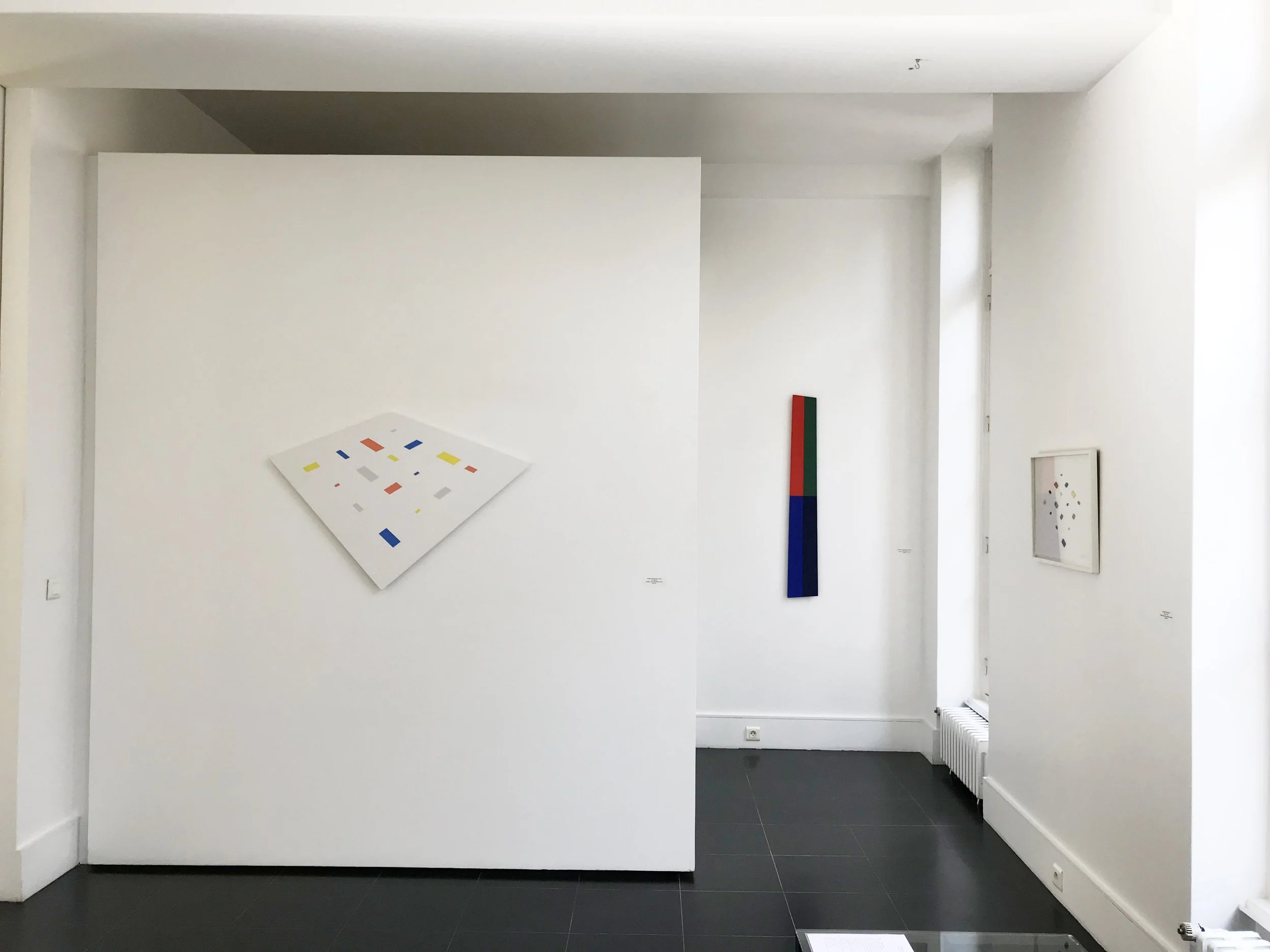
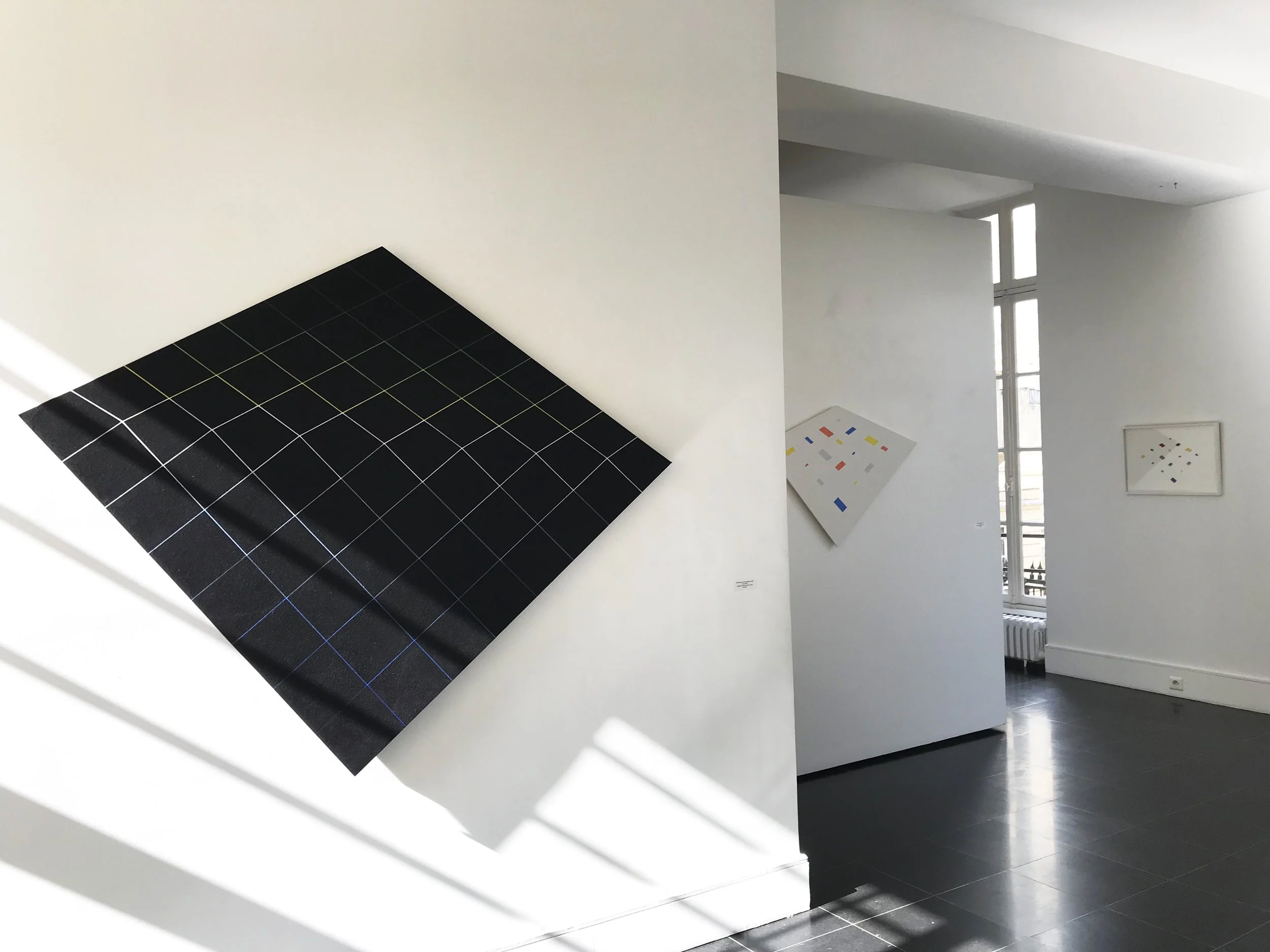
Tests
Hans-Jörg Glattfelder
From September 16 to October 7, 2023
A work of art that its author intends to place within the tradition of concrete art is expected to be expressed through strict rigor.
Traditionally, this rigor is geometric in nature, but also, and in my opinion with more innovative results, it can draw upon the universal energies and structures of nature: fullness and emptiness, interior and exterior, visible and invisible, simple and multiple, and ultimately, all imaginable contrasts and structures.
For almost three thousand years, Aristotle's dictate had established that art should 'imitate nature'. It was primarily concrete art that eliminated 'mimesis' through a veritable revolution. But revolutions sometimes risk becoming habits and losing their force.
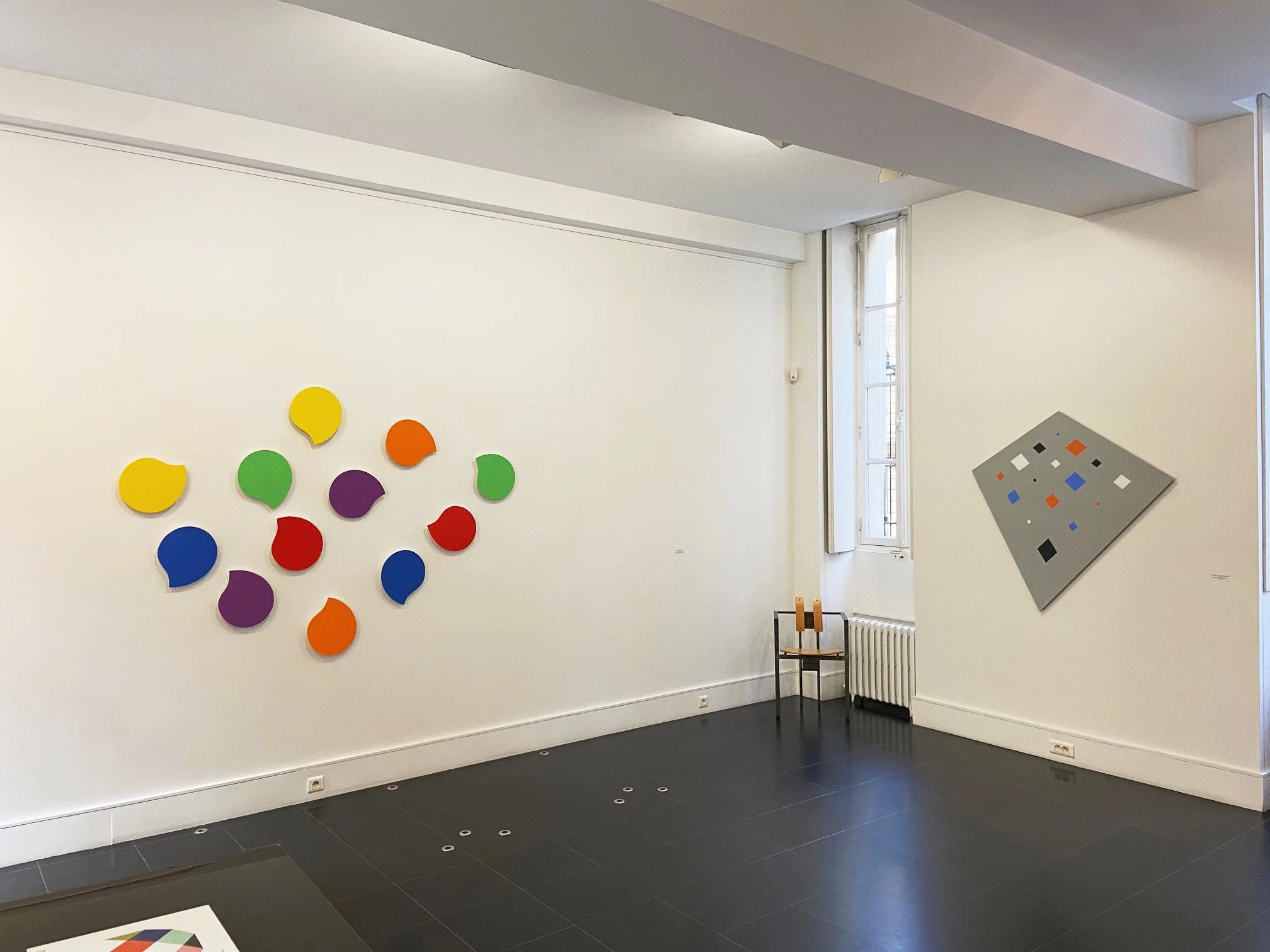
To avoid this fate, a constant effort is needed to renew language and eliminate conventions. This is what I tried to do with 'Rainbow Drops'. It depicts a set of twelve elements rotating very slowly around themselves. Their movement exists at the threshold between the visible and the invisible. The observer is invited to sharpen their visual acuity, which signifies the penetration of both gaze and mind. What nobler function could one imagine for a work of art?
HJ Glattfelder August 2023