

Immobile mobility
P. Bury, J. d'Imbleval, A. Kowalski, F. Morellet, Yvaral, JR Soto, A. Stempfel, I. Gouyon-Matignon, S. Kreitner, T. Nasseri, V. Vasarely
From January 14 to March 4, 2023
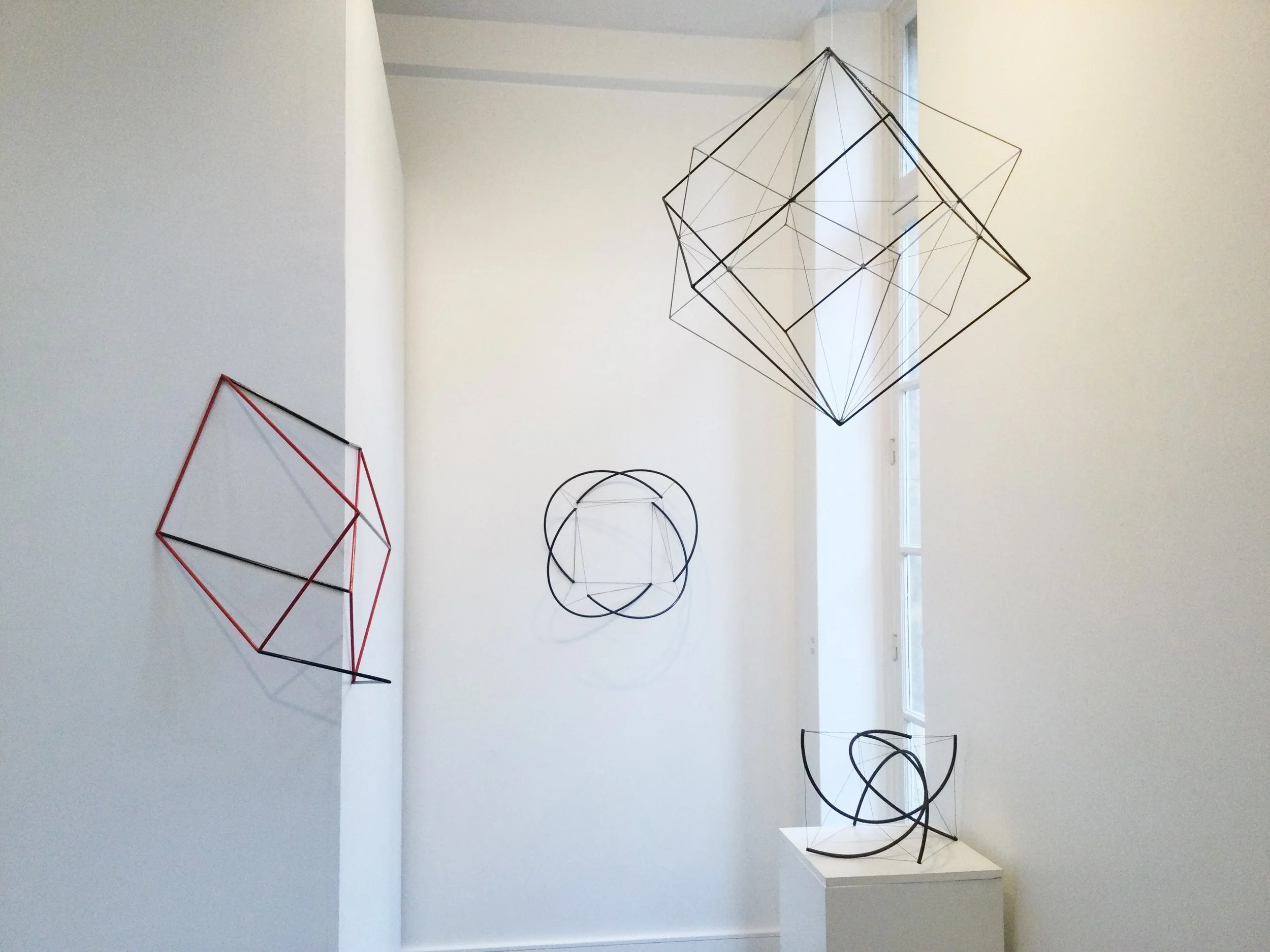
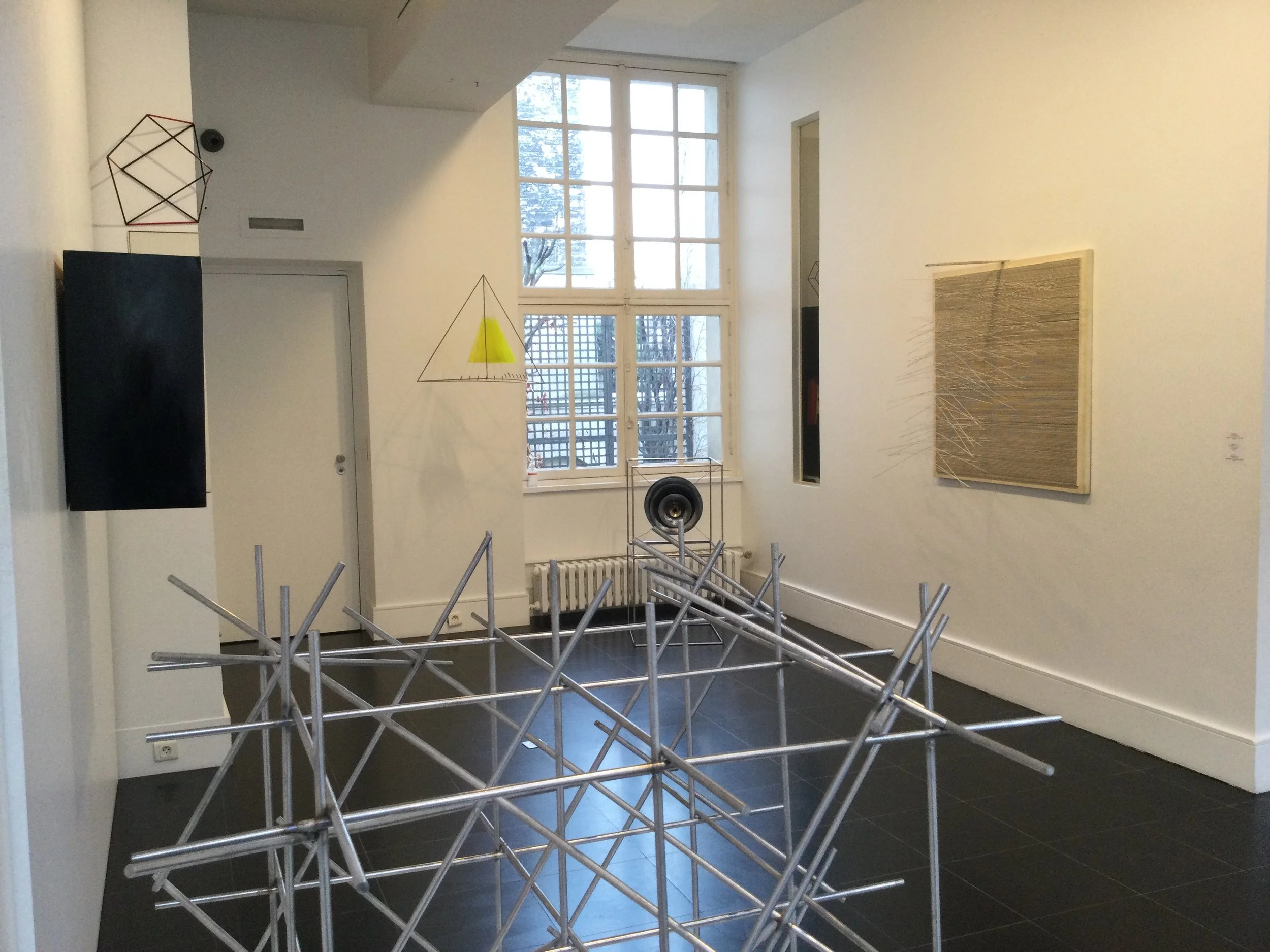
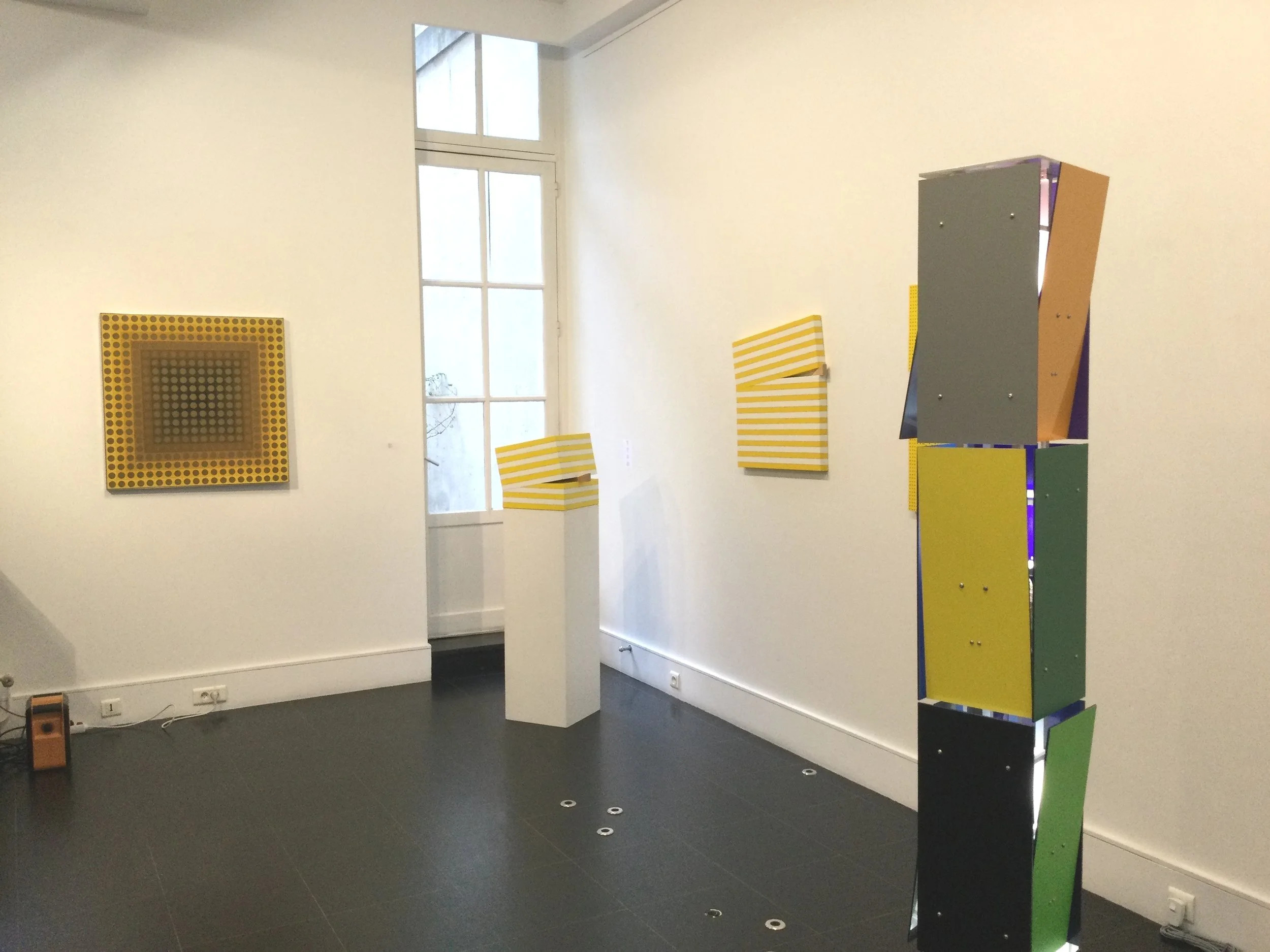
So, in this exhibition on the theme of immobile mobility, the suggested but unconsummated movement will give free rein to our imagination. The artwork, which we will observe in complete stillness, will play with our vision, and yet nothing moves, except our eyes. Haven't we all had this strange feeling that something is moving, without being certain of it?
Mobility, which characterizes our society, our way of being in the world, is something everyone knows or experiences on a daily basis. There is an attractive, positive side to mobility, but also a time-consuming one, and a fatal outcome: stopping, immobility.
Inaction has a bad reputation; we all experienced it firsthand during the months of Covid restrictions. The striking stillness, like a suspension of time, and yet, time continued to flow, but felt like an eternity.
So, in this exhibition on the theme of immobile mobility, the suggested but unconsummated movement will give free rein to our imagination. The artwork, which we will observe in complete stillness, will play with our vision, and yet nothing moves, except our eyes. Haven't we all had this strange feeling that something is moving, without being certain of it?
In motionless movement, there is an incalculable space-time that moves, as if gigantic masses were in motion, but since we see neither beginning nor end, everything appears static. "And yet it moves," Galileo dared to say in 1633, after having renounced his astronomical doctrines, when speaking of the Earth.
For some works, over a long period of time, one can detect a movement that is precise to the millimeter, one that can only be followed better if one refrains from staring at the work, and only returns to it a few seconds later.
Others will ask the viewer to participate in their discovery. They will no longer be a simple observer; they will have to train their gaze to search for and find what the still work can offer in terms of movement.
Around this theme, we will find works ranging from the provocative pieces of Victor Vasarely and Jesus Raphael Soto to the distorted works of Jean d'Imbleval, and the enigmatic pieces of Piotr Kowalski and Timo Nasseri. A moiré effect will hold our attention in the work of Isabelle de Gouyon-Matignon, and a captivating visual sensation will enthrall us in the work of Yvaral. An unspoken suggestion will bring a smile to our faces in a piece by André Stempfel, but we will be drawn back by the languid, almost erect, movement of a sculpture by Pol Bury, or by the slowed-down motion of a Siegfried Kreitner. We may pause before a pattern by François Morellet that will not reveal its construction at first glance.
In conclusion, it's a journey for the eyes, a moment just for yourself, a visual sensation that takes you on a trip without leaving home. Enjoy your visit!