

Jean-François Dubreuil & Jean d'Imbleval
The visible and the invisible
From March 18 to April 30, 2016
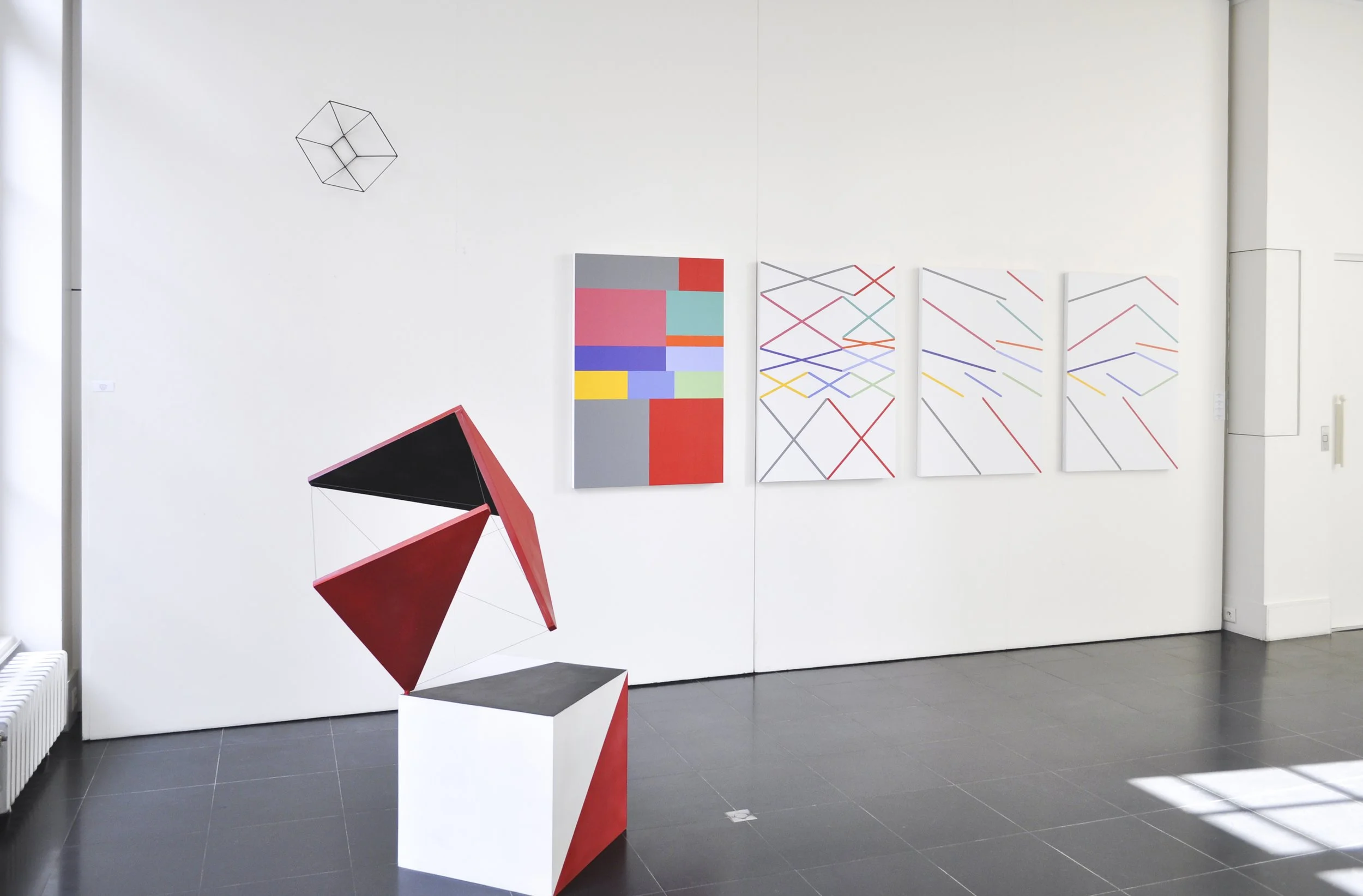
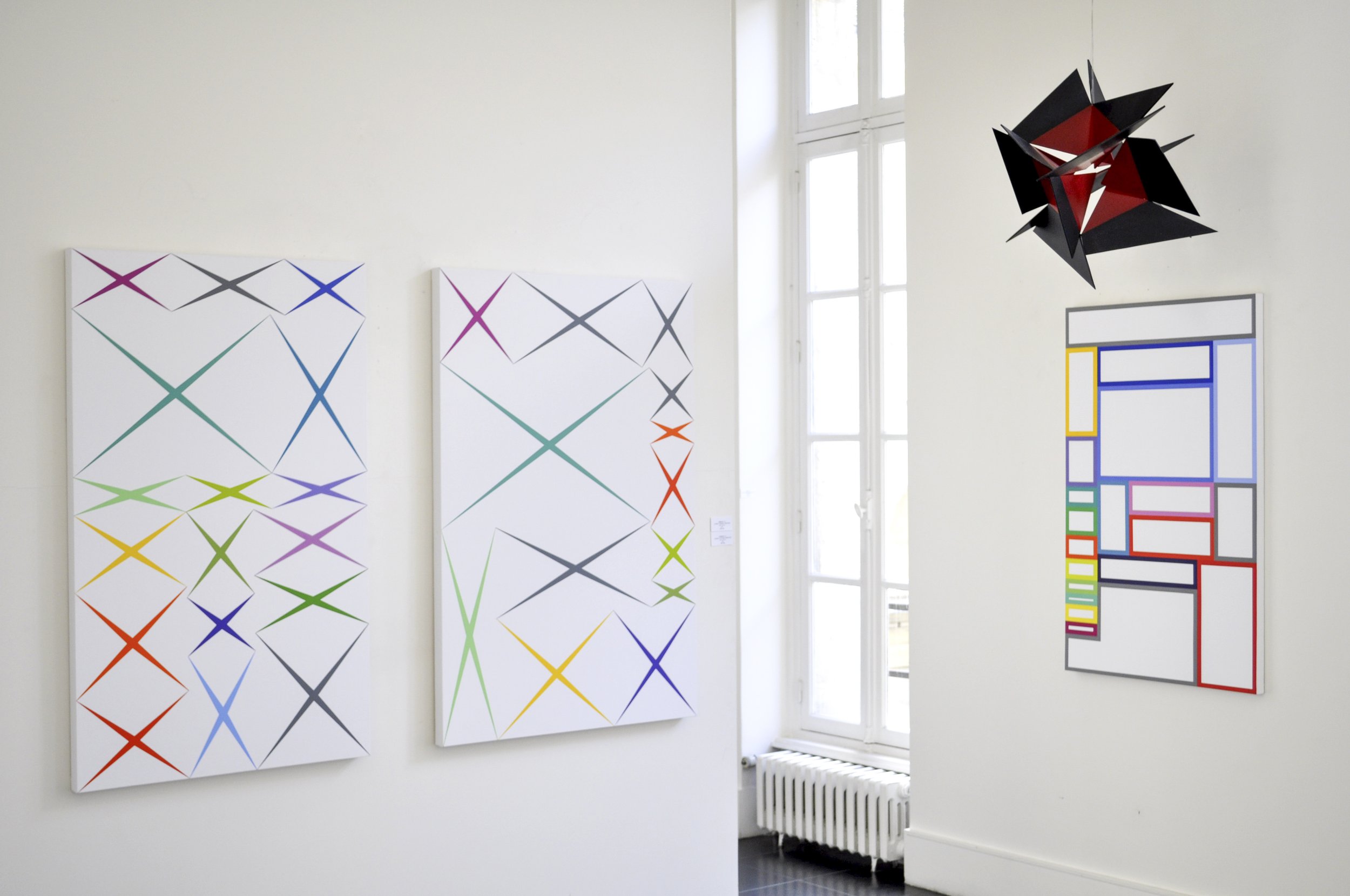
Jean-François Dubreuil has been analyzing newspapers from around the world for years. Like Jean d'Imbeval, he uses an existing structure: the layout of newspapers. The construction of his paintings is not random, as is his choice of colors, which are drawn at random, apart from two constants: black for photographs and red for advertisements. In his early works, Jean-François Dubreuil applied colors by filling the spaces of the articles, then he outlined them, leaving the interior spaces white. In his later works, colored crosses have taken over the white spaces; little by little, the newspaper's structure becomes invisible, replaced by a few lines, giving his works a more airy and graphic feel. The eye must train itself to reconstruct the invisible.
According to Jean d'Imbeval, also known as Jean-Claude Lahumière, who passed away in 2014, the cube is the first form to emerge from pure human thought. A symbol in itself of constructed art. Intellectuals and mathematicians have sometimes attempted to apply complex calculations to the fascinating works of Jean d'Imbleval, yet he conceived his sculptures empirically, starting with the cube, which haunted much of his research for years. He makes visible the magic of balance in his self-supporting structures or the secret of the triangle in the construction of a solid cube, which appears or disappears before the viewer's eyes, existing there, in equilibrium before our astonished gaze, which discovers the improbable magic of weightlessness.